





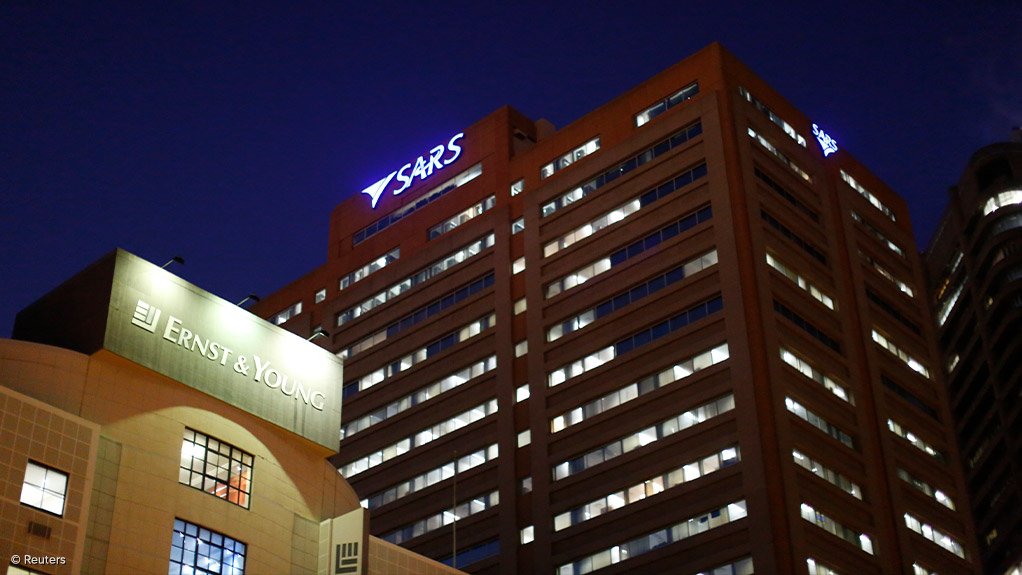

The South African Revenue Service (SARS) has updated its guidance on the documentary proof required to support the zero-rating of goods and services for VAT purposes, including for the disposal of an enterprise or part of the enterprise as a going concern. These requirements are important where immovable property is sold as a going concern and the parties seek to apply VAT at the zero rate.
In Interpretation Note 31 (Issue 5), published on 17 July 2026, SARS sets out the documentary proof that is acceptable to the Commissioner, as contemplated in section 11(3) of the Value-Added Tax Act, to substantiate the application of the VAT zero rate instead of the 15% rate.
Acquiring property in South Africa typically attracts either transfer duty, calculated on a sliding scale based on the purchase price or fair market value, or VAT at the standard rate. However, when the property is sold as a going concern and the statutory requirements are met, VAT at the zero rate under section 11(1)(e) of the VAT Act applies.
In the property sector a going concern commonly involves guesthouses, bed-and-breakfast establishments, Airbnb operations and hotels. Working farms may also qualify, but in many cases, it includes a residential property which demands careful consideration when claiming the zero rate.
To qualify for VAT at the zero rate, the property asset must be used to create supplies of goods or services subject to VAT.
Documents SARS Requires for VAT at the Zero Rate
Interpretation Note 31 states that for the zero rate to apply when disposing of an enterprise or part of the enterprise as a going concern, SARS requires:
a) A copy of the contract of sale between the recipient and the vendor confirming in writing that —
i) the enterprise or part of the enterprise–
Ø is disposed of as a going concern; and
Ø will be an income-earning activity on the date of transfer of such enterprise;
ii) the assets necessary for carrying on such enterprise or part of the enterprise must be disposed of to the purchaser; and
iii) the consideration for the supply includes VAT at the zero rate;
b) Tax invoice; and
c) The recipient’s Notice of Registration. (In this regard SARS further refers to paragraphs 4.3 and 4.5 of Interpretation Note 57 for a more detailed explanation of this requirement.)
Interpretation Note 57 Sheds More Light
Interpretation Note 57 on the VAT Act deals with the sale of an enterprise or part thereof as a going concern. It states that for the supply to qualify as being zero-rated in terms of the Act, the following requirements must be met:
- The seller and purchaser must be registered vendors.
- The supply must consist of an enterprise or part of an enterprise which is capable of separate operation.
- The parties must agree in writing that the supply is a going concern.
- The seller and purchaser must, at the conclusion of the agreement, agree in writing that the enterprise will be an income-earning activity on the date of transfer thereof.
- The assets necessary for carrying on the enterprise must be disposed of to the purchaser.
- The parties must agree in writing that the consideration for the supply includes VAT at the zero rate.
Tax attorneys at Foreign Buyer Property Solutions say the easy part of these requirements is that both parties are registered vendors. In some cases, however, it gets trickier when SARS requests evidence of a going concern.
An important requirement often overlooked, is that the parties must agree in writing that the enterprise will be an income-earning activity on the date of transfer. This means that the business’ income-earning activity cannot be interrupted between the date of the agreement and the transfer, which may only happen a few weeks later.
The purchaser must also buy the assets necessary for carrying on the enterprise. For instance, buying an Airbnb establishment or a hotel with no beds, will not pass the legal test.
Legal experts also warn against an agreement between the parties which reads too general. SARS requires the parties to agree in writing that the consideration for the supply includes VAT at the zero rate.
Paragraph 4.3 deals with the event should the purchaser not yet be registered as a vendor at the time of concluding of the agreement. Paragraph 4.5 addresses the requirements when a vendor supplying a going concern to a purchaser on or after the commencement date of the purchaser’s enterprise, but before the purchaser’s registration as a VAT vendor.
Foreigners Buying South African Property as a Going Concern Should Take Note
Under South African law, VAT treatment on the sale of property does not differentiate between a resident taxpayer and a non-resident for tax purposes.
Foreign buyers of property cannot avoid the tax obligation when purchasing a going concern by registering for VAT after buying from a seller who is not registered. That transaction constitutes a private sale and will attract transfer duty.
Even if the seller is a VAT vendor, but the immovable property falls outside its business operations (i.e. the property is not the income generator like a guesthouse) VAT at the zero rate will not apply.
According to SARS, under limited circumstances, a vendor may claim a deduction of transfer duty (notional input tax) on a supply made to it by a business that is not registered for VAT.
The Sale of Property Cannot be Subject to Both VAT and Transfer Duty
SARS' position is clear: a transaction cannot be subject to both VAT and Transfer Duty. Where VAT is properly levied on the sale of property, it takes precedence and Transfer Duty is generally not payable.
This principle is reflected in section 9(15) of the Transfer Duty Act, which provides that no Transfer Duty is payable where the transaction is subject to VAT.
VAT is levied at either 15% or the zero rate, depending on the nature of the transaction and whether the requirements for zero-rating have been met. By contrast, Transfer Duty is imposed under the Transfer Duty Act at progressive rates of up to 13% on the value of the property above the applicable thresholds. These rates and thresholds are reviewed annually and are typically updated as part of the National Budget.
Conclusion
SARS has reiterated that a vendor seeking to apply the zero rate bears the burden of proving that all the statutory requirements have been met. This requires the vendor to obtain and retain documentary proof that is acceptable to the Commissioner within the prescribed time periods.
Failure to retain the required documentary evidence may result in the zero rate being denied, exposing the vendor to an unexpected VAT liability together with potential interest and penalties.
Written by Foreign Buyer Property Solutions
EMAIL THIS ARTICLE SAVE THIS ARTICLE ARTICLE ENQUIRY FEEDBACK
To subscribe email subscriptions@creamermedia.co.za or click here
To advertise email advertising@creamermedia.co.za or click here


