






JOHANNESBURG (miningweekly.com) – Reduction of 3 000-equivalent trucks on the road, a 70.5 MWh decrease in smelting electricity consumption, a 70 000 t cut in smelting CO2 emissions, and a R203-million annual cost saving, which excludes revenue benefits from improved metal recovery.
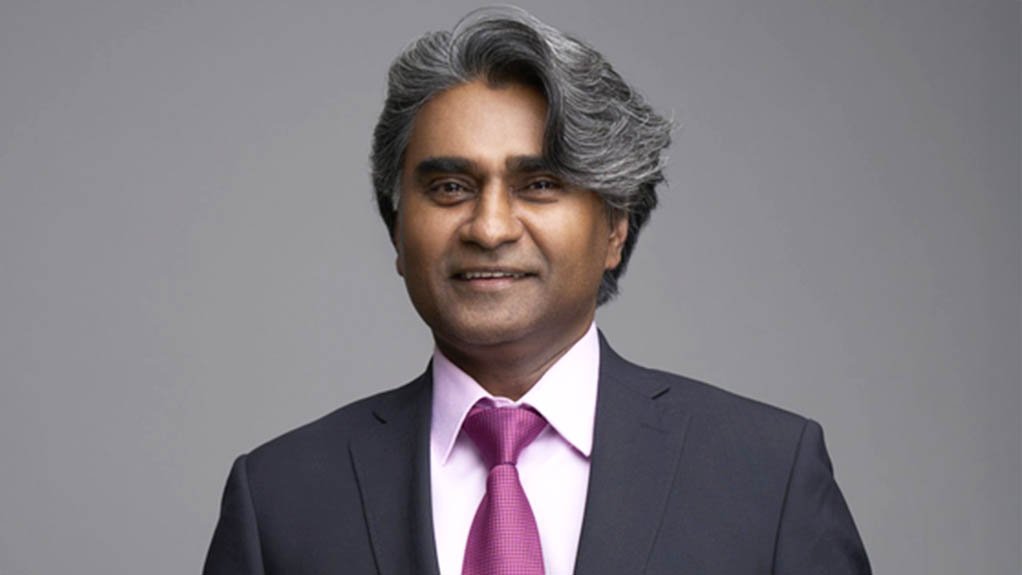
“Big, big benefits,” was the comment of Valterra Platinum executive head: processing operations Agit Singh when, during the company’s value-chain media briefing covered by Mining Weekly, he provided an update on the gains of Jameson cell deployment.
Singh was outlining the Johannesburg Stock Exchange-listed company’s integrated processing route from ore to refined platinum group metals (PGMs), and the downstream aspects of the PGMs business.
Valterra has in-depth insight into the mining and processing of Platreef in particular and pointed out the need for the PGMs industry to take account of the link of Platreef to base metal, which can be a big opportunity or a considerable challenge, as well as the potential of sulphur dioxide (SO2) pollution if abatement investment is not made.
On the Jameson cells front, Valterra has achieved major footprint reduction at the Mogalakwena PGM mine’s north concentrator by replacing something like 44 conventional flotation cells with four Jameson cells.
The north concentrator has been such a success that a study into also introducing Jameson cells at Mogalakwena’s south concentrator is well advanced.
“The south concentrator will go through what we did at the north concentrator, and we’ll definitely see the same reduction,” was Singh’s confident forecast.
‘Mass’ and ‘pull’ were two other words that popped up constantly in relation to the ability of Jameson cells to reduce the amounts of concentrate mass transported to the smelters without loss of grade or recovery; in fact, at times with a slight uptick in recovery.
Reduced mass pull points to less unwanted material being fed through the smelters amid Platreef ore’s clay complexity requiring innovative treatment. By nature of the mineralogy, the clay competes with the PGMs to float. To avoid this competition, sophisticated technology has been brought into play that involves liberation, grinding, air injection and bubble creation. Then reagents are added, with frothers causing foam, activators activating the PGMs, deactivators deactivating what is not wanted, and depressant stopping the unwanted material from floating.
You've got to get the PGM to attach to bubble and as the bubble begins to move from the bottom of the cell to the top, it starts to upgrade itself. But, at the same time, the PGMs are competing with all the other material.
The Jameson cells’ bubble particle contact is said to be very efficient. It attaches itself to the particle. It moves up very quickly, and it's got a very short distance to travel before it becomes concentrate that is then called final concentrate.
At that point, a high volume of depressant can be applied to prevent unwanted material from floating and the PGM recovery remains.
The only way that this could be achieved was by using the Jameson cells, because a lot of depressant entering a conventional cell results in the PGMs being depressed.
Instead, the Jameson cells allow the PGM particle to hold onto the bubble, and much more depressant can be applied to diminish all the unwanted material.
Interestingly, recovery improvement is also peeping through as the Jameson cells do their work.
SEVEN CONCENTRATORS
Overall information provided during the media briefing began with rocks bearing a few grams of sought-after material per ton making their way through concentrators and then advancing into smelters, converters, base metal refining, magnetic concentration, and precious metal refining.
Required to do all this is a major suite of assets that process Platreef, upper group two (UG2) reef, Merensky reef and Great Dyke reef in very distinctive ways.
On the western limb of South Africa’s renowned Igneous Bushveld Complex, for example, is Valterra’s Waterval complex that has two 34 MW furnaces, a slag cleaning furnace, a precious metal refinery, a base metal refinery, and a magnetic concentrator plant.
To the north are the company’s Mogalakwena concentrators and its Polokwane 68 MW flagship PGM smelter. “There's no other smelter, doesn't matter what you hear and I’m prepared to debate this openly, and I've said this many times: you'll never come across a 68 MW furnace like we have anywhere in the PGM industry with such stability, efficiency, and modernisation,” Singh emphasised strongly during the media brief.
On the Bushveld’s eastern limb, where chrome is prevalent, Valterra has a chrome plant at the Mototolo mine.
Of the company’s seven concentrators, there are two at Mogalakwena, two at Amandelbult, one at Mototolo, another at Unki in Zimbabwe and a joint venture concentrator at the Modikwa mine, which is also on the eastern limb.
Its three chrome operations are at Amandelbult, Mototolo, and Modikwa and considerable work around chrome is planned.
Adding to the Polokwane and Waterval smelters will be Mortimer, which is expected to be back online next year treating converter slag built up over the years.
The Platreef ore mined at Mogalakwena is low in grade and high in base metal loading, resulting in the mine’s concentrator being high volume when compared with Amandelbult and Mototolo, where chrome recovery circuits are continuing to be optimised.
Smelting is what Singh described as Valterra’s main differentiator. “We've got this massive smelting fleet. It's massive because Polokwane treats high-volume Mogalakwena concentrate, and this is why we did the mass pull project at Mogalakwena because you can smelt large volumes with a lot of gangue in it” – gangue meaning unwanted material that causes considerable energy waste.
The mass pull project was implemented to minimise that gangue so that better quality PGM concentrate can be smelted.
Eighty per cent to 90% of what Polokwane treats is from Mogalakwena, with Waterval’s predominant UG2 mix coming from third parties, Amandelbult and Mototolo.
The way the variety of ores are treated differs widely in that some ores are high in base metal content; others have no base metal content at all. Some are high in chrome and others have zero chrome, “and bringing all of that together is what's unique in terms of getting optimal blends fed into our furnaces and our converter plants," Singh pointed out.
Mogalakwena’s base metal content is described as having “a massive advantage for us” in that the base metal attracts PGMs and maximises PGM recovery during smelting.
Smelters have a mass stream, where PGMs are wanted, and a slag stream, which PGMs must bypass, and base metal content helps that to take place optimally.
Mogalakwena has the right amount of base metals to ensure that desired stabilisation and, to some extent, Unki has that as well.
“We have that base metal collector in our concentrate, and that's why we split that everywhere. We split it to Waterval. We split it to Mortimer when that was running, and we'll continue to do that when Mortimer returns, and it’s what we have at Polokwane.
“So, our efficiencies are really, really high – in excess of 98% on first pass and at 99% on overall efficiencies, and that's because of the base metal advantage that we have.
"That's the first thing around the smelting operations. The second is that we’re able to blend-out chrome, which can be poisonous to smelting. If you have a high UG2 ore, you're going to have chrome that you're going to be blending in with your concentrate and it can be poisonous to the smelting operation,” Singh explained.
“Essentially, you dilute the chrome,” Valterra executive head: mining operations Willie Theron elucidated.
“We can blend that because we also have Mogalakwena and we have Unki, and bringing that together and distributing it appropriately to blend out the chrome in our UG2 ores is another advantage that we have,” Singh outlined.
‘FORMULA ONE’ REBUILD PIT CREWS
Valterra’s processing plant rebuild strategy was highlighted as another of its processing advantages.
“We've put our own rebuild teams together. We've taken complete ownership around rebuild, and we take care. We build our furnaces. We rebuild our furnaces. There's no one that we rely on to come and do a rebuild for us. It doesn't matter what it is, whether it's an end wall, side wall, roof, or a full rebuild. We have a warehouse that’s like a Formula One setup. It's got pit crews.
“We've got factories ready for various types of rebuilds, and our team moves from one to the next. We've built that efficiency and that capability within our team,” Singh made known.
CONVERSION ‘GAME CHANGER’
Highlighted as “a massive game changer for us” was the converter plant, owing to its flowsheet being able to separate PGMs and base metals in a single step.
“Then we've got the refining processes, where we achieve really high purities, recoveries, and capacities, and we’re able to treat all the different ore that we have, as well as any third party ore that we’re processing.
“This is really important in that you're going from 0.0004% platinum in concentrate, and upgrading that to 99.99%.
“We have an absolute commitment to safety. Amandelbult and Mototolo concentrators have gone for over two years without one injury.
“Then we've got this flexibility around processing different types of ores. We've learnt over the years about how to process Platreef. We’ve learnt a lot around UG2.
“We continue to optimise our chrome strategy and we’ll be announcing a full-blown chrome strategy in February,” Singh divulged.
SMELTING OPERATIONS
Valterra has 180 MW of smelting capability. “When you have the number of smelting assets that we have, you want them to be as efficient as possible. You don't want to keep a furnace operating just because you want to feel good about yourself, and also to smelt high volumes of unwanted material.
“We want to feed a smelter what it needs, and a smelter loves good quality PGMs base metals. If you only feed it what it's supposed to get, it requires less energy. We refer to that as the specific energy consumption. It's a kilowatt hour per ton smelted. We want that to be low.
“On the base metal side, we've got 32 000 t of base metal or nickel capacity, and we've got 3.5-million ounces of PGM capacity – more than enough to do whatever we want to do.
“If we look at the flow sheets in the industry, we start to differentiate ourselves when we get to the converter, of which there are two types found in the industry. You have the Peirce-Smith converter and you have the top submerged lance furnace that we have, which we call the converter plant.
“The Peirce-Smith converter, which our peers use, takes the molten matte, and they do a hot transfer of that into the conversion process. They collect it in the ladle. It's molten metal, and they pour that directly into the Peirce-Smith converter plant.
“We don’t do that. We take our matte that we produce from our furnaces. We cool it down. We produce a solid matte. We crush that down, and we feed that pneumatically into our converter plant, which goes through a conversion process of also converting iron to iron oxide, converting sulphur to sulphur dioxide, and silica oxide. It pushes all that stuff into slag phase, which is the whole point of the conversion.
“Once we're done with that, we take the converter matte and we slow cool that for seven days, which is where the advantage comes in because PGMs are not magnetic at all by property. You can't magnetise them. But by taking PGMs and associating them with base metals, you can magnetise them.
“Over the slow cool process, we have this base metal PGM platelet and these platelets that form the PGM attach themselves to the base metals, and the base metals become a collector for the PGMs.
“So now you've got in the slow cool process in the converter matte, you've collected these PGMs to the base metals. It's cooled over seven days. You then crush that, and now you take it to the magnetic concentrator plant, where you are immediately able to separate your PGMs using magnets, and left over is what we call nickel-copper matte, and that's the base metals.
“So, we have effectively been able to, post the converter plant, separate base metals, and separate PGMs at the same time. If we have a base metal issue, it does not affect our PGM flow. If we have a PGM issue, it doesn't affect our base metal flow.
“Secondly, let's assume that we want to treat a lot more of Platreef-type ore, which has a significant amount of base metals. Getting up to full capacity, will have, for those in the same region, even more base metals than we have. If we wanted to treat that, all of it, it would mean that we have options, but anyone else that needs to treat must make sure they have the base metal capacity.
“Why? Because all of it, the PGMs and the base metals, go to their base metal refinery and Peirce-Smith doesn't create this separation of base metals and PGMs. It's just a normal conversion process of where you are converting iron to iron oxide, silica to silica oxide. There's no slow cool process.
“You don't have the ability, post the conversion of the Peirce-Smith converter, to have a magnetic fraction of PGMs. All of it, therefore, goes to the base metal refinery, and only once you've removed the base metals, you treat the PGMs. If you have a base metal refinery issue or concern or capacity, guess what? You slow your PGMs.
“I want to land this, and again, happy for open debates in the market. I'm happy to have this conversation with all my peers and everyone around. Are we solving for our base metal capacity issue in the industry? My answer is ‘no’, there are base metal constraints in this industry,” Singh reported.
Quoted sometimes is that South Africa’s PGM industry has a smelting capacity issue but this was disputed by Theron. “It's that flowsheet from the converter to the base metals. That’s where the issue lies,” Theron explained.
Of Valterra’s own production of 2.1-million to 2.3-million ounces, Mogalakwena contributes about one-million ounces.
“So, almost 50% of our own profile is Mogalakwena. But on base metals, it's not 50% capacity usage; it's almost 80% capacity usage. So, 50% PGMs from Mogalakwena uses 80% capacity in the base metals refinery, so if anyone in the Platreef wants to look at expanding, that’s the problem,” Theron clarified.
Singh elaborated: “The converting process makes the difference. If we’re unable to separate PGMs from base metals, your base metal refinery sees the full stream. If you have a base metal capacity constraint, and you will if you were treating 30 000 t to 35 000 t of base metals, as is being told in the industry, there’s no base metal refining capacity in the industry for that, and because the converter does not allow for the separation of base metals and PGMs, like we do on the magnetic fraction, that entire PGM stream with all the base metals, has to first go to the base metal refinery, and if you don't have the base metal capacity, you’ll hold up the PGMs.
"That's the first thing. The next thing is SO2. A Platreef-type ore has got a significant base metal sulphides content. It comes with a lot of sulphur – like orders of magnitude more sulphur.
“So, the amount of SO2 that you're going to produce on a Platreef-type ore is significant, and if you look at the base metal loading that's been spoken about, you can imagine the high amount of sulphur that will come with it,” Singh pointed out.
“What we've done is put in a lot of investment for zero ounces of sulphur because we thought that from a sustainability point of view, in line with our strategy, that's the right thing for us to do.
“You see the massive impact we've had – a 98% drop in sulphur emissions through adhering to all the requirements. The SO2 intensity has been reduced from 150 000 t/d down to 4 t/d to 5 t/d.
“This is important because we're not only here to make money. We're also here to make sure that we do what is the right thing to do and I'm not saying that everyone else is not doing the right thing.
“Our strategy is different in terms of sustainability, but it's going to be quite interesting around how all of this, from a processing point of view, actually comes together. Sulphur is going to be a big issue around any treatment of a Platreef-type ore. It’s going to be a significant impact around the downstream process.
“But, as you can see, we're well positioned to be able to handle whatever comes our way with regards to Platreef, Merensky, UG2 and Great Dyke ores.
“We have effectively been able to separate base metals, and separate PGMs at the same time,” said Singh.
Merensky reef and sulphur are also associated. “Even a significant amount of Merensky in your processing will require some sulphur abatement. If you don’t have sulphur abatement, the capital required to do so will have to be invested,” Theron pointed out.
DOWNSTREAM PROCESSING INVESTMENT
All of Valterra’s downstream processing assets are capitalised; Unki comes with 8.5 MW, Mortimer with 38 MW, and Waterval with two 34 MW entities and a 23 MW furnace.
“We continue to invest in them, but at the right level of investment with regards to sustainability, and it comes down to our operation of the smelters.
“We don't like ramping things up and down. We don't like powers going up and down. We manage that through our blending strategy, and our rebuilds," said Singh.
“We don't want an unplanned runout. I don't want blowouts on the matte side or on the slag side. I don't want any of that. So all of the rebuild work that we do is all aimed at making sure none of that happens to us.
“We've invested a lot of research and development and capital around our systems on our furnaces, and that's really paid off dividends for us over the years.
“These assets – on paper, in reality, in practice – are the strongest fleets of smelting operations you're going to find in the industry, and I'm always prepared to have this healthy debate openly in the industry, and you can pass the invite over to my peers that I’m happy to have that conversation.
“I'm very confident of what we've done. We don't want to give away our value. We want to fill our value, fill our capacity for the right value, and we continuously have conversations in the industry around the way it makes sense for us to do so.
“Mortimer was a strategic shutdown for repurpose. But the day we start to mothball our smelters is not the day that I'm looking forward to. We need to look at how we can utilise the smelting assets to generate value for us, for our country, for the people, and for the betterment and survival of PGMs going forward,” Singh concluded.
EMAIL THIS ARTICLE SAVE THIS ARTICLE ARTICLE ENQUIRY FEEDBACK
To subscribe email subscriptions@creamermedia.co.za or click here
To advertise email advertising@creamermedia.co.za or click here


