





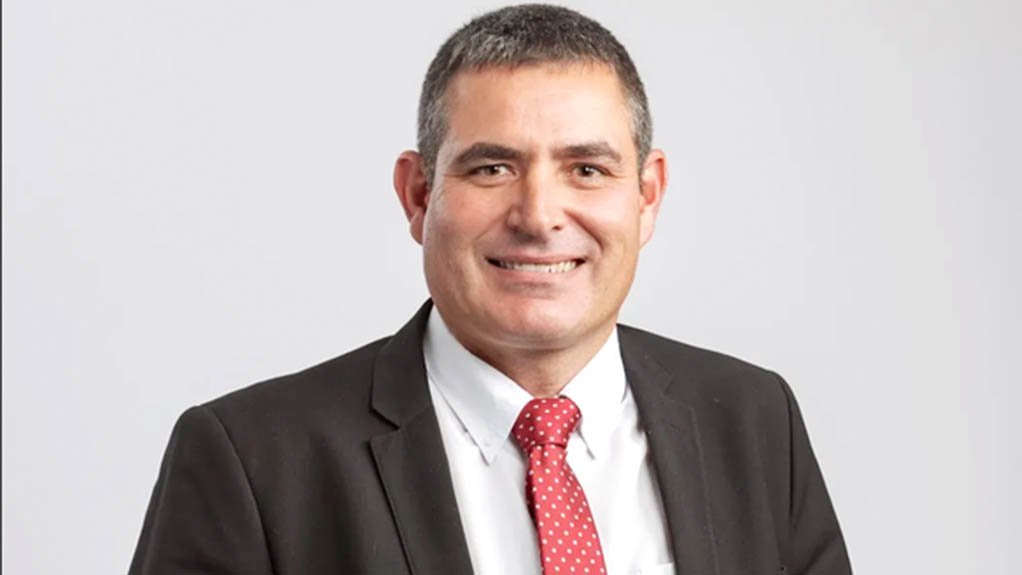
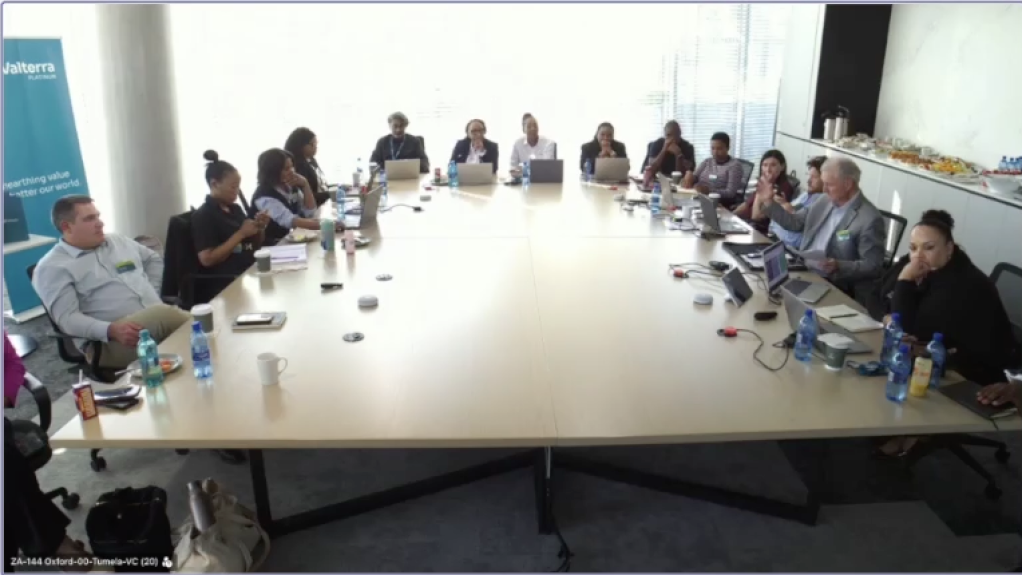

JOHANNESBURG (miningweekly.com) – There is no argument that the Mogalakwena platinum group metals (PGM) mine in South Africa’s Limpopo province is “definitely” the PGM mining industry's most exciting endowment, Valterra Platinum executive head mining operations Willie Theron stated emphatically during the company’s value-chain media briefing.
Valterra has communicated to the market that Mogalakwena, on a six-element (6E) basis, is targeting production of between 900 000 oz and a million ounces a year. “But I just want to highlight our inclusive resource number,” said Theron, as he reported that, on a 4E basis, there are 285-million ounces at Mogalakwena, which against the targeted production offers multi-century life-of-mine potential of 300 years plus – “that's how massive that resource is,” Theron pointed out.
Then, after going beyond Mogalakwena alone and extending out to the likes of Valterra’s Amandelbult, Mototolo, Twickenham, and Unki, he pointed out that Valterra’s huge resource is enough to keep this Johannesburg Stock Exchange-listed company busy “for millennia, never mind decades”.
Mogalakwena mines the Platreef, which Theron explained is not just about mining this reef that others are now also pursuing. “It’s about concentrating the Platreef and going through smelting and refining of the Platreef.”
And there is going to be a lot more of that because the Mogalakwena openpit mine is on the way to being followed by Valterra’s Sandsloot Underground Project.
The Sandsloot Underground Project is an underground PGM development situated beneath the former Sandsloot openpit at the Mogalakwena mine.
“If you look at Mogalakwena specifically, it has a one-to-one platinum-palladium ratio.
“It doesn't have any chrome, and it has very little rhodium. But it does come with a nice tick on copper and a nice tick on nickel, and it does give us a fair amount of gold.
“Almost 70% of our gold that we produce as a company comes just from Mogalakwena. If you recall, it's close to 100 000 oz. So, that's very important to note about the Platreef orebody.
“What's also interesting about the Platreef orebody is that it dips at a 45o angle and then flattens out.
“So, anyone that looks at the Platreef orebody needs to consider how they're going to treat base metals and then also how they're going to deal with Platreef’s characteristics, because what's also quite interesting about the Platreef orebody is that it has a lot of clay material associated with it, and you don't use the same PGM-recovery methodologies.”
AMANDELBULT GENERATING HIGHER REVENUE
While Mogalakwena is where major growth is being planned, it is the conventionally mined Amandelbult underground operation that is Valterra’s bigger revenue generator, located as it is on the northern part of the western limb of the Bushveld Igneous Complex – and also, like Mogalakwena, it's in Limpopo.
Theron emphasised that there is a difference between the northern part of the western limb in that it has 1.5-m-thick upper group two (UG2) reef and when you look at its UG2 specifically, the platinum-palladium ratio is two parts platinum to one part palladium, which turns Amandelbult into the highest valued basket in the Valterra portfolio.
At this moment, Valterra gets more revenue from Amandelbult than Mogalakwena – owing to Mogalakwena having that one-to-one platinum-palladium ratio.
"So, on a revenue basis, Mogalakwena is actually at a lower end owing to Amandelbult being two parts platinum and one part palladium, along with very good rhodium and very good chrome, and also interestingly enough, nice ruthenium and nice iridium, so a very important orebody."
SOUTH AFRICA CAN PROVIDE WORLD'S PGM NEEDS
Clearly, given Valterra and its PGM peers, South Africa can give the world the PGM metals that it needs. There's enough metal in the ground for decades and decades.
It's a question about extracting viably and a big thing is timing because it takes long to build mines.
“What's wonderful is that if you look at that orebody and its vastness, the size of the reserve at Mogalakwena at present trumps some of our peers in terms of what they have as a resource.
“What's interesting is that on a grams per ton basis, if you look at the Sandsloot Underground’s four to six grams per ton, there's not an orebody in the South African context, relative to our peers projects out there, to match it. They have projects, we have capital investments to get to the same grams per ton.
“Sandsloot has a long-haul open stoping mining method. It will be the first in the South African PGM mines that is going to deploy this mining method. It's amenable to a lot of more interesting mechanisation because you have remote loaders that can go and fetch ore from where we're blasting it," Theron explained.
Sandsloot will also backfill underground rather than dump on surface.
“It’s very similar to sub-level stocking, sub-level caving, but quite unique for PGMs. Why backfill is so important, and why this is such a fascinating strategic thrust in terms of us extracting openpit and underground. With openpit, you take only about say 2% of the 14-million tons mined to concentrator level; the other 98% gets on to tailings land that you have to replace every few years. But with underground, you use the tailings as backfill. So, think from a sustainability point of view what that does,” Theron outlined.
Seventy per cent of the waste can be deposited underground with no need to establish a tailings facility on surface.
Moreover, the deeper you go in the openpit, the more waste you have to strip to get deeper, otherwise you can't go deeper.
The current strip ratio is about 4.5, but as the openpit deepens, strip ratio continues to increase. “So, you can eventually have strip ratios that go up to 10. When we say the strip ratio is 4.5, it means that for every 4.5 t of waste that we have to go and stockpile somewhere on surface, we only get one ton of reef.
“So, as I go deeper, it will eventually be for every 10 t of waste that I have to strip, I will get one ton of reef.
“You’ll have to find dumping space. You'll have to find the all-in sustaining cost because of the trucking that's associated with this, while with underground, you don't have a strip ratio, no matter where you go.
“You do some waste development to open up the orebody but normally that ratio remains about a one-to-one, and at the steady state level, it can even drop to 0.5 to one.
“That's also significant. You don't have to go and store waste on surface. Nothing like that,” Theron explained during the value-chain media briefing covered by Mining Weekly..
The proposed underground at Mogalakwena will do two things. Its four to six grams per ton into the concentrator uplifts the grade at the concentrator, which means more ounces are recovered.
The concentrator’s capacity is14-million tons. It can't do more. But by uplifting the grade of those 14-million tons, the number of ounces recovered increases.
EMAIL THIS ARTICLE SAVE THIS ARTICLE ARTICLE ENQUIRY FEEDBACK
To subscribe email subscriptions@creamermedia.co.za or click here
To advertise email advertising@creamermedia.co.za or click here


