





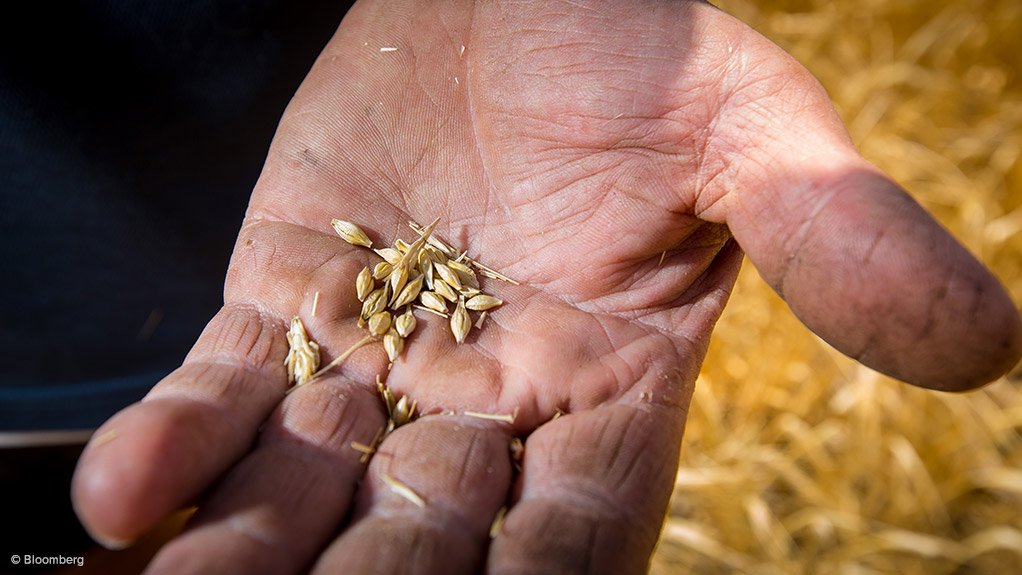
 Grain legumes, also known as pulses, are an important source of calories and income for rural households and small farmers globally. Beans, especially dry beans, are the most traded and consumed grain legume crop in southern Africa. They are the primary staple and the second-most significant source of dietary protein for people in the region. They’re also sensitive to water stress and high temperatures.
Agricultural researcher Moses Chitete was part of a team of researchers who reviewed 62 studies on legumes in the Southern African Development Community. They found that extreme climate shocks have cut legume harvests by up to 78% in the past and could do so again. We spoke to him about the risks and what governments must do to protect farmers.
How do climate shocks affect farmers and food supplies?
Climate shocks include droughts, floods, extreme heat and unpredictable rainfall. These affect legume crops across southern Africa. My research aimed to find out how farmers and food supplies can become better protected from climate disasters or shocks. I found that climate shocks can cut legume harvests by up to 78%.
Losing this much of the legume harvest because of climate disasters is a serious threat to the livelihoods of smallholder farmers in southern Africa. Drought, extreme heat or erratic rainfall reduces agricultural production, leaving households with less food and less produce to sell. This can also increase food prices and reduce the availability of affordable sources of protein.
Repeated climate shocks can deepen poverty. They can also make it harder for farming families who are already not very well off to recover before the next season.
How could the super El Niño make the situation worse?
A “super” El Niño is an informal term used by scientists and meteorologists to describe a rare, exceptionally strong El Niño event. The World Meteorological Organisation says this year’s Super El Niño is expected to last from September 2026 into early 2027.
Legumes are particularly sensitive to water stress and high temperatures during critical stages such as flowering, pod formation and grain filling. The super El Niño could bring on another severe drought accompanied by high temperatures. In this case, legume farmers could face substantial production losses.
Farmers should not wait until drought conditions become severe to find ways of recovering. They can prepare by planting early-maturing and drought-tolerant legume varieties. Coming up with ways to conserve soil moisture, and diversifying the crops they plant so that not all fail, are other ways to prepare for the super El Niño. Farmers should harvest and store water, and follow seasonal climate advice to adjust planting dates and when they use other agricultural inputs.
Governments and agricultural institutions need to strengthen early-warning systems and communicate forecasts in ways that farmers can use. This could be delivering information through extension workers, radio stations, community platforms, cooperatives, agro-dealers, and other channels easily accessible to farmers.
Farmers must get timely access to drought-tolerant crop varieties, appropriate planting advice and information on when and where to plant.
Legumes are ‘climate smart’, so why wouldn’t they survive?
Legumes are said to be climate smart because some, especially cowpeas and pigeon peas, tolerate dry conditions slightly more than many cereal crops.
But simply labelling legumes climate-smart does not necessarily mean they can survive an El Niño. As with any other crop, farmers need access to newer technologies if they are to survive climate disasters. This can include getting affordable access to improved and drought-tolerant seed, irrigation and water-harvesting technologies, extension services and reliable weather information.
Farmers also need access to credit and crop insurance so that one failed season does not push them into long-term poverty. Better storage and functioning markets are equally important because farmers need to protect the value of what they produce.
Most importantly, these interventions need to be locally appropriate. The climate risks facing a farmer in a dry area of southern Malawi, for example, may differ considerably from those facing a farmer in a higher-rainfall area.
What don’t we know about how climate change will affect legumes – and where are the biggest research gaps?
We still do not have enough evidence about how all the different legume species and varieties will perform when drought, heat and changing rainfall patterns combine to cause a climate shock. Much of the existing research also focuses on how one disaster affects legumes and not how legumes cope with several disasters at once.
There are also important geographical gaps. Evidence from one location cannot simply be applied to another because soils, rainfall patterns, farming systems, access to irrigation, markets and farmer resources differ. We need more long-term, location-specific research that compares crops, varieties and management practices under real farming conditions.
We also need to understand the economic side of adaptation: which technologies farmers can actually afford, which interventions provide the greatest returns and which policies help the poorest farmers adopt them.
What are the top three things governments should do now to protect the legume farmers?
My review found that agricultural and climate policies are not doing enough to tackle the problems of damaged soil, water shortages, limited irrigation, changing pest outbreaks, poor access to quality seed and unpredictable markets.
First, governments must invest in climate-resilient production systems. This means supporting the development and distribution of types of legumes that are tolerant to drought and heat. It also means improving water management and strengthening agricultural extension services.
Second, climate information and early action must be prioritised by governments. Farmers need timely, reliable and locally relevant weather forecasts, together with practical advice on planting dates, varieties and farm management. Early warnings are most useful when they are linked to early support.
Third, reduce the financial risk faced by farmers. Governments should improve access to affordable credit, crop insurance, input support and reliable markets. Climate adaptation cannot succeed if farmers have technologies available but cannot afford to use them. Climate finance should fund farmers to beat the risks that farmers and agriculture academics are already expecting. Funds for drought resilient seed, weather information services, insurance and water management are needed.
Development finance should finance longer-term investments in irrigation, seed systems, storage, extension and market infrastructure that strengthen farmers’ resilience beyond the El Niño season.
Protecting legume farmers from climate change requires moving beyond the idea that farmers should simply adapt on their own. Governments, researchers, extension systems, financial institutions and markets all have a role in making adaptation possible.
Written by Moses Chitete, Agricultural Economist and Research Fellow at the Centre for Agricultural Research and Development, Lilongwe University of Agriculture and Natural Resources
This article is republished from The Conversation under a Creative Commons license. Read the original article.


