






JOHANNESBURG (miningweekly.com) – The Zandkopsdrift rare earths project in South Africa’s endowed Northern Cape was highlighted on day two of the Junior Indaba, which also learnt of the rapid forward momentum of West Wits Mining’s gold-bar producing Qala Shallows mine on the doorstep of Johannesburg, as well as the advance of Pensana's rare earths project in Angola.
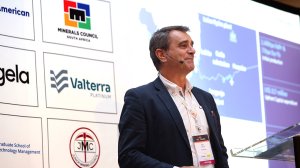
Frontier Rare Earths CEO and co-founder James Kenny declared the company’s Zandkopsdrift to be the lowest-cost producer of magnet rare earths and battery-grade manganese sulphate globally. (Also watch attached Creamer Media video.)
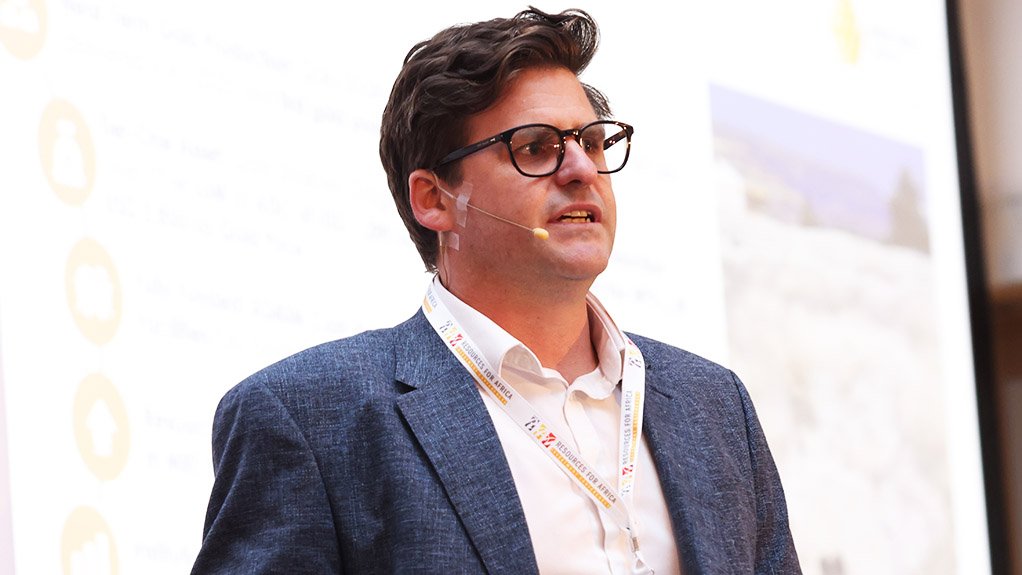
West Wits CFO Simon Whyte, one of only two non-South African employees of this Australia-listed gold mine, the other being its chairperson Michael Quinert, reported having 55 people in the owners’ team compared with ten last year and 450 people on site in Roodepoort.
“It still surprises people that we’ve got a seven-million-ounce project from surface here in the Witwatersrand basin,” said Whyte.
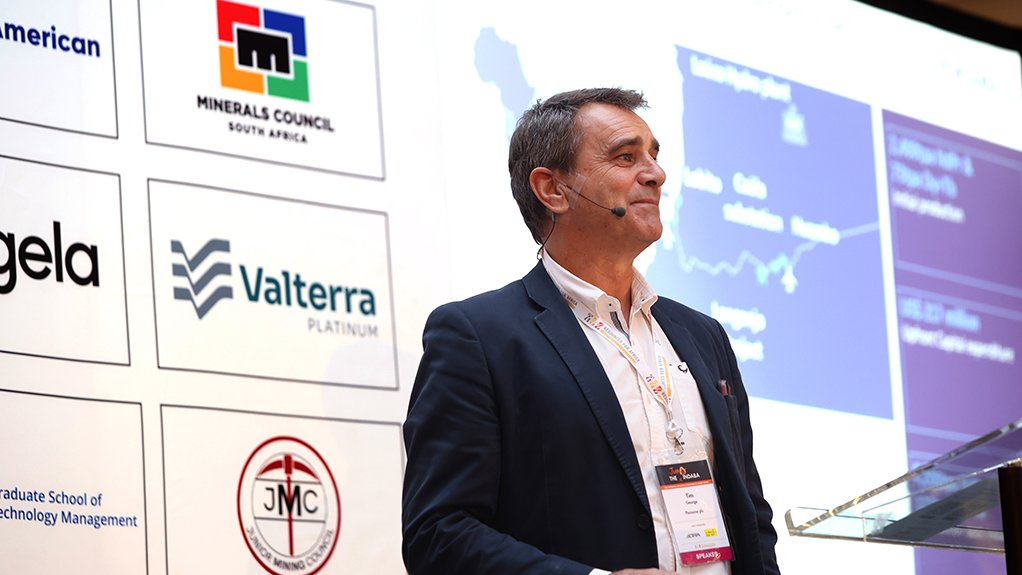
Pensana CEO Tim George outlined the beneficiation steps being taken in Angola, involving flotation followed by a hydrometallurgical process to end up with a mixed rare earth carbonate – “white powder with all of the rare earths still mixed up in it”. Part of Pensana’s journey is to develop the separation technology suitable for this particular deposit.
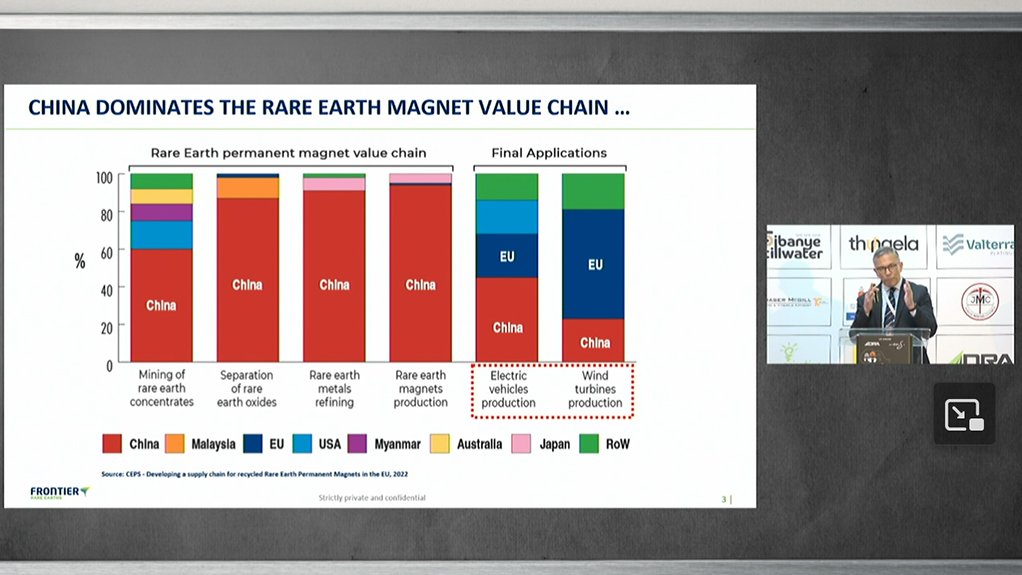
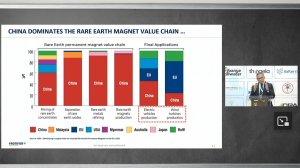
In answer to what rare earths were and why they were rare, Frontier’s Kenny displayed a slide showing China’s dominance of rare earths and battery-grade high-purity manganese sulphate monohydrate (HPMSM) being at the 85% to 90% level.
He pointed out rare earths at oxide level as a sub-$20-billion market and the overall industry that relies on rare earths for end-use applications at a colossal $4-trillion to $5-trillion.
“That tells you what their critical importance is, and they've become the most weaponised critical raw material globally,” Kenny remarked at the event chaired by mining luminary Bernard Swanepoel and covered by Mining Weekly.
Kenny predicted the strong growth of rare earth magnets between now and 2040, but under supply, “and there's going to be an enormous squeeze in terms of pricing”.
Luxembourg-based Frontier Rare Earths has signed a technology supply agreement with rare earths separation specialist company Carester to work with Frontier on developing South Africa’s Zandkopsdrift rare earths and manganese project.
Additionally, South Africa’s State-owned Industrial Development Corporation (IDC) has provided an investment of $20-million to finance a definitive feasibility study (DFS) on the project.
Carester owns proprietary rare earth solvent extraction technology that will enable the production of high-purity neodymium/praseodymium (NdPr) oxide, as well as mixed heavy rare earth carbonate (MHREC) at Zandkopsdrift.
The agreement between the companies includes a seven-year offtake arrangement for MHREC, which will be processed at Carester’s Lacq facility, in France.
IDC industry planning and project development executive Rian Coetzee has described the IDC’s investment in Frontier as reflecting the organisation’s mandate to support projects that advance Southern Africa’s industrialisation and critical minerals strategy.
The investment has afforded Frontier the option for the IDC to offtake up to 10% of production at prevailing market prices, subject to being used in further downstream processing in South Africa.
Zandkopsdrift is described as having strong fundamentals and the potential to support downstream beneficiation, job creation and long-term economic value.
The project’s DFS is scheduled to be completed in the first half of 2027 following an updated prefeasibility on the project being completed last year.
First production is envisaged from 2030 along with a 25-year mine life. The study earmarks production of 3 038 t/y of NdPr oxide, 114 t/y of dysprosium oxide and 25 t/y of terbium oxide.
Zandkopsdrift has proven and probable reserves to support a 45-year mine life.
The project currently has an after-tax net present value estimation of $2-billion, an internal rate of return of 34% (ungeared) and 50% (geared) and an estimated yearly revenue potential of $727-million.
The manganese sector of the flowsheet will be modified to produce battery-grade HPMSM and battery-grade manganese tetroxide.
The project is currently fully permitted with a mining right and environmental authorisation in place and TSX-listed Frontier has completed infrastructure planning to support a smooth transition from the DFS stage into mine development.
In response to Mining Weekly’s question on the likelihood of West Wits listing on the Johannesburg Stock Exchange (JSE), Whyte said at the moment, the Qala Shallows project was fully funded, “but we do have growth ambitions like Project 200 that would require additional capital to put in the further infrastructure, so I think when the timing's right, we'd certainly look at a JSE listing with the right partner here to support us and further Africanise the company”.
The London-listed Pensana is in the central part of Angola en route to the Lobito Corridor, a 1 300 km rail and logistics network connecting the Central African Copper Belt to the Atlantic Ocean via the Port of Lobito in Angola.
“The important thing there,” said George, "is the underlying infrastructure, the rail, the hydroelectric power, and the port are already in place, so we're effectively building a $250-million mine that's already plugged into existing infrastructure.
“If you compare that against many of the other railroad projects in terms of capital intensity, it's an order of magnitude lower than many of the others currently under final investment decision, and it's backed up by a deposit that we've got measured and indicated for about 30% of the potential inferred at this point in time.
“So, 20 years is what we worked out would get us financed, with a long future ahead of it on that side of things, against a backdrop of, for the time being, an emerging pricing differential in West versus East, particularly on the heavy rare earth side of things, with people perhaps focused a little sentimentally at this point in time, but we'll see where that goes, and our fundamentals are underpinned by being competitive with the China price, as it was in the mid $40/kg of neodymium and praseodymium, and that's where we are.
“We’re very junior at this point in time, with a large resource base, low market cap, and good opportunity in terms of an investment profile,” George pointed out.
EMAIL THIS ARTICLE SAVE THIS ARTICLE ARTICLE ENQUIRY FEEDBACK
To subscribe email subscriptions@creamermedia.co.za or click here
To advertise email advertising@creamermedia.co.za or click here


