





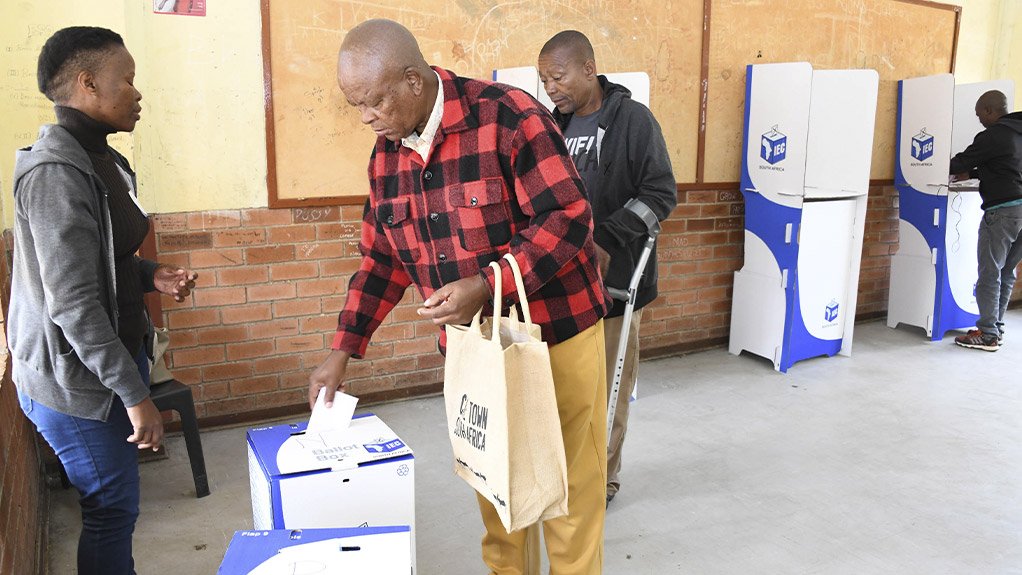
It’s election season in South Africa, and much of the public debate so far has focused on voter numbers, turnouts and predictions of results. How many people are registered? Who’s most likely to win? What could possible coalitions look like?
There’s been less focus on what happens when the polls close on 4 November. Africa Check has seen how quickly this kind of information vacuum can create room for mis- and disinformation to circulate online.
Many of the falsehoods we tackled in the 2024 election centred on who was voting, how votes were tallied and what counted as “evidence” of something going wrong.
Knowing how election processes actually work, and what safeguards are in place, can make these claims easier to assess.
In this explainer, we round up the most important things to know from voting day to the official declaration of the results, based on information from the Independent Electoral Commission (IEC) and the amended Municipal Electoral Act, which governs local elections.
How does vote counting work?
To understand how votes are counted, it helps to know how voting stations will be organised on voting day. Each voting station has presiding officers who supervise the process, officers who manage voting and count ballots, election observers and security personnel.
This graphic from the IEC shows how the process works:

Once voting ends and polls close, counting starts that night, usually at the voting station. The IEC outlines the process here:
- Verifying ballots: Officials check that all ballot boxes allocated to the voting station are present and still sealed. Only then are the boxes opened and emptied.
- Unfolding and checking ballots: Each ballot paper is unfolded and checked for the official IEC security stamp to ensure it is genuine. Ballots without this stamp are not counted.
- Sorting ballots: Ballot papers are sorted by colour, which represents the type of election (district, local or metro, and ward). They are then sorted into piles for each party and ward candidate. Ballots are rejected if they show a vote for more than one party or candidate, or if they identify the voter, as voting must be anonymous.
- Counting and bundling: Ballots are counted for each candidate or party and grouped into bundles of 100.
- Reconciling: Officials compare the votes counted for parties and candidates with the number of ballots received at the station, and the total number of ballots cast, to ensure the totals match and all votes have been counted.
- Signing results slips: Once all votes are counted, the counting officer and all candidates or party agents who observed the count sign a results slip to confirm they are satisfied with the process. A copy is posted on the voting station’s door.
- Results capture: An identical copy is transported to the central electoral office, where it is scanned and the results are captured on the system. External auditors then check the results through a double verification process, including using a barcode to match the results to the correct district. This happens before results are made available to the public, media and parties.
How do we know the voting and counting process is fair and accurate?
Every step, from before voters enter the station to when they leave with an ink-stamped finger, is designed to prevent fraud, ensure only registered and eligible voters can vote, and let everyone vote privately for the party and candidate of their choice.
Before voting begins, all agents present (party representatives who observe the process) are shown that each ballot box is empty. The boxes are then immediately sealed and kept in sight until counting begins.
How are final results announced and declared?
Overall results must typically be announced within seven days of voting. If there is good reason for a delay, the commission can ask the Electoral Court to extend the deadline.
Once all vote counts for a municipality or ward are received, the commission determines the result, records it on the prescribed form and declares it publicly.
Results are usually declared live at the results operations centre. You can also follow results as they come in on the IEC’s elections dashboard. The portal for previous elections is here.
Results announced by parties, news outlets or other sources are not official, and should not be relied on. Only the commission can declare official election results.
False claims about ballots and counts
Across more than a decade of election reporting, Africa Check has debunked many false claims about voting and vote counting. Most centre around a few key themes.
In the 2024 election, social media claims questioned the IEC’s integrity, alleging that officials were bribed to rig results or that results on its digital dashboard had secretly been changed.
Other false claims stem from confusion about how voting and counting work. Examples include claims that your vote automatically goes to the ruling party if you don’t vote, or that voting stations use disappearing ink.
With heightened anti-migrant sentiment, you may also see false posts claiming that people from other countries are voting illegally in South Africa.
Other false claims use images as “evidence” that ballots or ballot boxes have been tampered with or misused. In 2021, images circulated with claims that they showed boxes prefilled with votes for the ruling party.
In the 2024 election, videos and images were shared with claims that they showed “hidden, uncounted” boxes of ballots, ballots being destroyed, or “ballot box stuffing” during special voting. These claims fuelled distrust in the election process, although the footage showed routine, proper processes that were taken out of context.
All of this false information exploits gaps in the public’s understanding of how voting actually works, and the mechanisms in place to keep elections fair.
The best way to protect yourself and your community against these falsehoods is to know what legitimate voting and counting processes look like. And if something doesn’t seem right, don’t share it – send it to us to check first.
This report was written by Africa Check., a non-partisan fact-checking organisation. View the original piece on their website.


