





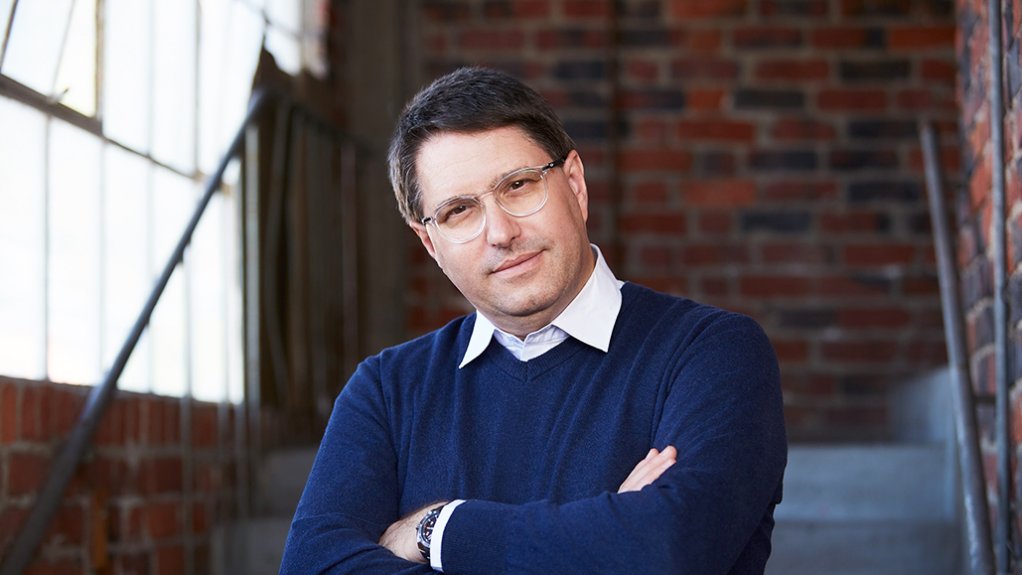

South Africa remains committed to the Paris Agreement and multilateral climate change responses and will seek to contribute to advancing the global climate agenda from commitments toward implementation during the UN Framework Convention on Climate Change’s (UNFCCC's) thirty-first Conference of the Parties (COP31), to be held in Antalya, in Türkiye, in November.
The second Global Stocktake that would be launched during COP31 provided an opportunity to assess collective progress towards achieving the goals of the Paris Agreement, Forestry, Fisheries and the Environment Minister David Maynier noted on October 16.
South Africa's position was that this assessment must not only focus on reducing emissions, but must also assess the delivery of climate finance, technology transfer and development, and capacity building to meet the needs of developing countries.
This second Global Stocktake must help to advance development in developing countries, he said.
Further, adaptation remained a priority for South Africa and for Africa. The country aimed to address vulnerabilities and build resilience in sectors prioritised in its second Nationally Determined Contribution (NDC).
South Africa, therefore, supported continued work toward operationalising the Global Goal on Adaptation and the Belém adaptation indicators, Maynier said during a stakeholder engagement conference in preparation for COP31.
“At COP31, we will advocate for the necessary technical work to improve the methodologies for operationalising these indicators, including the establishment of a balanced technical task force, that reflects the diverse circumstances and challenges of different regions.
“For Africa – a continent that contributes less than 4% of global greenhouse-gas (GHG) emissions – the priority is adaptation and building resilience.”
Further, at COP31, South Africa would advocate for the development of the benchmark for the tripling of adaptation finance by 2035, as well as setting up a process for monitoring the achievement of this target.
The New Collective Quantified Goal on Climate Finance called for efforts to at least triple annual outflows from the operating entities of the Financial Mechanism from 2022 levels by 2030. This ambition must be matched by an adequate climate finance resource base.
South Africa would advocate for ambitious and predictable replenishments of the Green Climate Fund and the Global Environment Facility, as well as for more contributions to the Adaptation Fund.
COP31 must identify ways to address the gaps that remained to enable the implementation of global commitments, particularly related to loss and damage funds, the Minister said.
Further, the country would also submit its second Biennial Transparency Report (BTR) in December, which would outline progress made in the implementation of South Africa’s 2025 and 2030 NDC targets for the period from 2023 to 2024.
South Africa was on track to meet its targets, as reported in its first BTR, Maynier added.
The Enhanced Transparency Framework, which the BTRs fell under, remained the backbone of the Paris Agreement and provided key inputs into the Global Stocktake, he explained.
However, developing countries required predictable and sufficient support to build sustainable institutional capacity and reporting systems, he emphasised.
“South Africa and other developing countries have taken comprehensive steps to decarbonise their economies and will continue to do so, but our ability to implement and comply with these measures requires additional financial and capacity support.”
COP31 should also provide clear political direction to the Climate Finance Work Programme and ensure it delivered practical outcomes on the implementation of assistance for developing countries, Maynier said.
Further, South Africa’s position at COP31 aligned with that of other African countries, said Department of Forestry, Fisheries and the Environment climate change and air quality deputy director-general and South Africa’s chief climate negotiator at COP31 Maesela Kekana.
South Africa’s and many African countries’ positions naturally aligned, particularly around mitigation, adaptation, finances, technology and support for capacity building, he said.
“We are informed by our national interests, specifically reducing poverty, unemployment and inequality, but the key principles South Africa advocates for in climate negotiations include equity, and common but differentiated responsibility and respective capabilities of countries.”
A priority for the country was to advance the global goal on adaptation set out in COP30, which was held in Belém, Brazil, in 2025, and this priority aligned with the country’s position during the COP31 negotiations.
Adaptation was important for South Africa and Africa, but uncertainty remained following stalled negotiations.
In terms of mitigation, reports indicated that the world was on track for global average warming of 2.8 °C above preindustrial levels. Indicators were key for determining how the world was building resilience.
However, in the June meeting in preparation for COP31, there was no agreement on the issue of indicators, said Kekana.
Further, the outcomes of the second Global Stocktake must inform the next set of countries’ NDCs. The stocktake and BTRs of countries must provide details on the progress of implementing NDCs, he said.
As South Africa prepared for Antalya, its goal was to move global climate response from commitment to implementation, said Presidential Climate Commission (PCC) deputy chairperson Dipak Patel.
Ten years after the Paris Agreement, countries should test whether targets and plans were translating to how economies were developing, people’s lives were improving and whether appropriate investment flows supported this.
The key issues at COP31 included the global goal on adaptation, mitigation and climate funds, response measures and the implementation of NDCs.
“The June session provided an early reading on where we are heading. The parties are operationalising mechanisms around climate finance and capacity building, but the global goal on adaptation, and mitigation and response measures remain to be resolved,” he said.
Meanwhile, public policy think tank the South African Institute of International Affairs youth representative Siviwe Mboyana said South Africa’s youth were concerned that progress on climate commitments and policy formulation were not being matched by the implementation of financing commitments and accountability.
“We are calling for a tripling of adaptation funding to $1.3-trillion a year by 2035. However, any climate funding must not deepen the debt burdens of vulnerable countries,” she said.
Additionally, labour union Congress of South African Trade Unions climate change and just transition policy unit co-lead and PCC commissioner Boitumelo Molete said the key message from workers was that the focus for COP31 must be on translating international commitments into implementation.
“The implementation of the Paris Agreement must create decent jobs, protect workers and build economies that are low-carbon and resilient. This requires finances, capacity building, technology transfers and negotiated protection for workers impacted by the transition to low-carbon economies,” she said.
“We want to see a just transition work programme in the UNFCCC. We are working to ensure South Africa pushes for mechanisms to ensure that workers are catered for as part of this programme. We want full implementation of NDCs; not only in terms of targets but moving from discussion to formal implementation of contributions,” said Molete.
Access to finance was at the core of the shift to implementation, said industry organisation National Business Initiative climate and energy programme manager Bhavna Deonarain.
In terms of finance and access to climate finance, business wanted to see South Africa convert its finance ambitions into a pipeline of investable projects to attract climate finance.
Further, business wanted to see financiers help with the derisking of projects and faster deployment of concessional finance. Blended finance would be needed and must be scaled up, project preparation must be supported and climate finance must reach municipalities and small enterprises, she said.
Business also considered renewable energy not only a means to reduce GHG emissions, but as a core determinant of energy security for industry and development of renewable-energy generation needed to be fast-tracked.
“The climate plans and targets are in place. We want to see implementation of these and the updating of countries’ plans must reflect the latest science,” said Deonarain.
She also called for businesses to be supported to verify and reduce their emissions, so that new carbon trade and disclosure regulations served as incentives for industry to upgrade, rather than acting as barriers to trade.
“The just transition must be visible in people’s lives. It will only be credible if the whole of society and the whole of the economy is taken into consideration and if the benefits of the transition are distributed across sectors,” Deonarain said.
Climate action was not only an environmental issue, but an economic and industrial development and competitiveness issue, said business organisation Business Unity South Africa energy and environment head Rosalind Dos Santos.
South Africa’s position should focus on two priorities, namely strengthening adaptation and resilience, and developing credible implementation and mitigation pathways.
Climate action was now influencing global investment decisions, trade relations and industrial competitiveness. Investors asked for companies to be more active in climate actions to access capital, and to transition industries to be more resilient, she said.
Future competitiveness depended particularly on low-carbon economies, with companies investing in renewable energy, energy efficiency, cleaner production and emerging low-carbon technologies.
Importantly, decarbonisation and economic growth were not competing objectives and, if mutually dealt with, could deliver more economic growth and resilience.
South Africa’s pathway to zero GHG emissions should be differentiated but pragmatic, and should be aligned with technology-readiness and sectoral circumstances, particularly in hard-to-abate sectors, she said.
EMAIL THIS ARTICLE SAVE THIS ARTICLE ARTICLE ENQUIRY FEEDBACK
To subscribe email subscriptions@creamermedia.co.za or click here
To advertise email advertising@creamermedia.co.za or click here


