





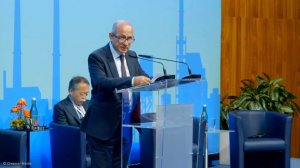
JOHANNESBURG (miningweekly.com) – South Africa spelled out a detailed green hydrogen pursuit roadmap at the United Nations Industry Development Organisation (UNIDO) conference attended by 70 countries in Vienna on Wednesday, April 8, when South Africa’s Industrial Development Corporation Just Energy Transition Investment Plan (JET-IP) programme director: green hydrogen Rebecca Maserumule outlined the steps South Africa is taking to initiate first-mover green hydrogen project development.
From a critical metals perspective, South Africa is the host of the overwhelmingly largest global volumes of platinum group metals, which can serve as catalysts in electrolysers that separate water into hydrogen and oxygen and then play a second catalytic role by converting the hydrogen back into electricity that provides emission-free mobility for buses, trucks, trains, cars, ships and planes as well as stationary electricity for communities, green steel, green cement, data centres, and you name it. (Also watch attached Creamer Media video.)
Hydrogen anchors the global future energy mix, was Maserumule's final statement after reporting that the initiatives that are under way to assist first movers include a 120-question final investment decision checklist as well as the partnering of first movers to international conferences.
“Next month, we'll be in Rotterdam, and the delegation will be led by our Minister of Electricity and Energy,” Maserumule reported.
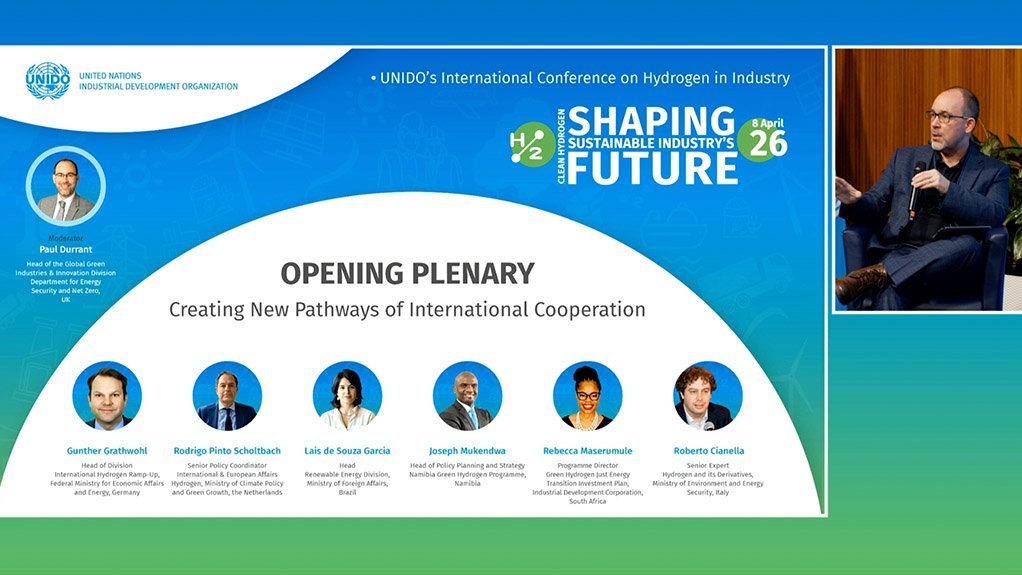
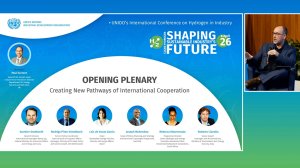
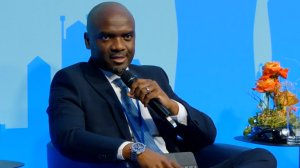
The panel discussion, covered by Mining Weekly, was moderated by UK global green industries head Paul Durrant and participating were Germany's international green hydrogen ramp-up head Gunther Grathwohl, Netherlands' international and European hydrogen senior policy coordinator Rodrigo Scholtbach, Italy’s energy markets director-general Alessandro Noce, and Brazil's renewable-energy division head Lais de Souza Garcia, who expressed strong optimism about the future of hydrogen in the South American country.
“We’re living in uncertain times now, so it's not quite clear how much hydrogen we’ll need, but what is clear is that we’ll need hydrogen,” Grathwohl emphasised, adding that it was also clear that Germany was unable to produce the hydrogen it needed domestically, a situation which was quite the opposite in Southern Africa.
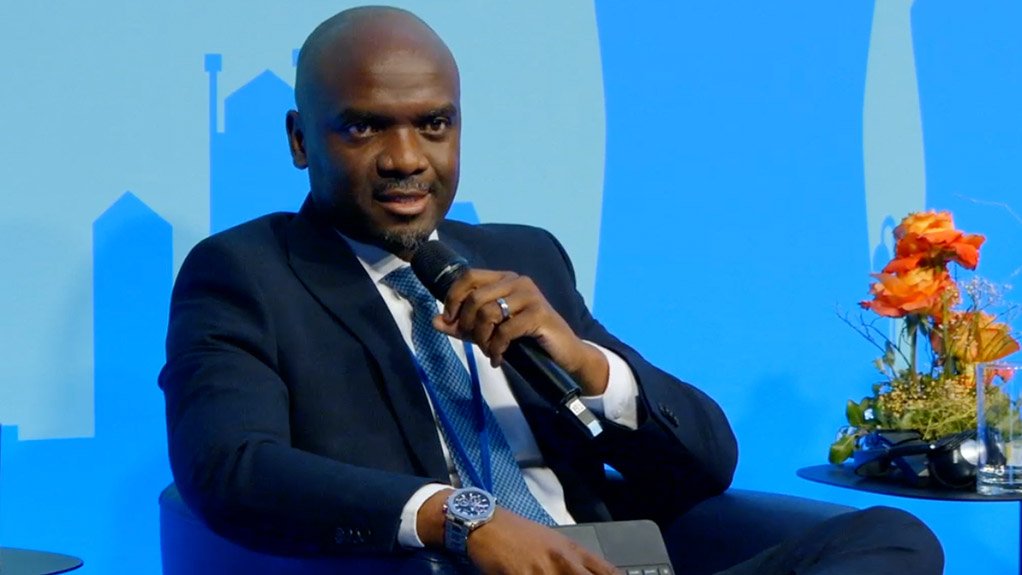
“We have amazing renewable resources in wind and solar to produce the hydrogen molecules and be a partner to the rest of the world,” Namibia Green Hydrogen Programme policy planning head Joseph Mukendwa pointed out during the opening panel discussion.
This was outlined shortly after the conference heard that two-thirds of the volumes of hydrogen needed in Austria would have to be imported, about which Scholtbach said ditto in the case of the Netherlands and Germany.
"We have in Europe one of the main demand centres worldwide and if you look a bit further, Japan, South Korea will also be depending on imported volumes," added Scholtbach, which presented major supply opportunity for the Global South.
“We’re open to importing hydrogen,” said Noce, while adding that hydrogen was not only a decarboniser but a driver of inclusive growth, to which Durrant, who moderated the discussion, responded that he loved the fact hydrogen brought economic development and growth, with its cleanness.
“Africa clearly has vast potential for clean hydrogen production but many of the projects that we've seen mooted in Africa have yet to reach final investment decision. There is clearly a risk that if producing countries and their institutions are consistently required to underwrite the earliest and riskiest stage of development, without the strength of those offtake agreements and other things in place, those countries are essentially derisking projects for others at their own cost.
“From a South African perspective, what would genuine burden-sharing actually need to look like within partnerships to avoid a generation of green hydrogen projects not making it over the line?” Durrant asked.
In her response, Maserumule explained that when it comes to green hydrogen, South Africa is at the same inflection point today that it was at with renewable energy in 2009.
“We've done it with renewables successfully. We moved from strategy and policy to execution very well and I think today we're standing here in 2026 because we had a great run of moving to renewables and getting projects on the ground, and this is what makes the next stage of just adding an electrolyser, moving the molecules, either for domestic or export, really enabling for South Africa. This is why I know, without any doubt in my mind, we can do it,” Maserumule enthused.
“Now, moving on to the partnerships and what the sharing is, it's in place because of the JET-IP, which really outlines the Just Energy Transition Partnership (JETP) between South Africa and a number of partners.
“I see the Dutch government here, I see UK here. I see Germany here, and other partners are coming in. There was a commitment of R1.7-trillion made to South Africa through the JETP.
“Now, the reality is all of that funding has not come through. Of course, the majority was for renewable power and a portion was earmarked for green hydrogen as one of the six portfolios.
“We have seen some funding. So again, thank you to the Dutch government, to the German government; and most of that money has been grant money to derisk early stage projects and we have seen progress.
“But also, what's important is that we need to support what I call the first movers, with actual funding to make things happen . . . then I would go a step further and say that even as producers are producing ammonia, hydrogen and so forth, we will actually need a reduction in our operational cost.
“It's good to bring in funding for grants for your capex, but if we can find some way to reduce the opex cost, you get those projects to go over that green premium that we're seeing between grey hydrogen and green hydrogen.
"Also, I think technical assistance is actually very important, and I'll just give an example. We have a programme for what we call first movers in South Africa. It’s six steps that we're taking.
“The very first step is identifying who the first movers are, based on an online platform to qualify projects with 120 questions. Seems like a lot, but in 60 minutes, you can fill in this questionnaire online, and we can understand how far you're away from final investment decision. And then partnering with those first movers to take them to international conferences; so next month, we'll be in Rotterdam, and the delegation will be led by our Minister of Electricity and Energy,” Maserumule reported.
In that way, South Africa will be assisting those first movers by allowing them to have discussions with offtakers and even discussions on their environmental-impact assessments, ensuring that they understand.
“And last, not least, how to structure projects. You may need $400-million or $1.5-billion but how you structure that project actually has huge implications for how much financing you will need.
“Having vertical integration between your offtakers and your upstream producers, we've seen projects in Netherlands where the offtaker has equity in the upstream renewable-energy assets.
“Technical assistance, from countries that have been successful in that, to South African project developers would actually go a long way.
"So, it's not always about money. I think that's number one, but also very dedicated technical assistance to those first movers, who I believe are very courageous to take the step forward,” Maserumule added.
Clean hydrogen offers a pathway to decarbonise industry, strengthen energy security, and provide new economic opportunities, which was heavily underscored at the conference, seeking to scale hydrogen technologies, unlock finance and partner globally.
Clean hydrogen presents a transformative opportunity for energy-intensive industries worldwide, especially in regions with abundant renewable-energy resources.
SASOL TRAINING
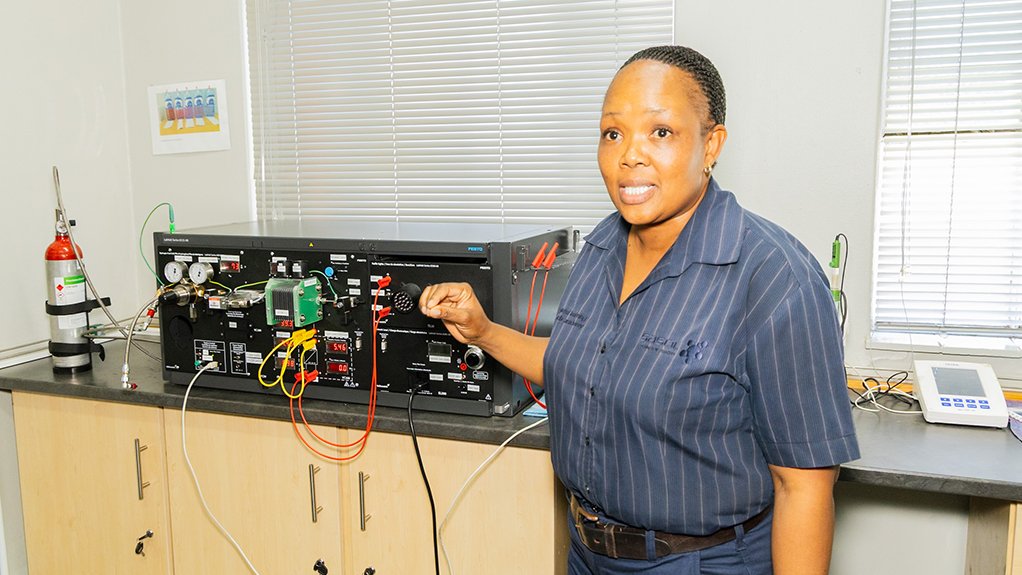
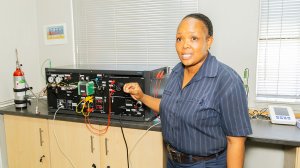
Meanwhile, a decisive step toward building the skills pipeline required for the green hydrogen economy has been the successful implementation of an industry-integrated Green Hydrogen Fuel Cell Training System at Sasol’s operations in Sasolburg, in South Africa's Free State. Sasol has been producing grey hydrogen since 1950.
The initiative, led by the Chemical Industries Education and Training Authority (CHIETA) in partnership with Sasol, marks a significant milestone in advancing the country’s green hydrogen capabilities.
The project follows a multi-year commitment between the two organisations. In April 2024, CHIETA and Sasol initiated collaboration on the development of the training system. This was followed by CHIETA’s approval of R1.8-million in funding in 2025 to enable its implementation.
Developed in collaboration with global fuel cell education specialists Heliocentris, the system provides a realistic, hands-on platform designed to equip learners with practical competencies in hydrogen fuel cell technology.
At its core is a working 50 W hydrogen fuel cell system, allowing learners to engage directly with the technology and understand key system functions through applied experimentation. The programme is further strengthened by complementary training in solar PV and hydrogen system fundamentals, positioning it within the broader renewable-energy and electrical trades ecosystem.
The training system is specifically designed to bridge the gap between theory and industrial application, build foundational skills for emerging roles in the hydrogen economy, and ensure safe, scalable training aligned with industry standards.
“This is what execution at speed looks like,” said CHIETA CEO Yershen Pillay. “We didn’t just talk about green hydrogen. We funded it, built it, and delivered it. Because in the green hydrogen economy, no skills means no transition.”
Sasol, which is positioning itself as a fast follower in the global hydrogen economy, underscored the importance of aligning skills development with evolving market demands. The initiative also addresses key industry constraints, including stringent safety requirements and the integration of hydrogen technologies into existing disciplines such as electrical engineering.
The project highlights the critical role of public–private partnerships in accelerating South Africa’s readiness for the energy transition.
As global investment in green hydrogen continues to gain momentum, initiatives such as this position South Africa not only as a participant in the emerging market, but as a producer of the skills required to sustain and grow it.
In China, South Africa's Northam Platinum has noted that Sasol-type grey hydrogen is powering thousands of trucks ahead of China's five-year plan to transition to green hydrogen and many believe South Africa's huge taxi fleet should do the same.
EMAIL THIS ARTICLE SAVE THIS ARTICLE ARTICLE ENQUIRY FEEDBACK
To subscribe email subscriptions@creamermedia.co.za or click here
To advertise email advertising@creamermedia.co.za or click here


