






South Africa is poised to delay the retirement of about a fifth of its coal-fired electricity-generation capacity as gas projects earmarked to replace them remain behind schedule, contrasting a decline in use of the dirtiest fossil fuel in other developing nations.
Africa’s largest economy, which relies on coal to generate about 80% of its electricity, had planned to shut 8 GW of coal-fired capacity by 2030 according to its Integrated Resource Plan 2025, but the new capacity planned to take its place — 6 GW of gas-powered generation — is behind schedule and tied up in legal processes.
That leaves few options outside of running the aging plants beyond their intended lifespans, according to government officials and an executive at State-owned Eskom Holdings, with many pointing out further obstacles to the switch, ranging from equipment availability to the cost of gas.
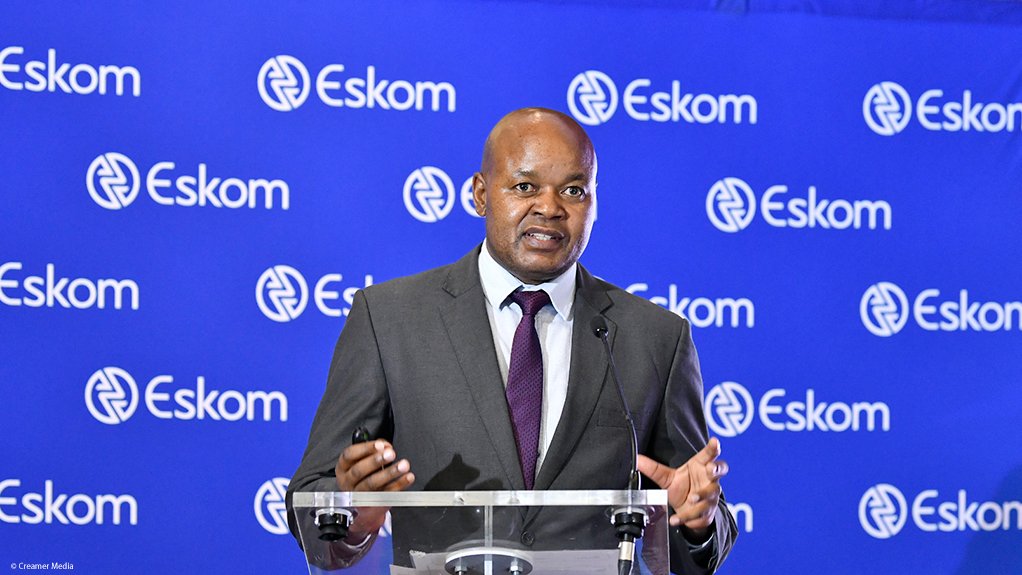
“We are looking at it,” Bheki Nxumalo, the utility’s head of generation, said about running the coal units for longer.
A wait of around five years for gas turbines from suppliers such as Siemens and General Electric means Eskom will already miss the deadline, he said on the sidelines of a Cape Town conference.
“Unless the order is in, the backlog is just too high,” Nxumalo said.
Eskom’s current plans are to shut about 7.4 GW of coal net capacity by 2030.
“It must be noted that this plan hinges on all projects as envisaged in the IRP25 materializing on time,” the utility said in an emailed response to questions.
As a result, the shrinking timeline to build a station fired by gas — a fuel South Africa does not produce domestically and must import — is driving Eskom toward a second life extension of coal plants in as many years. The utility approved a plan in 2024 to keep some stations open to ensure supply just as it was bringing to an end blackout that plagued the economy.
Elsewhere, the use of coal in power generation is falling away. It dropped last year in China for the first time in more than a decade, along with India, according to the International Energy Agency. The Iran war has since caused a surge in the use and price of coal due to the cut-off of gas shipments through the Strait of Hormuz.
South Africa’s transition from coal to cleaner sources of energy has been years in the making, drawing billions of dollars of foreign funding toward the effort. The switch has proven more complex and fraught than anticipated and has raised anxiety in communities around coal mines.
Residents living near the plants already face a higher number of deaths from air pollution, a study last year by the South African Medical Research Council showed. Fatalities are caused by a range of pollutants including particulate matter as well as sulphur dioxide and nitrogen dioxide.
South Africa has measures in place to support the prolonged use of coal. At the opening of an expansion at Exxaro Resources’ Matla mine this month, Mineral Resources Minister Gwede Mantashe called for continued investment in projects such as the Leandra carbon-capture research site in Mpumalanga province.
“Our critical-minerals strategy recognizes coal as a strategic resource because it continues to create employment for thousands of people and sustains the livelihoods of millions of South Africans,” he said at the mine.
The Matla mine feeds a corresponding Eskom power station, and the utility recently signed a contract for coal supply until 2043, almost a decade beyond the most recent planned decommissioning date for the plant, which began generating electricity in 1979. Eskom declined to confirm the planned retirement year, only noting that the fuel “can also be used in any other power station.”
The IRP anticipates 6,000 megawatts of gas online to balance the energy mix in the near term, split evenly between an Eskom project realized in 2029 and independent producers connecting the following year.
The utility is still at the start of its Richards Bay gas project. It lost a case last year brought by environmental groups over its environmental authorization process and was ordered by the court to redo it. “The intention is to still continue with gas-to-power project,” Eskom said.
A government program to procure 3 000 MW of gas power from independent producers has experienced multiple delays. The latest timeline indicated by the IPP office that oversees the process would announce bidders in August, reach commercial close a year later and begin commercial operation 36 months after that.
South Africa’s dependence on imports in order to secure gas is another risk. While it has an abundant supply of coal, according to Silas Zimu, special adviser to Electricity Minister Kgosientsho Ramokgopa.
“With the wars we can’t shut down our coal power stations that we hoped to replace with gas,” he told a Cape Town conference this month. “As you see gas is more expensive — we must take a responsible decision that we’re going to have to protect our current coal power stations.”
EMAIL THIS ARTICLE SAVE THIS ARTICLE FEEDBACK
To subscribe email subscriptions@creamermedia.co.za or click here
To advertise email advertising@creamermedia.co.za or click here


