





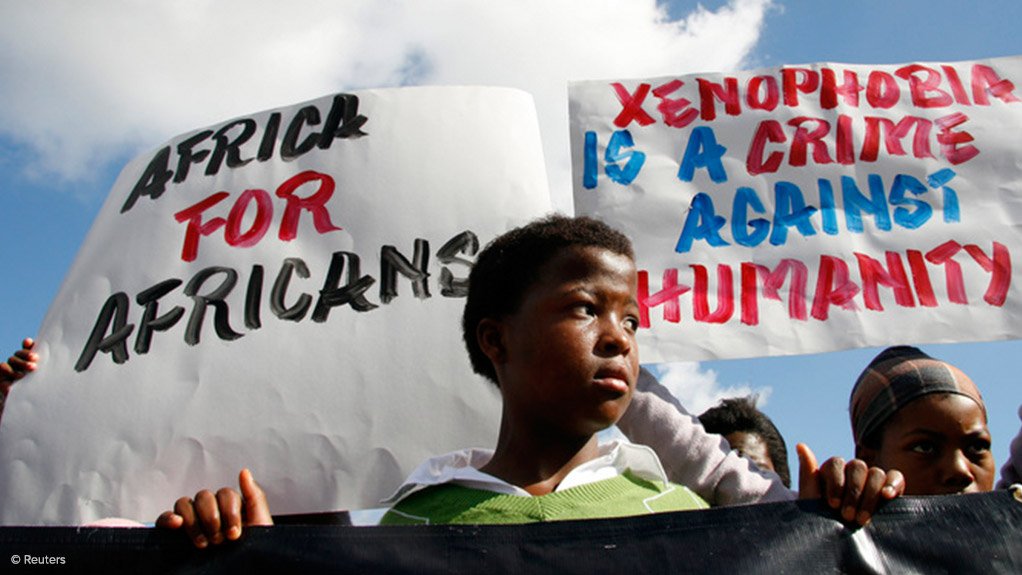
A constitutional democracy founded on dignity, equality and the rule of law must hold firmly to those principles. Violence against foreign nationals is unlawful, morally indefensible and damaging to the country’s social fabric and global standing. There can be no justification for it.
But there is another truth that must be confronted with equal clarity. South Africans are living with real and visible pressures, many of which are intensified by porous borders and weak immigration enforcement. Communities are not imagining overcrowded clinics, strained schools, illegally occupied buildings, informal economies operating outside regulation, or the growing sense that the state is losing control in parts of its own territory. To acknowledge this is not xenophobia. It is a call for governance.
The deeper problem is that South Africa is attempting to manage a continental migration challenge as if it were a purely domestic issue. It is not. For years, people from across the continent have come to South Africa in search of safety, stability and economic opportunity. Many are law-abiding and contribute meaningfully to the economy. They are embedded in the country’s professional class, its small business ecosystem, its universities and its labour force. Their presence reflects both the openness of South African society and the enduring ideal of African solidarity. But alongside this is a harder reality. There is a significant flow of undocumented migration that is not being effectively managed. This has created fertile ground for exploitation, illegal economic activity and, in some instances, organised criminal networks that deepen public anxiety and erode trust.
This dual reality is where South Africa’s narrative has faltered.
The public discourse has become unbalanced. There is strong and necessary condemnation of xenophobic violence, but far less willingness to engage honestly with the scale and impact of illegal migration. That imbalance is now eroding public confidence. When citizens feel that their lived experiences are dismissed, frustration builds. When government messaging appears selective or incomplete, it creates the perception that leadership is either disconnected or unwilling to confront difficult truths. In a country already under economic strain, that perception is combustible.
Yet the responsibility does not lie with South Africa alone.
The African Union, representing 54 member states, cannot afford to remain a passive observer in what is clearly a continental governance challenge. Regional structures such as SADC must also move migration from the margins of policy discussion to the centre of coordinated action. The movement of people across borders is not random. It is driven by structural realities beyond South Africa’s control: economic decline, governance failures, corruption, political instability and limited opportunity in parts of the continent. These conditions are pushing large numbers of people to leave their home countries in search of survival and prosperity. South Africa has become the destination not only because of its relative economic strength, but because of the absence of effective, coordinated responses elsewhere. That silence is no longer sustainable.
Pan-Africanism has long been a defining principle of South Africa’s foreign policy, rooted in solidarity and a shared history of struggle. But solidarity cannot be one-directional. It cannot mean that South Africa absorbs the consequences of regional instability without reciprocal responsibility from the continent.
The African Union and its member states must move beyond rhetoric. They must confront the root causes of migration within their own borders. This requires meaningful investment in economic recovery, stronger governance, decisive action against corruption, and the stabilisation of regions affected by conflict and insecurity. It also requires the development of coordinated, lawful migration frameworks that protect both migrants and host nations.
Regional cooperation is not optional. It is urgent.
SADC, in particular, is uniquely positioned to lead on this issue. It must take responsibility for developing practical frameworks for labour mobility, strengthening border management systems and enhancing cross-border law enforcement. Migration within the region must be structured, documented and aligned with economic realities, not left to informal systems that are vulnerable to abuse. Without this, South Africa will continue to face unregulated inflows that place increasing pressure on already strained resources and institutions.
At the same time, South Africa must confront its own shortcomings.
Border management must be strengthened. Immigration systems must become more efficient and transparent. Employers who exploit undocumented labour must be held accountable. Law enforcement must act consistently and decisively against criminal activity, regardless of who is involved. Most importantly, the country needs a more honest national conversation. It is possible to reject xenophobia while also rejecting lawlessness. It is possible to protect foreign nationals from violence while also enforcing immigration laws. It is possible to uphold human dignity while also acknowledging that no country can sustain uncontrolled migration indefinitely. These are not contradictions. They are the foundations of a functioning state.
South Africa’s reputation is at stake, both at home and abroad.
But reputation is not preserved through denial. It is built through credibility. Credibility requires balance. It requires honesty. And it requires leadership. South Africa must affirm its commitment to human rights and Pan-African solidarity. But it must also state, clearly and without apology, that illegal migration, criminal activity and systemic abuse of its borders will not be tolerated. And it must call, respectfully but firmly, on the rest of the continent to act. This is not a rejection of Africa. It is a call for Africa to share responsibility.
South Africa cannot carry this burden alone. Nor should it be expected to. The task now is not to choose between compassion and control, but to hold both at once. That is the only path to restoring stability, rebuilding trust and protecting the values that define the nation.
Written by Tshepo Matseba, Managing Director of Reputation 1st Group, a South African advisory firm specialising in reputation management, strategic communication and public policy engagement. He is a former President of the Public Relations Institute of Southern Africa and a sought after media analyst on governance, reputation and socio-economic issues.
EMAIL THIS ARTICLE SAVE THIS ARTICLE ARTICLE ENQUIRY FEEDBACK
To subscribe email subscriptions@creamermedia.co.za or click here
To advertise email advertising@creamermedia.co.za or click here


