





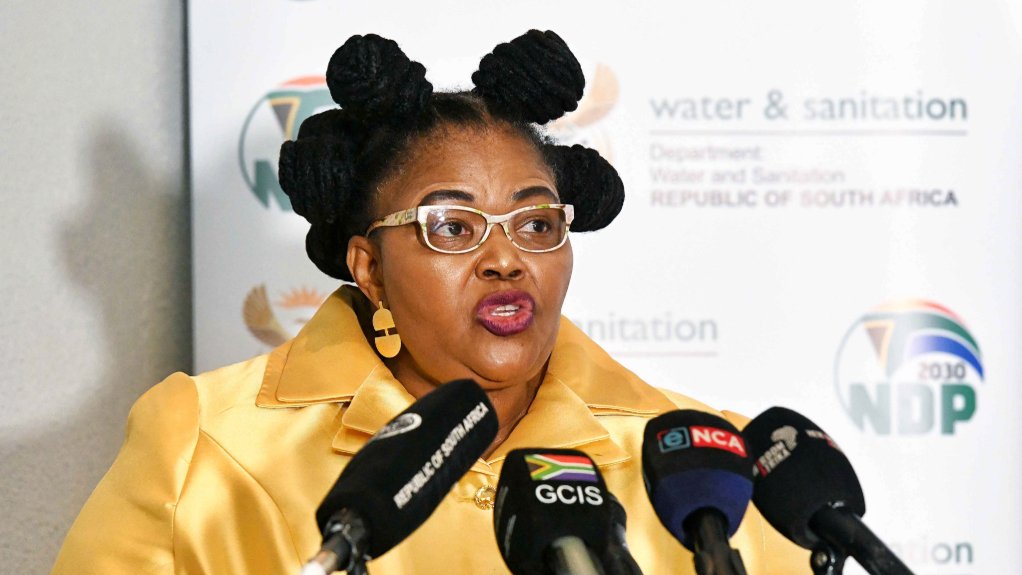
A year after the inaugural 2025 Water and Sanitation Indaba set out clear resolutions to reverse the significant decline seen in South Africa’s water sector in the past few years, some progress has been made, however, implementation has not been sufficient.
The ‘Water Security and Provision High Level Declaration and Resolutions’ document that emerged from that two-day indaba outlined 58 resolutions across five themes.
These were: delivery and implementation models, increasing investments though financing options and ensuring the financial viability of the sector, enhancing and strengthening technical and operational efficiency, building partnerships, and fighting criminality and corruption.
The resolutions formed the basis of the Department of Water and Sanitation’s (DWS’s) turnaround plan for the sector, which was very ambitious with clear timeframes, said DWS director-general Dr Sean Phillips during a national Ministerial webinar to track progress on implementation of the High-Level Declaration and Resolutions taken at the National Water and Sanitation Indaba held last year.
More than a third of all water service authorities have put nonreveneue and water conservation and demand management programmes in place, have updated indigent registers and have submitted corrective action plans for the critical systems identified in the Blue and Green Drop reports.
However, more than a third of water service authorities have still not started ring-fencing or implementing a utility model, and for the corrective action plans and nonrevenue plans that have been prepared or put into place, implementation remains insufficient.
“Quite often there are plans or discussions and things that are starting to move, but implementation is not yet as sufficient, and that relates to key issues such as reducing nonrevenue water, implementing the corrective action plans which have been submitted and, very importantly, ring-fencing of revenue from the sale of water,” he explained.
Water and Sanitation Minister Pemmy Majodina said that municipalities remained central to the delivery of these commitments.
“Water services authorities are the frontline of delivery. But let us also be frank: Too many water services authorities are not performing the functions entrusted to them,” she told delegates on Friday.
“Many are failing owing to poor planning, a lack of preventative maintenance, weak financial management, poor billing and revenue collection and, in some instances, the misuse of funds.”
Current delivery and implementation models are not working in many areas.
“We cannot remain trapped in arrangements that look correct on paper but fail in practice. We must move toward fit-for-purpose delivery models that match responsibility with real capability. We must strengthen the role of water boards and other capable entities where local delivery is failing,” she continued.
Discussing the progress made under the first theme of delivery implementation models, DWS water use compliance and enforcement chief director Anet Muir said that progress had been made on the establishment of the South African National Water Resources Agency, with Parliament approving the technical amendment of the Act, as well as the Water Services Amendment Bill, which has been tabled with Parliament.
All eight metropolitan municipalities are participating in National Treasury’s reform of the Metropolitan Trading Services, which includes the requirement to ring-fence revenue from the sale of water; however, very little progress has been reported from other water services authorities.
About 60% of the water services authorities have started the process of separating the functions of the water services authority and water services provider, with many preferring to retain an internal municipal water services mechanism.
“On investment and financial viability, we must confront a hard truth: the sector, in many areas, is financially unsustainable in its current form. Poor revenue collection, a culture of nonpayment, weak billing systems and the misallocation of grants have created a cycle of collapse,” said Majodina.
Muir, outlining the progress on the theme of increasing investments through financing options and ensuring financial viability, said that two-thirds of the water service authorities receiving bulk water from water boards reported not paying current invoices in full. Defaulting on these arrangements remained a matter of concern.
National Treasury and the DWS have been working to withhold equitable share allocations to the worst performing municipalities in terms of payment of invoices. This measure is over and above other credit control measures.
“The withholding of equitable share allocations has had a positive impact and resulted in improved payments in a number of municipalities. This, in turn, has prevented the bankruptcy of the two water boards who were most at risk due to non-payments,” said Muir.
Meanwhile, the DWS and water boards are working closely with the Infrastructure Fund to put in place blended finance projects in the water sector, which makes up the largest component of blended finance Infrastructure Fund projects.
Seven major blended finance projects to the value of R51-billion, of which R28-billion is financed by the private sector, are currently in implementation.
Further, most water service authorities have nonrevenue water reduction programmes in place; however, while the No Drop progress report released last week indicated that they have stabilised these levels, these programmes are not yet resulting in a reduction in nonrevenue water.
Half of the water service authorities have also secured council approval, indicating that some have started with the process of ring-fencing the revenue from the sale of water for water infrastructure.
Meanwhile, Muir raised concern over the implementation of corrective action plans.
“We have 38 municipalities that still have corrective action plans outstanding from the 2022 and 2023 reports.”
Often municipalities have these plans in place but are not implementing them, she said.
“Half of our water services authorities that submitted corrective action plans indicate that they have not yet implemented more than 50% or more of these corrective actions to address poor performance in terms of the Blue, Green or No Drop reports, and it shows in the reports.”
“In terms of partnerships, more than half of our water service authorities reported they have considered or have concluded partnerships with the private sector. However, there has not been a marked increase in the number of water and sanitation public-private partnerships (PPPs) registered with the PPP Unit of National Treasury or with the department's Water Partnership Office.”
Government cannot solve this crisis alone, said Majodina.
“We need stronger PPPs, stronger collaboration with communities and stronger civic ownership of infrastructure. Communities must help protect infrastructure from vandalism and illegal connections, and all of us must promote responsible water use.”
Muir noted that what was of concern was the level of vandalism and theft reported for wastewater infrastructure.
However, the Special Investigating Unit, the DWS and various other institutions partnered to launch the Water Sector Anti-Corruption Forum, with several investigations bearing fruit.
Some progress has also been made here with at least 60% of water service authorities indicating that they have at least initiated processes to develop infrastructure security strategies, and 20% implementing strategies or plans to combat vandalism and theft of water and sanitation infrastructure.
“To address the problem of water tanker mafias, DWS is encouraging all our water services authorities to have internal tankers in place . . . to reduce the opportunity of corruption.”
In general, there had been good progress made in the implementation of the five resolutions where national government was responsible for implementation, Muir said.
NATIONAL WATER ACTION PLAN IMMINENT
Further, President Cyril Ramaphosa established and is chairing the National Water Crisis Committee. Work has commenced in earnest, and the National Water Action Plan will be released soon.
“Most of the resolutions in the 2025 Water Indaba will remain integral in addressing the national water crisis, and we will find expression in the National Water Action Plan.”
EMAIL THIS ARTICLE SAVE THIS ARTICLE ARTICLE ENQUIRY FEEDBACK
To subscribe email subscriptions@creamermedia.co.za or click here
To advertise email advertising@creamermedia.co.za or click here


