





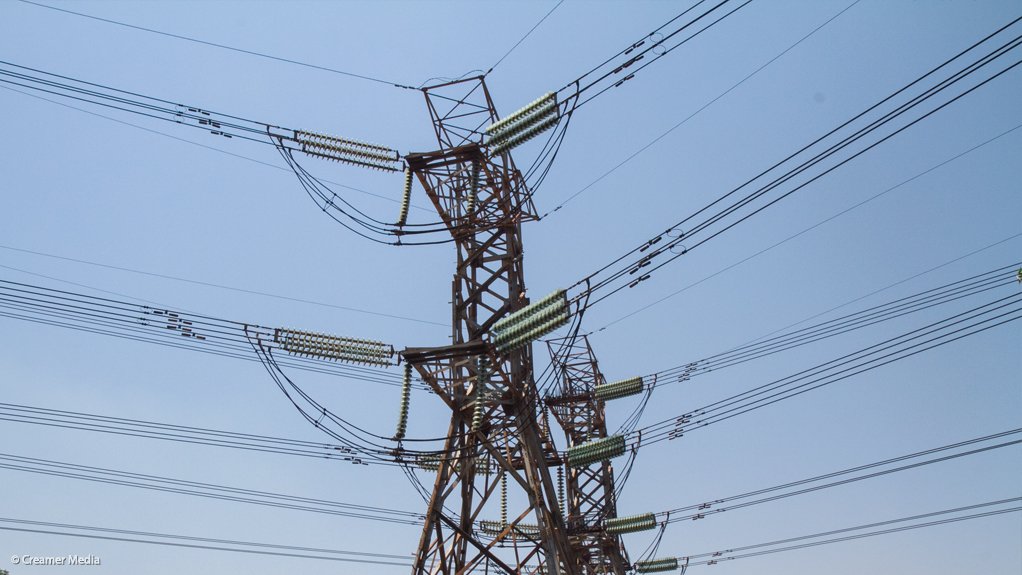
The National Treasury has issued termination letters to 13 municipalities and is preparing to issue similar notices to 14 others in relation to their continued participation in a scheme set up in 2023 to address rising arrear debt to Eskom.
Under the so-called Municipal Debt Relief Programme, municipalities that owed the State-owned utility a collective R58.5-billion as of March 2023 became eligible to have their historical debt written off over three years, with a maximum of one-third being cancelled in each year.
To do so, however, they had to consistently meet various conditions, the most important being that of ensuring that their current accounts with Eskom were kept up to date.
Some 71 municipalities were eventually approved for participation by the National Treasury, which meant that a total of R55.3-billion in debt could theoretically be expunged. Those municipalities now owe Eskom over R94-billion.
In a presentation to a joint meeting of the portfolio committees on Electricity and Energy and Cooperative Governance and Traditional Affairs, the National Treasury’s Sadesh Ramjathan reported a compliance level of only 66% and that arrear debt owing to Eskom had risen to over R111-billion by the end of March this year.
It was also confirmed that the debt backlog currently stood at over R114-billion.
Ramjathan said that, while nonperforming municipalities should be contractually removed, the National Treasury had given the first 13 letter recipients the option to enter into five-year Distrisubution Agency Agreements (DAAs) with Eskom instead. An option that would also be extended to the subsequent 14 municipalities.
Under the DAA’s, the electricity business is fully ring-fenced, with billing and revenue collection conducted by Eskom on a temporary basis.
The intervention has already been implemented with mixed success in three cases, including in Maluti-a-Phofung and Emfuleni following court rulings, and in Merafong where implementation is being legally contested.
LEGALLY FRAUGHT
The DAAs are both controversial and legally fraught, because electricity reticulation is constitutionally mandated as a municipal function.
In addition, a DAA can be implemented legally only after a council resolution and if a council follows the processes outlined in Section 78 of the Municipal Systems Act.
These processes include a detailed internal assessment that takes account of the costs and benefits, as well as other impacts on a municipality.
Eskom acting group executive for distribution Agnes Mlambo told the joint meeting that ten of the 13 municipalities in receipt of National Treasury termination letters had signed council resolutions.
Two other municipalities, the National Treasury confirmed, would be exited from the programme, while one had raised a dispute that required further investigation.
Those municipalities with council resolutions were now required to complete Section 78 processes by September and enter into a DAA with Eskom so as to remain within the Municipal Debt Relief Programme.
Ramjathan confirmed that Eskom was the National Treasury’s “preferred agent” to perform the function, as appointing an organ of State was simpler from a public procurement perspective and because doing so meant they could potentially still receive a debt-write off from the utility.
Those municipalities that opt-out, meanwhile, could immediately be subjected to Eskom credit control and debt management processes, which could include Eskom resuming legal proceedings to attach municipal bank accounts.
NO ‘SILVER BULLET’
Electricity and Energy Minister Dr Kgosientsho Ramokgopa stressed that government did not view DAAs as a “silver bullet” to the arrear debt problem but as a practical instrument to begin addressing a crisis that posed an existential threat to Eskom’s financial sustainability.
He also cautioned that it would take time to bear fruit. This was confirmed by Eskom, which indicated that while there had been relatively rapid collection progress in Emfuleni, where there were large industrial firms that could pay Eskom directly, the turnaround had been less immediate in Maluti-a-Phofung.
The Minister also insisted that the focus was broader than ensuring revenue collection and included infrastructure upgrades, the installation of smart meters and the training of municipal staff to assume the function at the end of the DAA.
Nevertheless, the Department of Cooperative Governance and Traditional Affairs and the South African Local Government Association (Salga) remained cautious about the DAA instrument, and urged that it should not become the default mechanism for dealing with municipalities that owed money to Eskom.
R467BN OWED TO MUNICIPALITIES
The department pointed out that, while municipal debt to Eskom stood at R111-billion, consumer debt owed to municipalities was far higher at R467-billion, owing to a combination of a culture of nonpayment and weak revenue collection systems.
DAAs, the department said, should be viewed as a pragmatic intervention rather than a universal structural reform, and should be reserved for municipalities in severe financial distress.
Salga, which has been openly critical of the instrument and has warned that it could be perceived as a backdoor takeover of municipal distribution functions, also called for conditions that were less “one-sided” in favour of Eskom.
Ramjathan indicated that the National Treasury was eager for the development of a “standardised version of the DAA” that balanced Eskom’s requirements with the needs and rights of municipalities.
EMAIL THIS ARTICLE SAVE THIS ARTICLE ARTICLE ENQUIRY FEEDBACK
To subscribe email subscriptions@creamermedia.co.za or click here
To advertise email advertising@creamermedia.co.za or click here


