





On a Friday last November, government officials representing Lesotho, a mountainous enclave in eastern South Africa, sat down in the capital Maseru for three hours of negotiations with Trump administration counterparts.
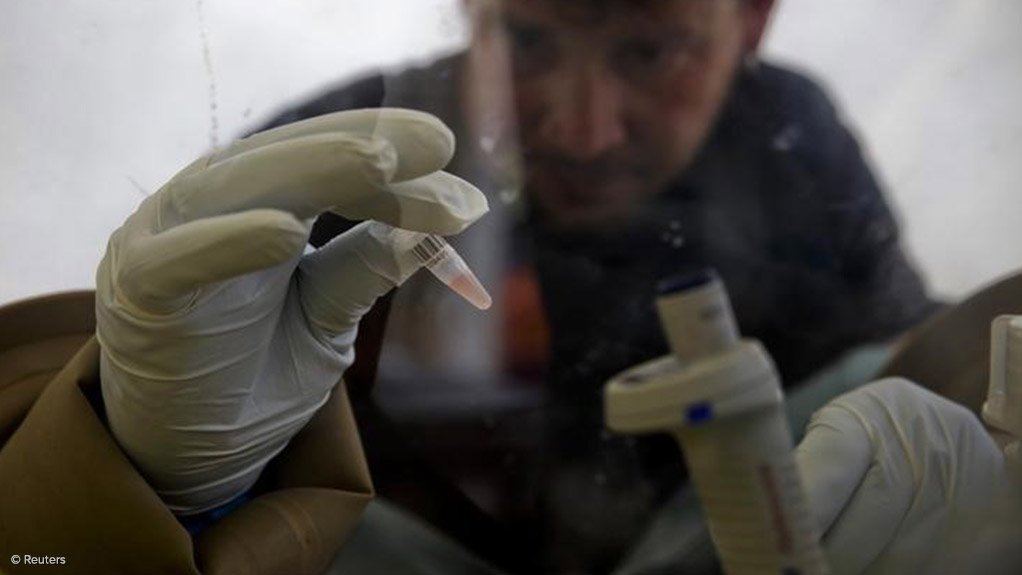
Earlier that year, the US suddenly cancelled funding for healthcare programmes in the country as part of billions of dollars in cuts to international aid. For Lesotho, a nation of 2.4-million people with the unhappy distinction of having the world’s second-highest HIV rate and the fourth-highest tuberculosis rate, the loss of support threatened thousands of lives.
To unlock future funding, the US wanted something back. While previous US assistance came with few strings attached — and never included commercial terms — documents seen by Bloomberg detailed the conditions the Trump administration expected. Those included “preferential consideration” of US partnerships, technologies, equipment and supplies, a demand that US regulatory approvals for drugs be recognised by Lesotho, and tax exemptions for companies carrying out work paid for by the US. It also asked for 25-year access to Lesotho’s medical data, though that was later reduced to five years.
Lesotho’s officials were given just weeks to sign the deal — terms that Mokhothu Makhalanyane, a member of the ruling Revolution for Prosperity party, characterised as a form of extortion. “The US just locked the ministers in a room somewhere and threatened them with the deadline.”
A month later, the US Embassy in Lesotho issued a press release stating that the acting US Charge d’Affaires and Lesotho’s finance minister had signed an agreement. The US would give the country $232-million in health aid over five years so long as Lesotho also provided $132-million of its own money. That represented a significant curtailment. In 2024 alone, Lesotho received about $150-million in health assistance from US government agencies.
But the biggest shock to parliamentarians was how the process was handled. There had been no debate about the memorandum of understanding beforehand, nor was it published by either government after it was signed. As the document still hasn’t been made public, it remains unclear who will oversee its implementation, whether it will affect existing international agreements or if it violates privacy laws. It’s also not clear whether the deal was constitutional, as it never received parliamentary approval ahead of time.
More than a year after the United States Agency for International Development was dismantled, the situation offers a rare window into how the Trump administration is leveraging foreign aid to advance its geopolitical agenda, and how smaller countries are responding.
Nearby nations have also reported unprecedented demands in exchange for US assistance. Eswatini agreed to accept third-party nationals deported from the US, while Zimbabwe and Zambia have said that the US made health care aid contingent on access to minerals. (Both countries rejected the offer, and the US ambassador to Zambia denied that his country would withhold aid if it didn’t get access to critical minerals). According to the US State Department, 32 nations have signed the agreements.
A State Department spokesperson said that “cordial” discussions were held with officials from Lesotho’s foreign, health and finance ministries as well as with the country’s National Aids Commission. The representative added that none of the signed memorandums require that signatories give US companies “preference” when procuring medical goods, equipment or data services.
“This MOU is designed to reinforce Lesotho’s sovereignty and accelerate its path to self-reliance in the fight against HIV/AIDS,” the State Department said.
Some US demands either disappeared or were softened in the signed version of the memorandum, which was also seen by Bloomberg. Yet when the document was circulated among a small group of senior politicians, two appendixes related to data sharing and the handover of medical data were redacted. That has stoked further concern about what exactly Lesotho agreed to.
“There is this fear: What is the US coming to take from Lesotho?” said Sebabatso Ntlamelle, coordinator for health, education and social development at the Lesotho Council of Non-Governmental Organisations.
Health Minister Selibe Mochoboroane agreed to an interview with Bloomberg about the arrangement, but cancelled the day-of, saying a 30-minute meeting had turned into an all-day affair. He then offered a virtual interview but didn’t honour that commitment before leaving his post in late April. Finance Minister Retšelisitsoe Matlanyane referred questions to Mochoboroane, and new Health Minister Mamokete Ntsekhe and the office of Prime Minister Sam Matekane did not respond to questions.
Mochoboroane let some details slip about the pressure Lesotho had been put under in late March, when he appeared in parliament to defend the agreement. “It is true that America proposed to bring dangerous criminals into Lesotho,” he said. “But we declined.”
Until the memorandums were introduced, US foreign health aid agreements were mostly characterised by transparency and accountability, said Brian Honermann, deputy director of policy at amfAR, a US-based nonprofit dedicated to ending the HIV/AIDS epidemic. Under the new US guidelines, the bulk of information in the agreements — and details about partner countries’ progress — will remain confidential. “It creates a situation where both parties with access to the data have an interest in making sure the MOUs look like they’re doing really well — without the ability for external oversight,’’ said Honermann.
Over the course of its five-year deal with Lesotho, the US will progressively reduce its health funding as the African country’s contributions increase. If Lesotho fails to meet its financial obligations, the US can reduce or cancel funding entirely. This puts Lesotho in a delicate position: it’s already struggling with a decline in exports, and the additional money it has agreed to spend is roughly the equivalent of a year of its health budget.
Lesotho has few sources of income beyond sales of mohair from one of the world’s biggest herds of angora goats; water, which it sells to South Africa; diamonds and an ailing textile industry. Ntlamelle, the NGO coordinator, believes budget cuts will be needed to pay for the agreement.
“If it’s not provided for in the budget, then there’s going to be $30-million to $40-million a year that’ll have to be found,” she said. “This is not an allocation that we can afford as a country.”
That’s true across the continent for countries now grappling with the loss of US aid, said Emily Wong, an associate professor at the African Health Research Institute. “The funds available are orders of magnitude less than what was available from the US,” she said.
Concern is also brewing among Lesotho’s nonprofit organisations that the politics of the current US administration could impact who receives access to medical care. Previous US funding in the region focused strongly on vulnerable groups such as sex workers, unmarried mothers and members of the LGBTQ+ community, who often face prejudice at state-run facilities. Those groups go unmentioned in the signed memorandum, and according to an analysis of similar agreements conducted by the nonprofits, family planning initiatives have largely been eliminated.
While Lesotho has made strides in recent years to advance rights for marginalised communities, about 40% of the country’s health care is administered by the Christian Health Association of Lesotho, which does not “provide services that conflict with church doctrine.” Under the new funding terms, Tampose Mothopeng, executive director of the LGBTQ+ rights association People’s Matrix, worries that these groups may have an even harder time accessing health care.
“So now the MOU and its executive orders are pushing Lesotho into a corner where we have to abandon our values, our constitution and our national regulations. They want to shift the world to where they want the world to be,” Mothopeng said.
Makhalanyane, the politician, is also sceptical that the deal will do much to advance Lesotho’s health objectives.
“This is eroding and frustrating government systems, not building them,” he said. “It’s straight bullying.”
EMAIL THIS ARTICLE SAVE THIS ARTICLE FEEDBACK
To subscribe email subscriptions@creamermedia.co.za or click here
To advertise email advertising@creamermedia.co.za or click here


