





The content on this page is not written by Polity.org.za, but is supplied by third parties. This content does not constitute news reporting by Polity.org.za.
Corruption is not a victimless crime. It steals directly from those in need, robbing our communities of essential public services, crippling economic growth, and depriving South Africans of opportunity and prosperity. Nowhere is this more damaging than at the public sector level, where state resources meant for public safety, schools, healthcare, and basic infrastructure are diverted into private pockets.
This institutional breakdown is laid bare in a recent parliamentary reply to RISE Mzansi. While new corruption cases enrolled against public officials reached 103 in FY 2025/26, and the National Prosecuting Authority (NPA) maintains a high conviction rate exceeding 86% for public officers, the justice timeline is collapsing. The average duration to finalise a corruption case against a public official jumped from 6 months (195 days) in FY 2024/25 to a staggering 19 months (562 days) in FY 2026/27. Cases involving legislative authorities take an astonishing 32 months (962 days) to resolve.
The NPA explicitly points to severe constraints: prosecuting complex, single-witness corruption cases requires extensive corroboration, and dockets built without proactive operations or specialised forensic tools struggle in court.
To reset and repair our broken law enforcement and justice pipeline, RISE Mzansi calls on Parliament, Cabinet, and the President to execute a three-point structural intervention:
Broad Presidential Proclamation and Funding for SIU Audits: The President must issue a broad, overarching proclamation paired with dedicated budget allocations so the Special Investigating Unit (SIU) can independently conduct financial interest analyses and lifestyle audits across top officials at national, provincial, and municipal levels. Currently, the SIU cannot subpoena documents without a proclamation, and audits are blocked if the target institution refuses to fund them – leaving power in the hands of the very individuals who must be investigated.
Rigorous Vetting and Purging of Compromised Police Leadership: The top echelons of the police force are deeply compromised and must undergo thorough, mandatory vetting. Those who fail must be exited immediately, with Parliament ring-fencing the necessary budget for these separation processes.
Capacitation and Specialised Resources for the Hawks: The Hawks (DPCI) must be urgently resourced with new leadership, accelerated recruitment to fill excessively high vacancy rates, and direct access to forensic specialists to build court-ready, airtight dockets.
Furthermore, as highlighted by Prof. Somadoda Fikeni, Chairperson of the Public Service Commission (PSC), at the Madlanga Commission, South Africa faces a "political economy of inefficiency" driven by political patronage, unvetted personnel. This stresses the need for an urgent need for an ethics and skills reset in the public sector.
This local government election is not just about service delivery in our cities, towns, and villages; it is also a choosing between the same corrupt and unethical politicians and new, capable, and ethical leaders. RISE Mzansi therefore remains committed to stopping corruption, restoring integrity to our public administration, and ensuring those who steal from the nation face the full weight of the criminal justice system.
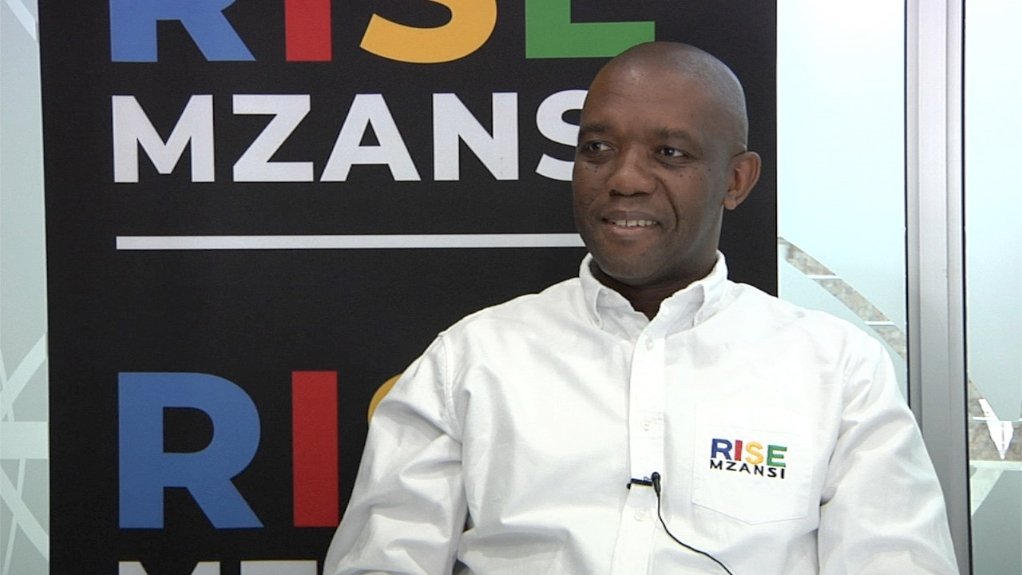
Issued by RISE Mzansi national leader Songezo Zibi
EMAIL THIS ARTICLE SAVE THIS ARTICLE ARTICLE ENQUIRY FEEDBACK
To subscribe email subscriptions@creamermedia.co.za or click here
To advertise email advertising@creamermedia.co.za or click here


