





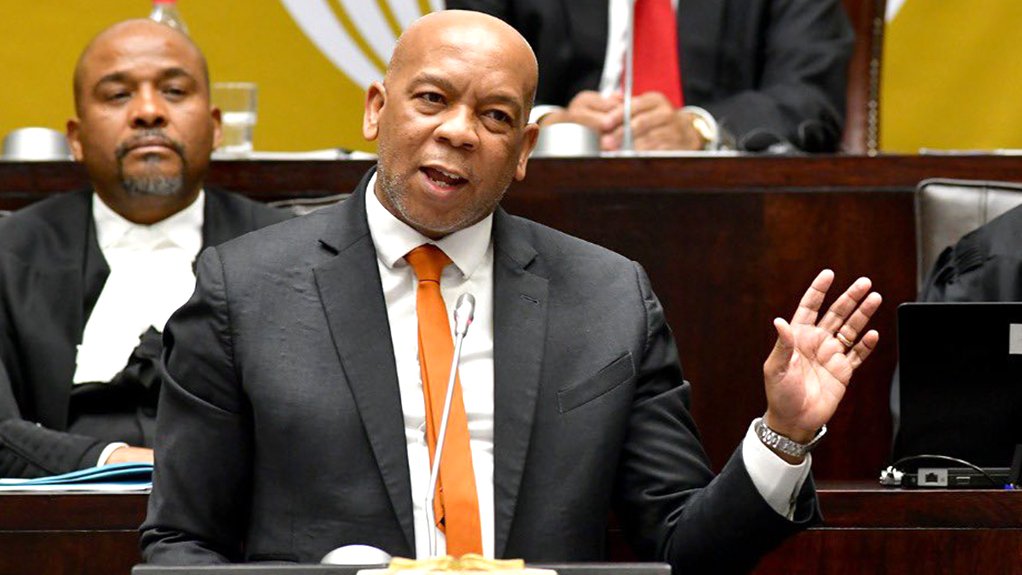
Electricity and Energy Minister Dr Kgosientsho Ramokgopa says a revised electricity pricing policy will be released for public comment in the coming few weeks.
Delivering a statement to the National Assembly in relation to the steps being taken to eradicate ongoing load reduction, whereby electricity is regularly cut to areas where the network is being overloaded, the Minister acknowledged that the affordability of electricity had become a major concern for many South Africans.
“The Ministry recognises that the current pricing framework must evolve to better balance affordability with the long-term sustainability of the sector.
“To this end, Madam Speaker, the department will be undertaking a review of the energy pricing policy and the Minister will announce that the revised policy will be released for public consultations within the next 21 days,” Ramokgopa said in Parliament on March 24.
The announcement comes as electricity tariffs for direct Eskom customers will rise by 8.76% on April 1, with increases of more than 9% to be applied on municipal customers from July 1.
The hike to the Eskom standard tariff is higher than the 5.36% approved for 2026/27 as part of the sixth multiyear price determination (MYPD6) revenue decision, having been adjusted to take account of a R54.7-billion error made by the regulator when calculating Eskom’s regulatory asset base.
Besides the R12-billion in additional revenue that Eskom is now allowed to recover in the 2026/27 financial year, a further R23-billion will be recovered in 2027/28, while the R19.7-billion balance will be recouped as part of the next MYPD period.
For the 2027/28 financial year, the increase for direct Eskom customers will thus be 8.83% on April 1, 2027, instead of the 6.19% outlined in the initial MYPD6 determination.
Ramokgopa also gave assurances to lawmakers that a plan was in place to “eliminate” load reduction, which was mostly affecting low-income communities, including households, businesses, schools and clinics that pay their electricity accounts, but that are in areas where illegal connections and overloading are prevalent.
He said the plan was premised on five pillars, including: the expansion of free basic electricity through the “proper registration of indigent households”; an accelerated roll-out of six-million smart meters by 2029 to allow for targeted rather than blanket disconnections; a network strengthening effort that involved the upgrading of transformers and associated infrastructure; the integration of distributed electricity solutions in “high-risk” areas; and structured community engagements that were being “scaled into a formal national programme”.
“To date, 199 000 consumers have been removed from load-reduction schedules through a combination of infrastructure upgrades, feeder stabilisation and smart-metering interventions,” Ramokgopa said, while indicating that load reduction was affecting more than 1.6-million customers countrywide.
EMAIL THIS ARTICLE SAVE THIS ARTICLE ARTICLE ENQUIRY FEEDBACK
To subscribe email subscriptions@creamermedia.co.za or click here
To advertise email advertising@creamermedia.co.za or click here


