





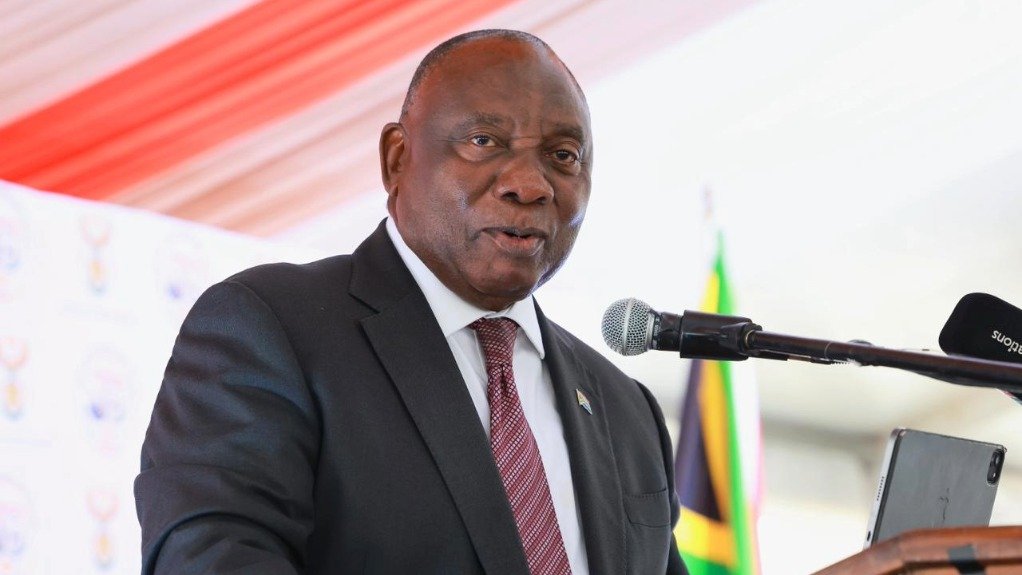
Economic growth is an outcome of a well-functioning system and unlocking local economic development requires fixing service delivery, which requires fixing governance, President Cyril Ramaphosa noted in an address to the 2026 National Local Economic Development Summit, in Boksburg, on April 15.
Local economies must be re-engineered with small business growth at the centre, he stated, adding that local government is the engine room of development and that metro, district and local municipalities must see themselves as incubators of economic activity.
A strong entrepreneurship culture that was supported in cities and towns contributed to job creation and small business development, he said.
South Africa has a resilient entrepreneurial sector that continues to increase its contribution to economic activity and job creation.
However, the entrepreneurship ecosystem also faced challenges within local government that constrained economic opportunity and potential, he said.
“The Auditor-General’s report on local government highlights persistent weaknesses that directly undermine service delivery and constrain local economic development, including weak financial management and revenue collection, failure to maintain infrastructure, ineffective supply chain management, irregular and wasteful expenditure and weak consequence management.
“These translate into unreliable electricity, water insecurity, poor roads, poor service delivery and unsafe trading environments.”
South Africa must unblock service delivery constraints at local government level, especially by providing basic infrastructure, as energy security, water provision, roads and rail lines are the foundation of growth, he directed.
Municipalities must work to unblock infrastructure constraints, but simultaneously adequately prioritise infrastructure maintenance.
National Treasury guidelines required municipalities to budget 8% of the carrying value of property, plant and equipment for maintenance and repairs. Many municipalities were budgeting less than 1%, he noted.
Some cities and municipalities have done well in improving the ease of doing business, with systems and targets for zoning approvals, issuing construction permits, connecting businesses with water and electricity and issuing trading and business licences, as well as using electronic registration systems.
In these cases, there is regulatory certainty.
However, these municipalities were the exception rather than the rule. Often, bureaucratic delays at municipal level prevented local investments from being made, Ramaphosa said.
Local governments must drive their own red-tape reduction reforms. They must also continuously engage with local business associations and forums to understand their frustrations and address their concerns, he instructed.
Municipalities contributed most effectively to growth through the provision of reliable basic services and predictable infrastructure maintenance, transparent and time-bound approvals for developments and effective urban management, Ramaphosa noted.
LOCAL PROCUREMENT
Municipalities also contributed to growth by using procurement and ensuring supplier payment discipline to support local small businesses. The municipal contribution to growth must become a systemic outcome, not a project function, he said.
“To achieve this, we are formalising the District Development Model’s One Plan as a binding economic transformation compact.”
These compacts will be implemented through specific area compacts for priority nodes and corridors, with sequenced investment in transport, bulk services, and enabling business infrastructure.
These plans must clearly articulate local growth drivers and how they could be supported, in line with the country’s broader industrial policy, he charged.
The critical question is capacity. Professionalising municipalities and ensuring that governance structures are capable, accountable and inclusive will equip local government and communities to realise these plans.
“Appointments must be made based on merit, relevant skills, experience and qualifications, while holding people to strong ethical standards. The scale of the challenge before us requires a national compact for local economic development,” said Ramaphosa.
“When infrastructure is built, we must see local suppliers, local contractors and local jobs. We need to build regional ecosystems where government, universities, incubators, traditional leaders and the private sector cooperate to unlock local growth drivers.
“We call on established businesses to partner with municipalities, develop local suppliers, invest in skills and open value chains.”
He said the summit must deliver a programme of action with clear deliverables and timelines.
“South Africa is a country of entrepreneurs. Our task is to unleash their potential to build an inclusive economy that creates opportunities for all.”
EMAIL THIS ARTICLE SAVE THIS ARTICLE ARTICLE ENQUIRY FEEDBACK
To subscribe email subscriptions@creamermedia.co.za or click here
To advertise email advertising@creamermedia.co.za or click here


