





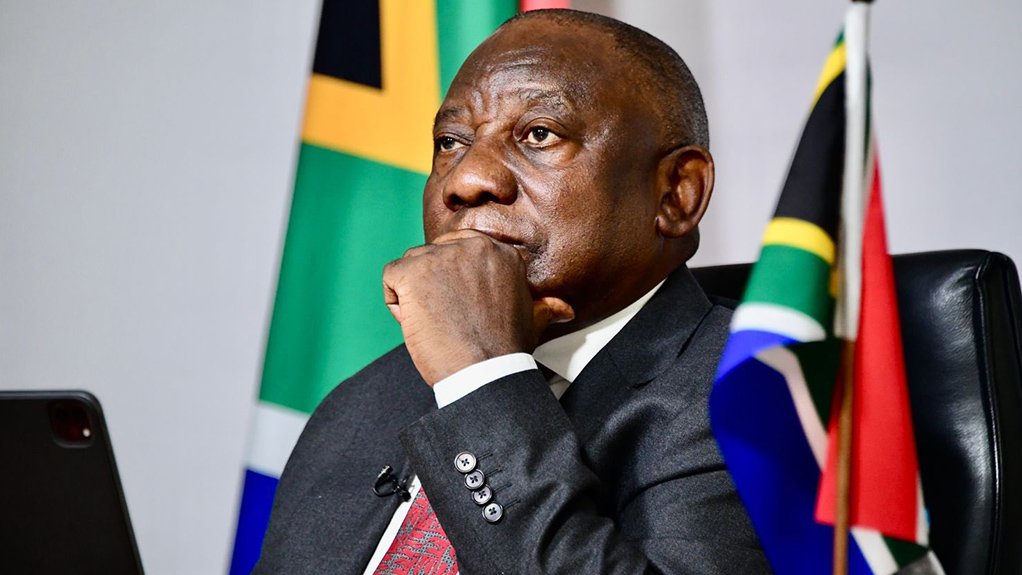
Following his Sunday night announcement that government is taking decisive action to tackle illegal immigration, President Cyril Ramaphosa said on Monday this will happen simultaneously with government’s plan to address the country's core economic challenges.
In his weekly letter to the nation, Ramaphosa added that government is balancing strict border enforcement with a revitalised economic strategy, by driving faster and inclusive economic growth, infrastructure development, industrial expansion and the creation of new jobs.
Following the adoption of the Comprehensive Approach for Migration Management by Cabinet, the State is intensifying its legislative enforcement, he pointed out.
Ramaphosa acknowledged growing community anxieties regarding national security and the rule of law, and he directly addressed the social and economic friction points raised by citizens.
He noted that some companies illegally employ and exploit undocumented foreign nationals and that public perception suggests foreign-owned spaza shops are crowding out local traders.
Sector-specific employment quotas for foreign nationals will be introduced, and informal businesses will have to be registered, Ramaphosa laid out.
He explained that while citizens fear that public infrastructure is overwhelmed, official statistics show foreign nationals account for a very small proportion of clinic, hospital, and school users.
Ramaphosa said organised syndicates do exploit migration weaknesses for drug trafficking, illegal mining, and extortion. However, the majority of foreign nationals are not involved in criminal activity.
Ramaphosa cautioned citizens against taking the law into their own hands, emphasising that only authorised State officials may enforce immigration laws. He linked local frustrations to broader systemic issues of poverty and unemployment, which often cause communities to target perceived competitors.
To solve the root causes of mass migration, South Africa is working with regional and continental partners to address the conflict, instability, and economic hardships driving people from their homes.
The President reminded citizens that South Africa was built on migration, urging the public to reject xenophobia, afrophobia, and violence, while remaining true to the country's Constitution.
MIXED REACTIONS
Meanwhile, DA leader Geordin Hill-Lewis also echoed Ramaphosa’s sentiments for South Africans to reject xenophobia and uphold the country’s constitutional values.
The DA said it will support every lawful effort by the Government of National Unity (GNU) to restore order, secure borders, and fix the broken systems that have allowed illegal migration to become a source of fear and frustration.
“… that is why the work being done by Minister Leon Schreiber at Home Affairs to strengthen lawful immigration control, improve documentation, and secure the border must be welcomed,” Hill-Lewis stated.
He stressed that people must be in South Africa legally, and the law must be enforced by the State and not by mobs, vigilantes, or politicians who stoke hatred for votes.
“Anyone who incites violence against foreign nationals, including political leaders, must be arrested and prosecuted, and every South African must abide by the Constitution we share,” he said.
He acknowledged that the deeper answer to the migrant crisis is jobs, growth and a capable State.
He wants the GNU to quickly implement the economic reforms needed to attract investment, unlock opportunity, cut red tape, fix infrastructure, and create the environment for South Africans to find work.
ActionSA president Herman Mashaba expressed disappointment with what he termed Ramaphosa’s “weak and reactionary address”, which he believes does nothing to address the immigration crisis that he claims was created by the ANC and perpetuated by the GNU government.
Mashaba pointed out that rather than presenting a clear shift in approach, which the party believes must be anchored on mass deportations and the urgent capacitation of enforcement capacity, the President merely repackaged the same “failed and tired talking points that have characterised the ANC’s decades-long failure to secure South Africa’s borders and effectively address illegal immigration”.
“While the Border Management Authority remains underfunded, under equipped and under resourced, any commitment by the President to ramp up enforcement is dead on arrival.
"It increasingly appears that the government is acting only in response to manufactured outrage from foreign governments that are unwilling to confront the consequences of their own failures,” Mashaba said.
The Parliamentary Portfolio Committee on Home Affairs urged government departments to implement all the plans outlined, particularly as many of these initiatives have already featured in the yearly performance plans of various departments.
Committee chairperson Mosa Chabane warned that failure to implement these measures will undermine the President’s authority.
The chairperson noted that Ramaphosa’s reaffirmation of the State's authority to enforce the law is particularly important at a time of heightened anti-foreigner sentiment in the country.
He urged law enforcement agencies to intensify their efforts to ensure that immigration laws are upheld and effectively enforced.
The chairperson also welcomed the President’s commitment to combating corruption in all its forms, noting that corruption has significantly weakened the implementation of the country’s immigration laws.
“Corruption is a cancer that erodes both the spirit and the intent of our immigration laws. Eradicating corruption will help ensure that our laws are implemented effectively and are not undermined,” he said.
EMAIL THIS ARTICLE SAVE THIS ARTICLE ARTICLE ENQUIRY FEEDBACK
To subscribe email subscriptions@creamermedia.co.za or click here
To advertise email advertising@creamermedia.co.za or click here


