





JOHANNESBURG (miningweekly.com) – The third phase of the August 20-launched Government-Business Partnership for Growth and Jobs names freight logistics as a foundational enabler of growing the economy by 3%-plus and generating a million new jobs by 2030.
“This is a welcome signal and confirms our consistently communicated and strong belief that logistics reforms – and rail reform in particular – are central to South Africa’s growth targets and are not a technical issue alone but rather a fundamental economic driver,” South Africa’s Manganese Producers Consortium has pointed out in a media release to Mining Weekly.
The partnership’s own scorecard records the entry into the logistics network of 11 private train-operating companies, Durban being recognised as one of the world’s most-improved ports (albeit from a low base), and R14.7-billion in Budget Facility for Infrastructure funding being approved for rail related maintenance backlogs.
While the Manganese Producers Consortium supports all tangible results and proof that reform commitments can move from policy to delivery, it expressed concern that bulk commodity export corridors are not getting the priority that they “urgently” demand despite lending themselves to “globally proven” private sector participation projects with “significant upside to the South African economy”.
What is appreciated by the Manganese Producers Consortium is that the Government-Business Partnership scorecard sets these hard new deadlines involving:
- a manganese private sector participation transaction being issued by year-end;
- the National Rail Bill coming before Parliament by March 2027, and
- also by March next year, the Transport Economic Regulator being fully operational.
These targets echo the direction that the Manganese Producers Consortium itself has been supporting for years – but what has been missing are speed, sequencing and executable timelines.
What is different now is that Phase 3 puts government’s own credibility on the line to meet these targets.
“Phase 3 matters even more for institutional design as it is critical to ensure that there is a capable delivery ‘machine’ that encompasses and empowers independent institutions, introduces appropriate regulation and procurement processes with clear roles and responsibilities,” the Manganese Producers Consortium emphasised.
Phase 3’s architecture assigns focal area leads and CEO sponsors to each priority, and commits to quarterly, public reporting on progress and slippage, which is precisely the kind of visible accountability called for, and what remains essential to make this architecture work in practice is:
- named leadership;
- transparent milestones;
- consequences when delivery falls short; and
- a capacitated, independent unit to drive private sector participation and rail transactions which are bankable and without institutional veto or conflict.
The Phase 3 scorecard lays down that a manganese transaction must be brought to market by December 2026 and the manganese ore industry has a direct stake in the timelines announced.
“This is a specific test, with a set deadline, of whether this Phase 3 can convert intent into action. The development of the long-awaited new manganese terminal at the Port of Ngqura and significant private sector participation on the Ore Export Corridor connecting Sishen in the Northern Cape with the Port of Saldanha cannot be delayed any further.
“Manganese producers stand ready, with capital, committed volumes and long-term rail allocation arrangements, to anchor bankable projects. The 12x12 corridor strategy – 12-million tonnes through Saldanha and 12-million tonnes through Gqeberha – offers a demand-led, investable pathway that fits squarely within the partnership’s mining and logistics ambitions.
“The risk is familiar. South Africa has convened partnerships, published plans and set targets before. What distinguishes Phase 3, on its own terms, is the promise of quarterly public reporting against hard metrics, not illustrative ones. Collectively we need to hold government and the partnership to this promise,” the consortium noted.
“The Minister of Finance recently said growth requires reform, and reform requires implementation. Phase 3 has now converted that principle into named deadlines.
“For manganese exporters, and for the rail and port terminal system on which they depend, the measure of success is not a launch event, but when private sector participation is closed, additional volumes being carried on trains are running, investments are unlocked and there are increased economic benefits associated with long-term sustainable (less road haulage) manganese exports, using a more efficient and globally networked export system,” the consortium added.
DISTANCE CRITICAL
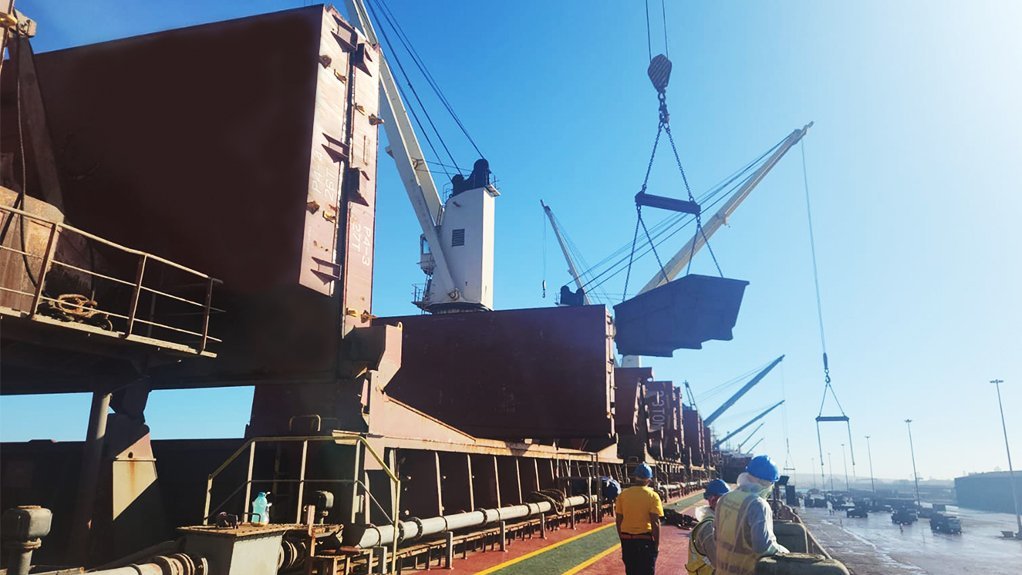
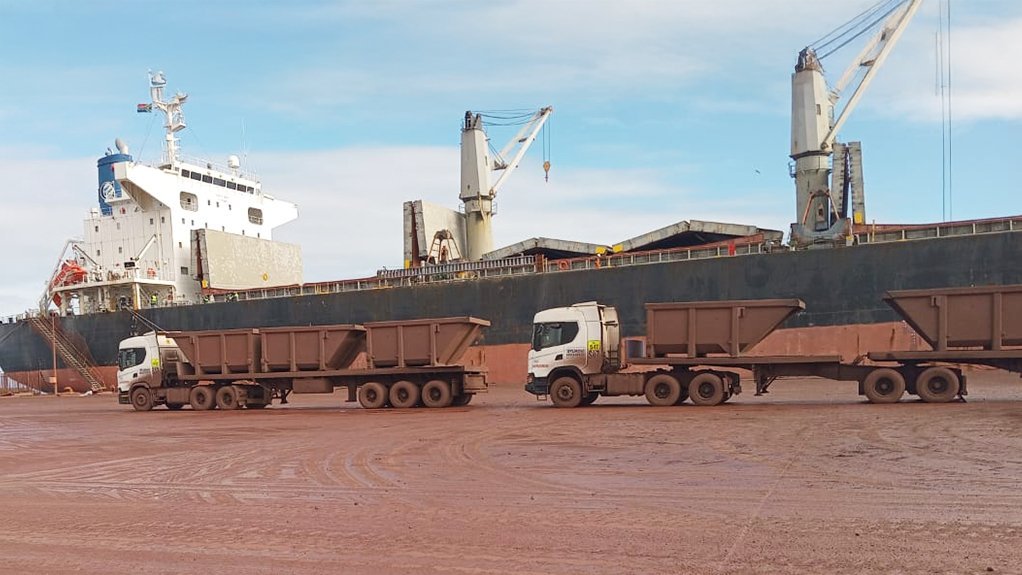
While South Africa’s Kalahari has a wonderful manganese endowment, its 1 000 km distance from any port turns South Africa’s manganese mining into a mining-plus-logistics business, with the mining in private hands and the logistics in generally much slower public hands.
As things stand, manganese mining will not always be of the lower-cost opencast variety and investment decisions about going underground at higher cost will have to be taken progressively from now on.
With logistics already making up a third of the cost of manganese mining, costs will not be lowered without public-private collaboration.
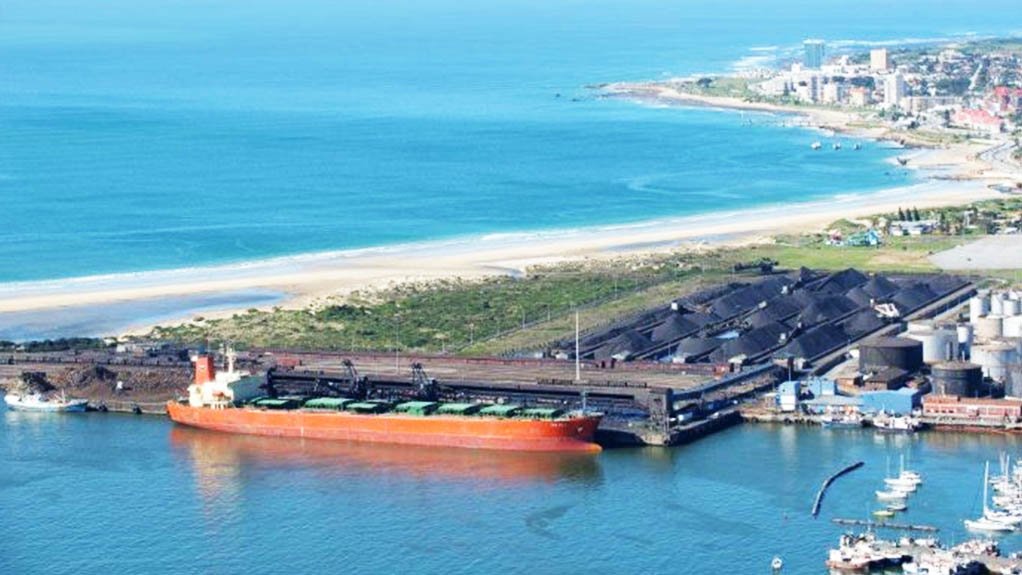
Currently, there are two transport corridors, one to Saldanha and the other to Gqeberha.
Why the Saldanha is a good bulk-commodity transport route is because very little else travels along it.
By contrast, the multi-freight line to Gqeberha has passenger and automotive connections at different points, with the manganese ore also made to wend its way through a four-terminal port complex that pushes up costs.
Several manganese mining companies tell Mining Weekly that the way to go is for 12-million tonnes a year to go down the Saldanha line, and a matching 12-million tonnes to go through Gqeberha – and not the current 16 t to Gqeberha and 8 t to Saldanha.
Fortunately, a lot of research is available for the Department of Transport and Transnet to use for the good of South Africa’s economy.
EMAIL THIS ARTICLE SAVE THIS ARTICLE ARTICLE ENQUIRY FEEDBACK
To subscribe email subscriptions@creamermedia.co.za or click here
To advertise email advertising@creamermedia.co.za or click here


