





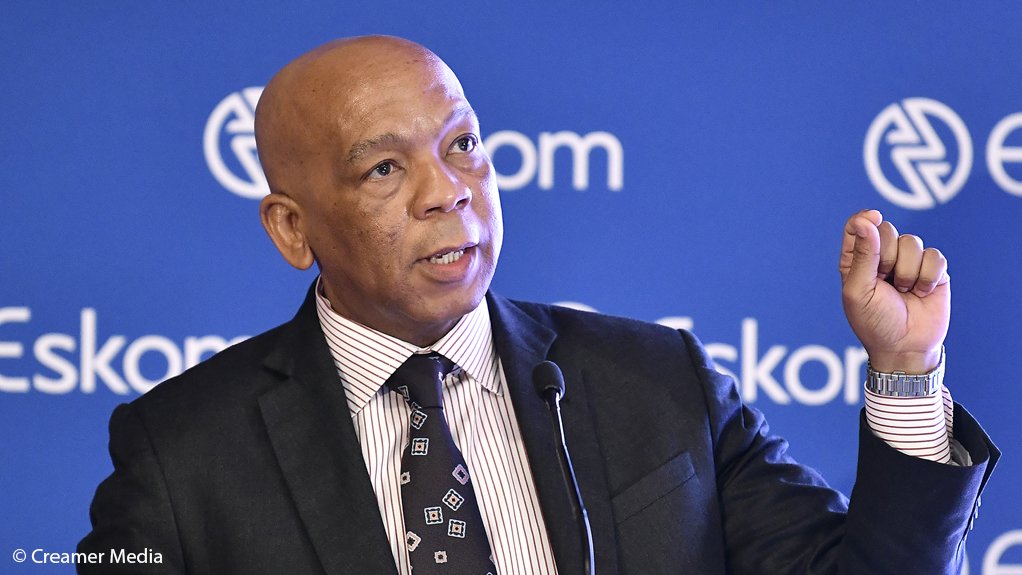
Electricity and Energy Minister Dr Kgosientsho Ramokgopa reports that government is finalising an electricity reform policy paper in a bid to offer a “single-window overview of the sector's reform agenda”.
Speaking at the release of Eskom’s 2026 winter outlook for the system, which indicates that there should be no loadshedding over the period, the Minister described the paper as long overdue and revealed it had already been drafted by his department.
The document would be presented to Cabinet in the coming weeks after which it would be published for public comment.
The paper would be a “coherent policy statement” of the transformation envisaged for the electricity supply industry and would also provide a benchmark against which progress could be measured.
Ramokgopa made a point, however, of stressing the complexity of the reforms already taking place and insisted that there would be no “big bang” but rather a phased transition towards a more competitive market.
“As days go by, and as we have an appreciation of some of the moving parts, I think it will dawn on everyone that this is a very complex process. But we are committed to it,” Ramokgopa said.
His statement comes amid ongoing tensions over the pace of the reforms, as well as the unbundling of Eskom.
Some Eskom trade unions have embarked on protest marches against the restructuring, while President Cyril Ramaphosa used his State of the Nation Address in February to insist that the new State-owned Transmission System Operator (TSO) should also house the transmission assets. This, after Eskom unveiled a plan that involved the retention of the assets by its National Transmission Company South Africa (NTCSA) subsidiary.
TASK TEAM PROGRESS?
Ramaphosa has since established an Eskom Restructuring Task Team to lead the transition toward a fully independent State-owned TSO and Eskom CEO Dan Marokane confirmed that Eskom was participating in the structure.
“The task team set up by the President is in motion, and the task team will, in due course, make announcements in terms of its progress. It is addressing the directive that the President has issued, “ Marokane said.
The Operation Vulindlela quarterly report, which was also released on April 22, highlighted the establishment of the task team as representing reform progress during the period.
It indicated that a detailed implementation plan for the establishment of the TSO and implementation measures to ensure functional independence of the NTCSA during the transition period would be finalised by August, with December 2027 having been set for the launch of the TSO.
Besides Eskom’s unbundling, there is also unease over the electricity trading rules currently being drafted by the National Energy Regulator of South Africa (Nersa), which decided not to release the latest draft following various adverse pre-release comments.
The launch of the South African Wholesale Electricity Market (SAWEM) has also been delayed until the third quarter from an initial April launch date, while reforms aimed at improving the sustainability of the electricity distribution sector and addressing rising arrear debt have not yet been fully endorsed.
NTCSA CEO Monde Bala said the SAWEM platform had been launched internally in April, with Eskom Generation and Eskom Distribution as the only participants, while outlining regulatory steps that were still required to finalise the market code and rules.
Eskom board member Clive Le Roux, meanwhile, argued that South Africa's electricity future required an orderly rules-based transition to a competitive and diversified market.
“This means clear wholesale and retail market rules, fair and transparent cost recovery, protection for vulnerable consumers, and accelerated transmission grid expansion to unlock new generation,” Le Roux said.
Bala offered an update on the implementation of the Transmission Development Plan, showing that only 270.8 km of new powerlines were built in 2025/26 against a target of 423 km, while 4 000 MVA of transformers were introduced against a target of 3 750 MVA.
Ramokgopa also used the platform to confirm that his department had finalised a new draft Electricity Pricing Policy that also needed to serve before Cabinet before being released for public comment.
He said the policy would seek to tackle the affordability problems confronting poor households and electricity-intensive industries and said it should be finalised in time to guide Nera’s deliberations on the next multiyear price determination.
The Minister also reiterated that future tariff increases should be limited to single-digit adjustments.
EMAIL THIS ARTICLE SAVE THIS ARTICLE ARTICLE ENQUIRY FEEDBACK
To subscribe email subscriptions@creamermedia.co.za or click here
To advertise email advertising@creamermedia.co.za or click here


