






The latest Green Drop report and the Blue and No Drop progress assessment reports, released by the Department of Water and Sanitation (DWS) on Tuesday, have laid bare the deteriorating state of South Africa’s water systems.
While drinking water systems and nonrevenue water have remained relatively stable – albeit at a high risk level – South Africa’s wastewater systems are continuing to deteriorate.
The full Green Drop Report 2025, auditing 848 municipal wastewater treatment systems across 144 water service authorities during the 2023/24 financial year, shows that 47%, or 396 systems, are in a critical state.
This compares unfavourably with the 39%, or 334 of 850, of wastewater treatment systems reported as in a critical state during the 2021/22 financial year.
The number of wastewater systems performing at ‘excellent’ or ‘good’ levels have also declined, from 14%, or 118 systems, in 2021/22, to 8%, or 66 systems, during the latest audit period from July 1, 2023, to June 30, 2024.
Only 14 systems achieved Green Drop certification – compliance with wastewater standards above 90% – down from 22 in 2022. Five of these were in the Western Cape, one in Mpumalanga and eight in Gauteng. No system in the North West, Northern Cape, Limpopo, KwaZulu-Natal, the Free State and the Eastern Cape achieved compliance above 90%.
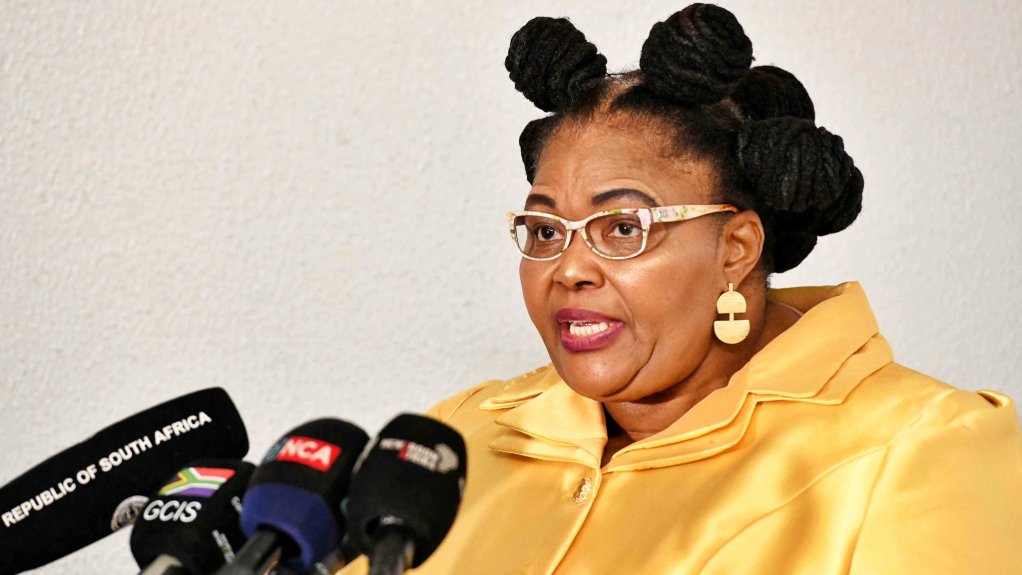
These results show that systems previously operating at a poor level have continued to deteriorate into critical failure, placing increasing pressure on water resources, the environment and public health, said Water and Sanitation Minister Pemmy Majodina.
Meanwhile, the progress assessment reports for Blue Drop and No Drop, covering drinking water quality and water use efficiency for the 2023/24 municipal financial year, were released as complementary reports to the full Green Drop report.
The Blue Drop assessment report, which assesses the quality of drinking water, shows that drinking water remains stabilised, albeit at a high level.
“The risk results of the 2025 Blue Drop progress assessment report are not significantly different to the risk results of the 2023 full Blue Drop report,” said DWS director-general Dr Sean Phillips, noting that drinking water systems in the major metropolitan areas are generally performing well in key performance areas.
The 2025 edition of the Blue Drop assessment found that, nationally, low-risk drinking water systems have increased marginally from 60.2% to 61.9%, while critical-risk systems have decreased from 9.9% to 7.9%.
Despite these modest improvements, a significant number of systems remain in high and critical risk categories and require urgent corrective action and intensified regulatory oversight.
Further, performance across provinces on drinking water quality remains uneven.
The Western Cape and Gauteng continue to show the strongest overall risks, while Mpumalanga and North West have recorded notable improvements.
The Northern Cape remains the poorest-performing province, with the highest concentration of high and critical risk systems, and the Free State continues to be an area of serious concern.
In addition, the national average percentage of nonrevenue water has marginally declined to 47.3%, compared with 47.4% in the 2023 full No Drop report, indicating stabilisation. However, it remains persistently high, reflecting ongoing inefficiencies in water use, infrastructure losses and weak revenue collection, all of which undermine the financial sustainability of municipalities and their ability to maintain and operate infrastructure effectively.
According to Phillips, the underlying causes of poor performance in terms of the Drop reports include non-adherence to standard operating procedures for drinking water treatment and wastewater treatment; infrastructure in poor condition owing to lack of maintenance; and municipalities failing to hire qualified staff or prioritise budgets for maintenance and operations.
Weak billing and revenue collection, poor municipal leadership and management and the absence of a legal requirement for municipalities to use water and sanitation revenue for maintenance further exacerbate the challenge.
Organised criminality and malfeasance, including attacks on critical water and energy infrastructure, corruption and illegal connections, continue to hamper the recovery of the water sector.
“The deterioration we are seeing is unacceptable, and it demands urgent and sustained action,” said Majodina, noting that the report must be treated as a decisive moment for the sector.
The DWS is responding decisively to these findings with a strengthened programme of enforcement, investment and reform aimed at reversing the decline and restoring system performance.
A central focus is the urgent implementation of corrective action plans for all systems in a critical state.
“We cannot allow a situation where infrastructure continues to fail while plans remain on paper. Implementation must be immediate, visible and measurable. Where there is inaction, the department will act,” Majodina continued.
“The department is intensifying oversight and will enforce compliance more rigorously, including taking regulatory action against municipalities that fail to implement required interventions.”
Legislative amendments currently before Parliament will further strengthen the department’s ability to enforce compliance and intervene where necessary.
These reforms will require municipalities to partner with capable and licensed water service providers where they lack the capacity to deliver, ensuring that technical expertise is brought in to stabilise failing systems.
The DWS is also directing financial resources to the areas of greatest need. Infrastructure funding through the Regional Bulk Infrastructure Grant and the Water Services Infrastructure Grant has been prioritised towards the worst-performing municipalities to accelerate refurbishment, upgrading and maintenance of critical infrastructure. This is being supported by increased technical assistance and closer monitoring of implementation.
In parallel, a coordinated national response is being driven through the National Water Crisis Committee, chaired by President Cyril Ramaphosa.
This work will culminate in a National Water Action Plan that will outline clear and time-bound measures to address both immediate system failures and long-term structural challenges in the sector.
The full Blue Drop and full No Drop reports will be released in March 2027, along with a Green Drop progress assessment report.
EMAIL THIS ARTICLE SAVE THIS ARTICLE ARTICLE ENQUIRY FEEDBACK
To subscribe email subscriptions@creamermedia.co.za or click here
To advertise email advertising@creamermedia.co.za or click here


