






South Africa has launched the National Water Access Acceleration Programme, through the decentralised water supply schemes, amid the need to expand access to safe and reliable water to underserved communities across South Africa.
The National Water Access Acceleration Programme is designed to fast-track practical, sustainable and fit-for-purpose water solutions, with the aim of expanding access to safe and reliable water services for unserved and underserved communities across the country.
“The programme is intended to shorten the time between identifying a community’s need and delivering a working water supply. It will use solutions suited to local conditions rather than waiting in every instance for large, complex infrastructure projects,” Ramaphosa said in his ‘From the desk of the President’ newsletter on Monday.
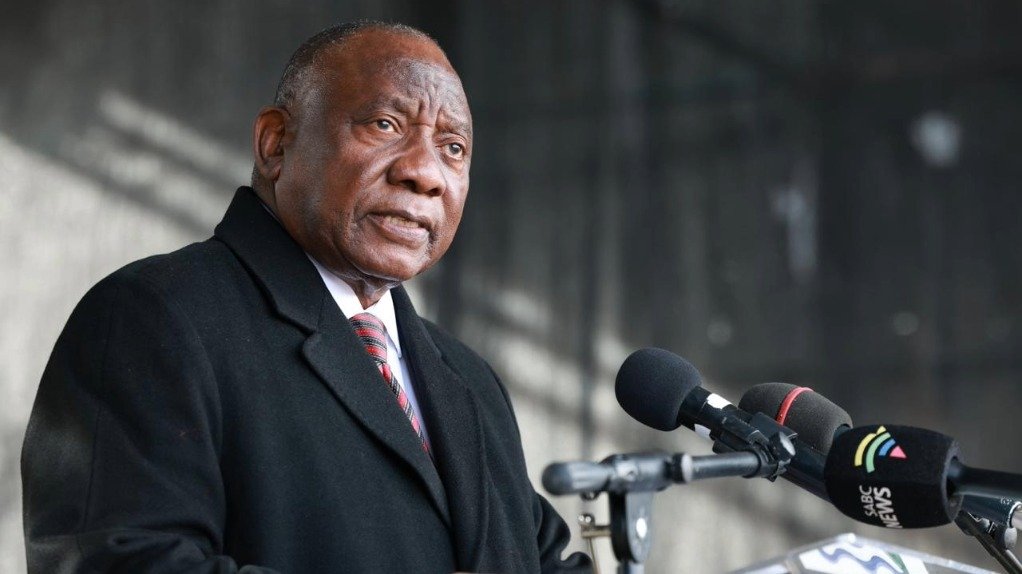
The programme was officiated by President Cyril Ramaphosa on Saturday in Hammanskraal in Gauteng, where boreholes were handed over to the Hammanskraal community and the Klipdrift package water treatment plant was officially commissioned to boost water treatment capacity.
Hammanskraal has faced significant water quality and supply challenges over the last few years, with the region facing limited water access and a cholera outbreak that led to the loss of lives.
Similar interventions, including borehole drilling and groundwater development, rainwater harvesting and rehabilitating existing water supply schemes, were launched simultaneously in other parts of Gauteng, KwaZulu-Natal and the Eastern Cape.
“A key milestone of the programme is the launch of 67 boreholes symbolising the 67 years the founding Father of our democratic government and global icon, former President Nelson Mandela dedicated to serving humanity. The initiative forms part of a broader programme of Mandela Month service delivery activities geared towards the vulnerable in society,” he continued.
“We must acknowledge that in too many municipalities, government has not succeeded with the maintenance of infrastructure, to manage water services properly and to respond with sufficient urgency. Parts of our country are experiencing worsening water shortages and deteriorating water quality. In some places, ageing water infrastructure has collapsed.”
NATIONAL WATER CRISIS COMMITTEE
To coordinate interventions across government, the National Water Crisis Committee was established earlier this year, with a focus on strengthening municipal water and sanitation services, increasing water infrastructure investment, reforming water sector institutions, improving the legal and regulatory framework and addressing corruption and criminality in the sector.
Further, the National Water Action Plan brings together national, provincial and local government, water boards, regulators and water service authorities around a single programme of action, with clear responsibilities and timelines.
“A number of immediate interventions are already being implemented, including rolling out emergency infrastructure projects such as the boreholes in Hammanskraal. These will continue to be expanded to reach more communities,” Ramaphosa highlighted.
Amid this, legislative and regulatory reform is also continuing, including the establishment of a National Water Resources Infrastructure Agency to coordinate investment in bulk water infrastructure.
Further, public hearings are set to start in due course on the Water Services Amendment Bill, which will strengthen enforcement and enable municipal managers who fail to manage water infrastructure to be held personally liable.
Over the next three years, government has also allocated R156-billion to water and sanitation infrastructure as part of its broader public infrastructure investment programme, while the National Treasury is supporting municipalities towards financial sustainability, including ensuring that revenue from water goes to the water entities so that it can be reinvested in infrastructure.
He pointed out that municipalities are the frontline of service delivery and must be supported to deliver on this critical mandate.
“Where municipalities or officials fail to comply with environmental and water-services legislation, government will use the enforcement mechanisms available to it, including directives, criminal proceedings and, where the law permits, personal liability.
“Water security is among government’s most urgent priorities. Households and businesses experiencing shortages and outages have had enough, and underserved communities across the country still waiting for taps to be installed 32 years into democracy are justifiably tired of waiting,” Ramaphosa concluded.
EMAIL THIS ARTICLE SAVE THIS ARTICLE ARTICLE ENQUIRY FEEDBACK
To subscribe email subscriptions@creamermedia.co.za or click here
To advertise email advertising@creamermedia.co.za or click here


