





- BLSA Reform Tracker Quarterly Review April 20261.90 MB
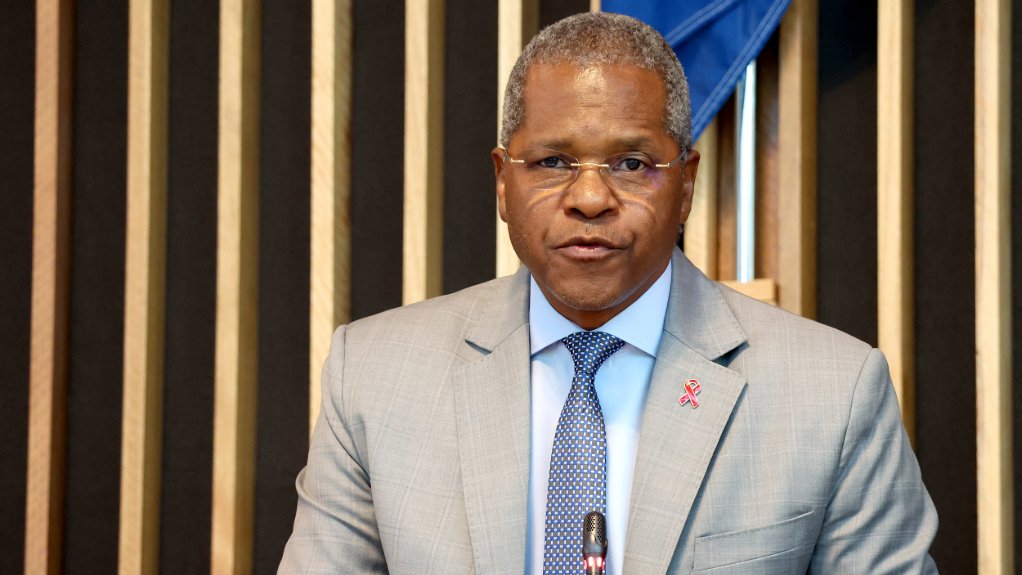
Municipalities and the services they provide are foundational for the functioning of society and businesses, and creating effective, efficient and sustainable municipalities is a focus that has been agreed on by all parties, Cooperative Governance and Traditional Affairs Minister Velenkosini Hlabisa said during an event hosted by Business Leadership South Africa (BLSA) on April 23.
Creating an environment in which municipalities can function effectively required that competent persons be appointed to relevant and suitable positions, he said.
Therefore, the White Paper on Local Government review process will introduce separation of municipal and political appointments, as well as ensure tenure of ten years for technical managers - split across two five-year election cycles - to ensure continuity.
The appointment of the technical and municipal managers would need to be approved by provincial department structures and by the relevant National Minister. The aim was to ensure there were suitable skills in the required positions, such as planning, finance, infrastructure development and maintenance and others, he said.
In too many places, governance weaknesses undermine administration, which contributes to financial weaknesses, accelerated infrastructure decay and service delivery failures, which erode trust.
This cycle must be broken. Therefore, the strategic direction of the reform process was system-wide. It did not aim to fix municipalities one by one, but made clear that the entire local government system must function differently, he emphasised.
Accountability must be clearer, support [for distressed municipalities] must come earlier and the rule of law must be upheld, he said during the briefing.
The White Paper review process places reforms within various themes, including, firstly, a more coherent and differentiated local government system with clear powers and functions, as well as pathways to a more rational and institutional model over time.
The review also identifies stronger governance as a reform theme, so that planning, budgeting and delivery are aligned around outcomes, instead of across different silos.
A third theme of reforms includes capable government, stronger ethics, consequence management, anti-corruption measures and clear separation of political leadership and administration.
Further, while the recruitment of technical and administrative personnel without political interference would ensure that the relevant skills were in place in each municipality, a municipal leader must still be a competent person to lead a municipality effectively, Hlabisa said.
If a mayor cannot understand financial statements, budgets and audit outcomes, then that person cannot plan for the operation of a city for the next ten years nor hold the administration to account.
The Constitution does not require that political representatives have any qualifications, which is why the draft of the White Paper review process does not prescribe qualifications for political appointees.
However, having qualifications does not necessarily translate to a person being competent, he added.
“A political leadership role is necessary, but is not always effective at leading municipalities. While we do not prescribe education requirements for political representatives, we are elevating the importance that such positions require a competent and capable person,” Hlabisa said.
Specifically, the importance of competent political appointees is being raised in two ways, with the first being that the draft White Paper review aims to set up continuous engagement platforms between municipalities and local communities, businesses, civil organisations and traditional leaders.
The second way is by raising the importance among voters of supporting parties that appoint competent leaders.
“A political party will demonstrate respect for the people of South Africa with the people they deploy. Voters can look at the people appointed to determine whether the party takes them seriously by whether the people nominated are competent and capable of planning for the future of the municipality.
“Voting by heart is not helping the issue; we need to vote for someone whom we believe will get the services right and voters must punish parties that do not appoint competent people or do not take the issues of the municipality seriously.”
Separate from the Local Government White Paper review process, government is also developing legislation to support the effective performance of municipalities governed by coalitions of parties.
Similar to the Government of National Unity, the main aim of the reforms in this area is to ensure the parties cooperate for the good of their communities, including agreeing on a set of actions that will be undertaken in collaboration among all parties until the next election cycle, Hlabisa said.
Further, the Local Government White Paper review does not suggest a one-size-fits-all approach, as municipalities have different challenges that require differentiated approaches to address them.
The reforms, therefore, must align obligations, instruments and support within the municipal context while ensuring finance followed function and core competencies were protected, Hlabisa said.
For businesses and the wider economy, this reform offers a strong, long-term foundation that municipalities will focus on the basics, be less fragmented, provide greater certainty around services and municipal processes, and deliver stronger infrastructure stewardship to provide better managed spaces for investment, trade and livelihoods.
Local government reform was about building municipalities that were ethical, accountable, capable and financially sustainable, and about restoring confidence in the State at the level that is closest to people, he said.
It was about creating local conditions in which communities could live with dignity and in which businesses could operate, expand, invest and create jobs, he said.
Meanwhile, Hlabisa also gave concrete timelines for the enactment of the reforms.
The finalised draft of the review will be taken to Cabinet on May 6 and will then be gazetted between mid-May to mid-June this year. The aim is to start implementing the review's reforms from July.
Implementation is divided into three stages, including short-term goals to 2027, which mainly involve preparing municipalities in terms of the new requirements prior to local government elections; medium-term goals from 2027 to 2031; and then long-term goals beyond 2031.
Further, work on the Local Government General Laws Amendment Bill was in abeyance until the current Local Government White Paper review process was completed, partly to ensure that recommendations from the White Paper review and the medium- and long-term plans could find expression in the Bill, Hlabisa said.
The plan is to submit the Local Government General Laws Amendment Bill to Parliament in March 2027.
“The whole of government - across party lines - is focused on ensuring local governments work. Because if they work, then education will work, services will work and sectors will flourish because we fixed the basics,” Hlabisa said.
Unreliable electricity and water supply, deteriorating road infrastructure and delays in approvals and licensing increase the costs of doing business and reduce the competitiveness of businesses.
Many companies have to invest in electricity generation, water-storage systems and private infrastructure to maintain operations. These costs divert resources away from expansion and job creation.
Infrastructure investment is also affected by municipal performance, and investors require certainty and predictability around provision of services over the long-term to invest.
“Every business and organisation exists and operates in a local government space. It is at the municipal level where economic growth either succeeds or fails.
“This is why reversing local government dysfunction is an economic imperative. Any local government reforms are economic reforms,” he said.
Hlabisa was speaking at a briefing to discuss the BLSA’s Reform Tracker data.
EMAIL THIS ARTICLE SAVE THIS ARTICLE ARTICLE ENQUIRY FEEDBACK
To subscribe email subscriptions@creamermedia.co.za or click here
To advertise email advertising@creamermedia.co.za or click here


