





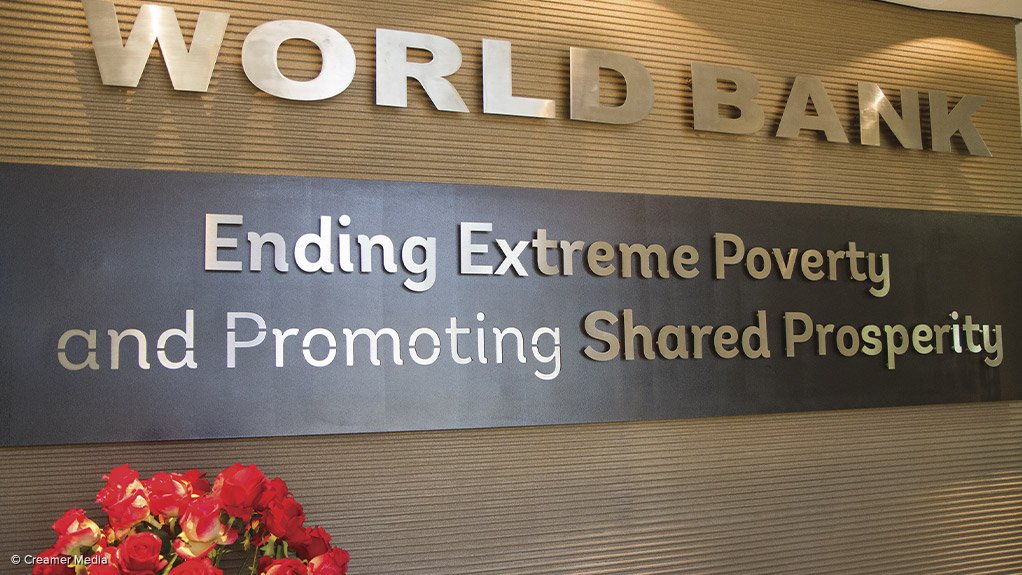
Two-thirds of the world's assets are in land and buildings, highlighted World Bank global leader in land Mikka-Petteri Törhönen in a presentation at the XXVIII Congress of the International Federation of Surveyors (better known as FIG), at the Cape Town International Convention Centre. The total value of the assets concerned came to about $415-trillion.
But when it came to land, there was still a lot of "informal" land ownership -- that is, not formally registered and recorded with the authorities -- worldwide, he pointed out.
This category included, but was not restricted to, land belonging to indigenous peoples, local communities and, often, women. Globally, only some 35% of land rights were formally documented.
Informally held land could not be used as a foundation (eg, by acting as collateral) for economic development. It was estimated that, worldwide, there was capital totalling $60-trillion in land assets that could not be economically used.
"Formalising land rights benefits everyone," he stressed. "Land with registered rights is, on average, 30% more valuable than land with unregistered rights."
Worldwide, progress is being made. Land administrative systems are improving. Today, 68% of countries operate digital land registries, while 62% are able to provide digital cadastre maps.
For example, in the ten years from 2014 to 2024, Indonesia increased the number of formalised land rights from 40-million to 120-million, in a programme driven by the country's then President. With World Bank help, Côte d'Ivoire is now seeking to replicate this. Meanwhile, Pakistan's Punjab province has successfully digitalised its Land Information System.
The World Bank had, he highlighted, great expertise in land affairs. Its land investment pipeline was $1.8-billion and its land-focused loans totalled $2.9-billion. It had 51 operations in 46 countries and had accrued "vast knowledge" in a range of land-related areas, including women's land rights, forest tenure, land and conflict, access to land, land revenue, indigenous peoples and local communities' land, and land and carbon markets.
It had been aiding countries to upgrade their land administration systems and formalise land ownership, through its Land 2030 Global Partnership, launched in 2021. Given that, by 2050, 70% of the global population (estimated by then to be 10-billion) would be urban, and that urban "agglomerations" would then be responsible for 80% of global GDP, Törhönen pointed out that these initiatives had to focus on urban areas first.
EMAIL THIS ARTICLE SAVE THIS ARTICLE ARTICLE ENQUIRY FEEDBACK
To subscribe email subscriptions@creamermedia.co.za or click here
To advertise email advertising@creamermedia.co.za or click here


