





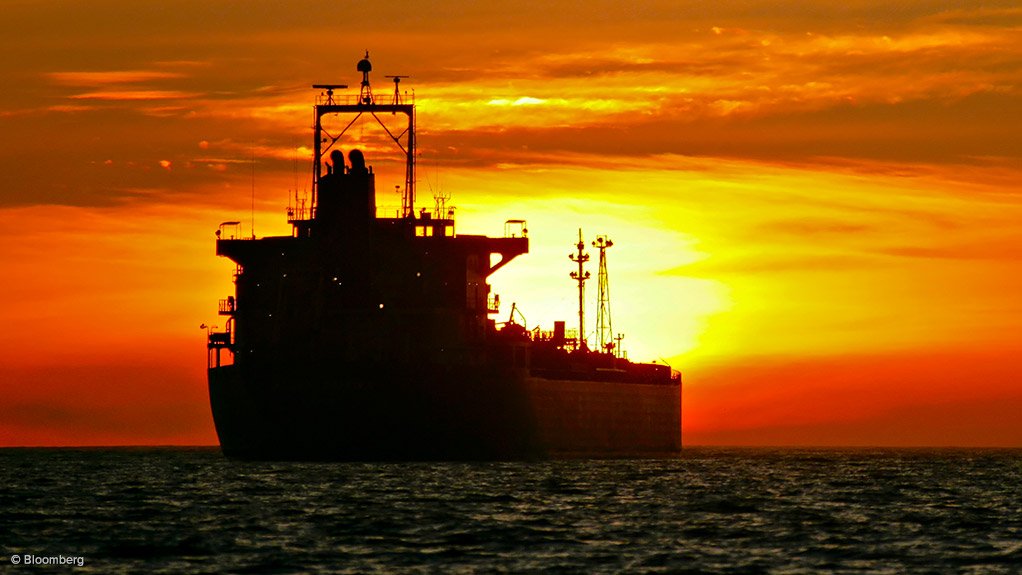

The International Monetary Fund (IMF) has cut its 2026 growth projection for the South African economy to only 1% from a January projection of 1.4%, as it warned that the outbreak of war in the Middle East threatened to throw the global economy off course and exact a high economic toll on many oil-importing countries.
The IMF has also reduced the growth outlook for sub-Saharan Africa to 4.3% from 4.6%.
South Africa relies heavily on fuel imports, including from countries unable to trade as a result of the ongoing disruption to shipping in the Strait of Hormuz, while recent movements in oil prices and the exchange rate point to yet more fuel price hikes in May, with particularly steep diesel hikes indicated.
Government moved to partially offset what would have been even steeper hikes in April by introducing a month-long R3/l reduction in the general fuel levy, while a Cabinet task team has been set up to assess short- and medium-term responses to security-of-supply risks and price shocks. However, there have been no public statements from the task team since the decision in late March to cut the fuel levy in April.
The IMF also cut its global growth outlook and raised its inflation projections in all three scenarios included in its World Economic Outlook released on April 14.
Global growth in its most benign ‘reference’ scenario is projected to be 3.1% against the 3.3% forecast in January, while inflation in the scenario is projected at 4.4% for 2026.
The reference scenario was released instead of the IMF’s traditional baseline, and is predicated on the assumption that the war will have limited duration and that the disruptions will fade by mid-2026.
However, IMF chief economist Pierre-Olivier Gourinchas acknowledged the high level of uncertainty and warned that, in the absence of a swift resolution to the war, the world could drift daily towards scenarios that pointed to lower growth and higher inflation outcomes.
Under the IMF’s so-called ‘adverse scenario’ growth is projected at 2.5% and inflation at 5.4%, while its ‘severe’ scenario pointed to global growth of only 2% and inflation of 6%.
Under its reference case, the IMF is projecting an average oil price for 2026 of $80/bl, based on an assumption of a resolution that will help bring down energy prices in the second half of the year.
“Very clearly with every day that passes where we don’t have a resolution, where the flow of oil and gas is limited through the Strait of Hormuz, we are moving away from that scenario,” Gourinchas said during a media briefing.
Earlier the IMF together with the World Bank and the International Energy Agency also cautioned that fuel and fertiliser prices could remain high for a prolonged period even if regular shipping flows resume through the Strait of Hormuz, owing to the damage to infrastructure as a result of the conflict.
The IMF also stressed that, while the growth and inflation revisions under its reference case seemed relatively modest at the global level, the impacts would not be evenly spread.
The toll would be most pronounced in the Middle East region and in more vulnerable economies elsewhere, especially commodity-importing emerging markets and developing economies.
Research Department division chief Deniz Igan said that, ahead of the war, many economies in sub-Saharan Africa were benefitting from resilient global growth and higher non-oil commodity prices.
“Now with the war, we have reduced global growth, softer prices for non-oil commodities and also worsened terms of trade for oil importers … and on top of that the region is also facing significant challenges from declining foreign aid, with bilateral aid cuts ranging from 16% to 28% in 2025 and we project that trend to continue,” Igan explained.
As a result growth has been downgraded for the region by 0.4 percentage points cumulatively for 2026 and 2027, while median inflation in sub-Saharan Africa is projected to rise from 3.4% in 2025 to 5% in 2026.
“That reflects the higher oil and fertiliser prices, fuel shortages potentially, and rising borrowing costs,” she said, indicating that fertiliser costs were of particular concern because of the region’s reliance on agriculture and underlying food security risks.
EMAIL THIS ARTICLE SAVE THIS ARTICLE ARTICLE ENQUIRY FEEDBACK
To subscribe email subscriptions@creamermedia.co.za or click here
To advertise email advertising@creamermedia.co.za or click here


