





 Ask people where
 But does this reflect reality?
I am a scientist who studies climate extremes and health, and was part of a team that set out to answer that question properly. We took 10 of the most widely used global climate models, adjusted them to better reflect real-world observed conditions, and then used them to project heatwave exposure for rural and urban populations globally.
We used multiple models rather than one because no single model is perfectly accurate. Averaging across ten corrected models also gives projections that are likely to be far more reliable than any individual one. We then ran those projections twice: once under a future where countries take meaningful action on emissions, and once under a future where fossil fuel use continues largely unchecked. This allowed us to see how much the answer changes depending on whether the world stops fossil fuel pollution or not.
We tracked rural and urban communities separately, across every major region of the world, from 1979 through 2100. Our study is unique because it analyses rural and urban populations separately rather than treating the world as one uniform population. This allowed us to see how population growth and climate change act together to amplify the dangers of a warming world.
It also showed exactly how much of the rising rural exposure to heat comes from the climate getting hotter, and how much comes from more people moving to already-hot places.
Population growth and climate change do not operate independently. Where a region is simultaneously getting hotter and adding large numbers of people, the number of people exposed to dangerous heat will get much worse.
In our findings, Africa stood out immediately. Even before any future warming is accounted for, our model revealed that rural communities across Africa are already recording between 20 and 1 000 person-days of heatwave exposure per year. (A person-day measures total heat exposure by combining how many people are affected with how many days they experience a heatwave.)
Urban African residents are recording fewer than 20 person-days per year.
Our projections show that the heat gap between urban and rural residents of Africa does not close. It grows.
Under a future where countries take meaningful action on emissions, rural exposure in south-east Africa (which includes Tanzania, Malawi, Mozambique, Rwanda and Burundi) will reach over 200-million person-days by late century. Urban exposure in the same region will reach roughly 100-million person-days.
This means that people in rural areas will be exposed to dangerous levels of heat nearly twice as much as urban dwellers. To minimise the risks to rural people, global fossil fuel emissions must be cut urgently. Governments must also move fast to invest in early warning systems, hire rural health workers to deal with heatwave-related illnesses, and provide shade and agroforestry for farming communities.
The global pictures
There are four standard futures that most climate scientists use in their projections but we chose two of them. The first is a future of partial action. This is where governments manage to stop some greenhouse gas emissions, but not enough to stop global warming.
The second future is a high-emissions scenario, where fossil fuel industries continue to grow and pollute without being stopped. Under this future, global warming speeds up fast.
Our modelling found that under a partial-action emissions future, northern east Africa (which includes Ethiopia, Somalia, and Eritrea) will experience about 50-million person-days of rural population exposure to dangerous heatwaves by 2100. The urban exposure is less than 30-million person-days.
In reality, this means that tens of-millions of people in this region will endure weeks of extreme heat, repeatedly, with very little protection.
The next regions to be badly affected are west Africa and central Africa. Nigeria, Ghana, Senegal, Côte d’Ivoire, the Democratic Republic of Congo, Cameroon and the Central African Republic will feel the heat.
West and central Africa will experience at least 8-million person-days of urban exposure driven by climate change and population growth. Rural exposure climbs further still to 50-million person-days.
The most concerning finding of our model was that under a high-emissions future, climate change takes over entirely. In south-east Africa and west Africa combined, the climate effect alone will drive rural heatwave exposure to roughly 70-million person-days, compared to just 5-million person-days for urban populations in the same regions.
These are not small, incremental shifts. They describe a continent where rural communities are absorbing an accelerating heat burden that the rest of the world has barely started to account for.
What we measured
What our models revealed challenges a widely held assumption that cities are where heatwave risk concentrates. Across most of Africa and large parts of South Asia, like Pakistan, India and Bangladesh, rural populations faced heatwave exposure comparable to or exceeding that of urban populations.
This was even the case in areas where rural temperatures were not the highest recorded.
The danger is not simply how hot it gets. It is how hot it gets in places where there is nothing to soften the impact.
Our models captured this by accounting for where people actually live and work, not just where temperatures peak. The temperature is not the only thing that kills you. It is the heat combined with the near-total absence of any way to escape it.
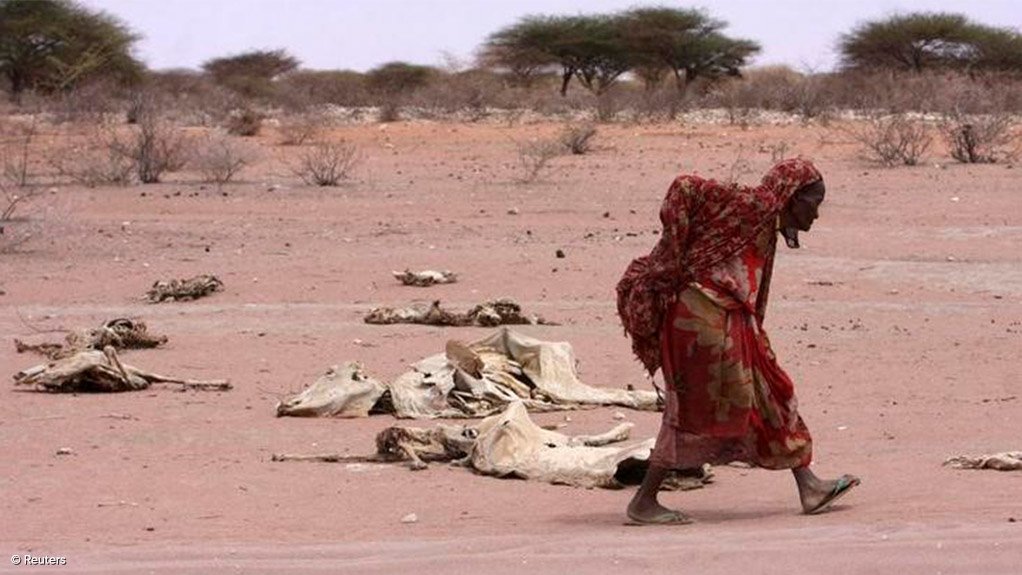
A farmer in south-east Africa does not get to stop working because the temperature spikes. The maize does not wait. A herder moving livestock across open ground in west Africa has no building to step into, no cooling centre, no fan.
A pregnant woman in a rural community an hour from the nearest clinic faces heat exposure that is consistently linked to premature birth and stillbirth, with no one nearby who can intervene.
Urban residents in Africa, even those in the most crowded and poorly ventilated informal settlements, have options that rural workers simply do not.
Where the risk is coming from
In south-east Africa, west Africa and central Africa, the research shows that population growth is a significant driver of near-future rural exposure increases (the changes projected between now and roughly mid-century). But climate change accelerates sharply as the century progresses and eventually overtakes population growth as the dominant force.
By late century, the heat itself becomes the dominant force, and the rural communities already living in those regions absorb the full weight of it. This matters because the two drivers require different responses.
What needs to happen next
Urgent action is needed: better planning, more investment in rural areas, and heat protection. This must happen at the same time as cutting greenhouse gas emissions and strengthening rural health systems.
This does not require expensive technology. Some things that can help rural people are:
-
heat warnings in local languages through community radio
-
shifting the heaviest farm labour to early morning before the heat builds
-
planting trees within and around farmland, which reduces local temperatures and improves harvests
-
training rural health workers to recognise and treat heat illness before it becomes fatal.
None of this is complicated. What it requires is the decision to treat rural heat exposure as the serious and worsening public health crisis that it is.
Written by Oluwafemi E. Adeyeri, Research Fellow in Climate Science, Australian National University
This article is republished from The Conversation under a Creative Commons license. Read the original article.


