





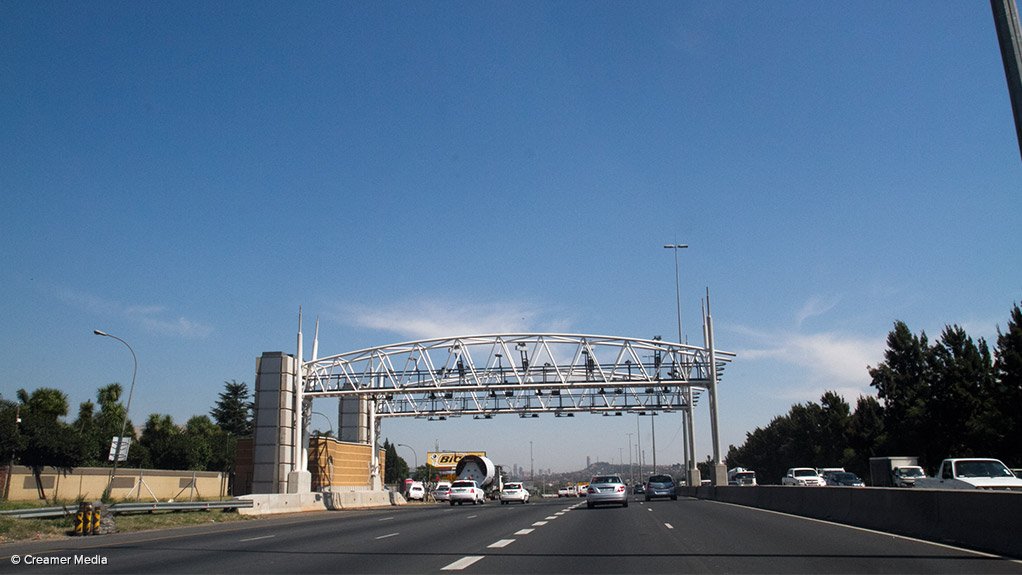

The Department of Transport (DoT) welcomes Cabinet's approval of State-owned South African National Roads Agency Limited’s (Sanral’s) plans to close the Gauteng Freeway Improvement Project (GFIP) e-toll historical debt, which also sees the resolution of all outstanding litigation matters.
The closure of the GFIP e-toll debt is intended to provide certainty, resolve historical debt matters and support a sustainable approach to the funding, maintenance and improvement of South Africa’s national road network.
With Cabinet’s approval secured, outstanding and unpaid historical GFIP e-toll debt owed by road users will be written off and Sanral will not pursue any further collection of historical GFIP e-toll debt.
However, road users who lawfully paid e-tolls while the system was legally in force will not be refunded, as they were lawful levies at the time they were paid before the toll declarations were withdrawn on April 11, 2024.
Transport Minister Barbara Creecy and Deputy Minister Mkhuleko Hlengwa say the decision is a long-awaited step to close the GFIP e-toll matter in an orderly and responsible manner.
The decision brings much-needed relief and lessens the financial burden on road users who are currently hard-pressed by high fuel costs, they aver.
The write-off of outstanding debt gives effect to government’s decision to close the GFIP e-toll scheme and provide finality to road users, Sanral and the fiscus.
“The user-pays principle remains an important part of South Africa’s road infrastructure funding framework where it is broadly accepted by road users through negotiation and agreement, appropriately structured, legally sound and supported by clear policy certainty,” the department notes.
Meanwhile, civil society organisation the Organisation Undoing Tax Abuse (OUTA) says the e-toll saga serves as a cautionary lesson for future infrastructure funding decisions and government policymaking.
The e-toll saga is a warning of what happens when government ignores public sentiment, persists with flawed policy and delays corrective action long after the facts are clear, it states.
Good governance requires leaders who are willing to acknowledge mistakes early and act decisively. South Africans waited far too long for this outcome, says OUTA CEO Wayne Duvenage.
“Had government acted when the scheme’s failure became apparent, taxpayers could have been spared years of legal disputes, administrative costs, political conflict and uncertainty.Instead, South Africans were left waiting while government delayed a decision that should have been taken years ago.”
The scheme was launched in December 2013. Compliance levels peaked at about 40% during the first six months and its failure was evident by 2014.
“By mid-2014, it was clear that the scheme lacked public support and was not financially sustainable, but it took more than a decade for government to formally accept the inevitable.
“This prolonged delay reflects a broader concern about government’s inability to act decisively when the evidence clearly points to policy failure,” says Duvenage.
OUTA consistently maintained that Sanral would not be able to recover the vast majority of outstanding debt and that government would, ultimately, have to accept this reality.
“Government switched off the gantries in 2024, but left the debt question hanging over motorists for another two years. This decision finally acknowledges what had become obvious long ago,” he adds.
This decision will bring significant relief to motorists about outstanding e-toll accounts and legal action over years, the organisation says.
EMAIL THIS ARTICLE SAVE THIS ARTICLE ARTICLE ENQUIRY FEEDBACK
To subscribe email subscriptions@creamermedia.co.za or click here
To advertise email advertising@creamermedia.co.za or click here


