





JOHANNESBURG (miningweekly.com) – Amid the expectation of Eskom publishing its winter outlook later this month, the State-owned power utility has meanwhile expressed confidence that it will be able to meet electricity demand as South Africa heads into the winter season, Minerals Council South Africa indicates in an electricity update.
The Minerals Council’s update notes, however, that Eskom’s energy availability factor declined in March, when it averaged 66.8% compared with the higher 68.3% the month before.
While March’s 66.8% fails to meet the 68% target set in last year’s Integrated Resource Plan, more than 4 000 MW remains in immediately dispatchable reserve owing to electricity demand continuing to lag supply.
Picking up slightly in March, though, was open cycle gas turbine usage but Eskom attributes this increase to optimisation testing conducted at Gourikwa power station in the Western Cape, rather than to peaking in response to excess demand.
On the maintenance front, planned maintenance is up and unplanned outages are down.
So far this year, unplanned outages have consistently averaged below 10 000 MW, with March recording 9 201 MW, an improvement from the 9 754 MW reported in February.
Planned maintenance increased in March by 1 300 MW compared with February, which suggests that Eskom is continuing to prioritise planned maintenance and upkeep ahead of the winter season.
Compared with the same period last year, total maintenance and outages are lower by 4 400 MW in March 2026, which is broadly consistent with the level of excess capacity currently held in cold storage.
Statistics South Africa data indicates a continued decline in both electricity production and consumption in South Africa.
Seasonally adjusted real electricity generation fell by 3.8% year-on-year in February 2026, extending the monthly decline in generation that began in June 2025.
On a month-on-month basis, electricity generation was down marginally by 0.2% in February.
The long-term trend in electricity production was graphically illustrated in the Minerals Council report by economist André Lourens.
Overall, national electricity output remains below pre-pandemic levels. In January 2026, production was 8.7% below the pre-Covid baseline and 12.4% lower than output recorded in January 2019.
Also graphically illustrated were the changes in seasonally adjusted electricity production and mining production, indexed to a common starting point in January 2019.
Historically, the two series have tracked each other closely, moving in the same direction with a positive correlation of around 0.68, implying that higher mining production was associated with higher electricity production.
However, from April 2025 onward, a clear divergence emerges and the relationship turns negative, meaning that higher mining production is now associated with lower electricity production.
This likely reflects the structural shift underway in the mining sector away from Eskom-supplied electricity.
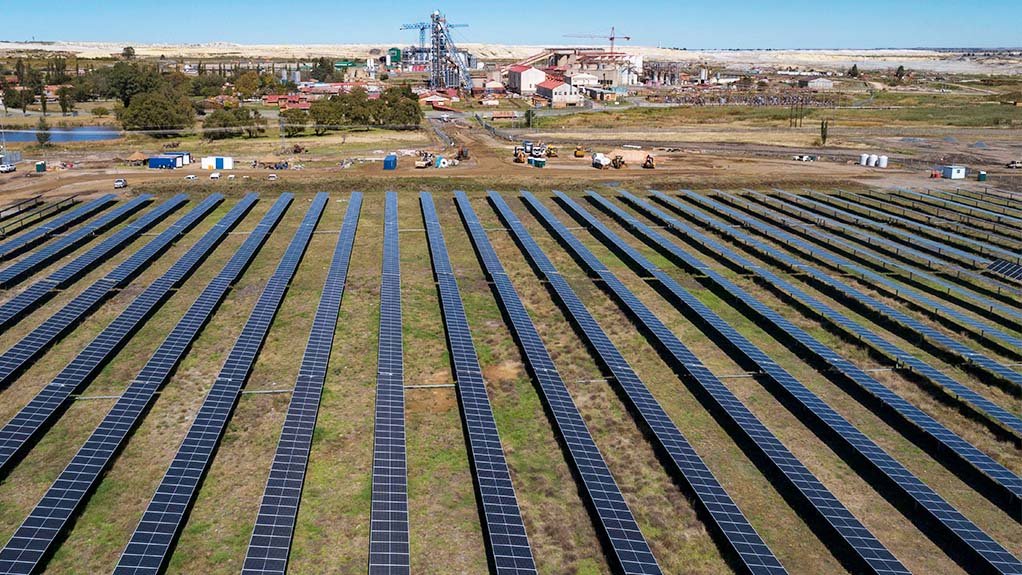
An increasing share of electricity production and consumption is being met through self-generation, weakening the historical link between Eskom’s electricity output and mining production.
As a result, Eskom's production of electricity is no longer a reliable indicator of future mining output.
Given that self-generated electricity is cheaper than Eskom-supplied electricity, this trend is unlikely to reverse in the foreseeable future.
The Minerals Council reports that South Africa’s electricity sector is undergoing a fundamental transition.
Despite improved system stability and the absence of loadshedding, electricity production and consumption continue to decline as demand remains subdued.
This is reflected both in the sector’s contraction of 4.3% in the fourth quarter of last year’s GDP and in weakening system demand, with peak demand in March 2026 at 26 500 MW, down from 28 905 MW in March 2025.
Taken together, these indicators suggest that improved supply conditions have not yet translated into a recovery in underlying electricity demand.
Given the trajectory of electricity tariffs and weak economic growth, a meaningful demand recovery appears unlikely in the near term.
At the same time, the traditional relationship between electricity production and mining output has structurally weakened.
Mining production is increasingly decoupled from Eskom-supplied electricity as self-generation expands, reducing the relevance of Eskom’s production figures as a proxy for industrial and mining activity.
This shift helps explain why electricity output remains well below pre-pandemic levels, even as mining production has shown resilience in recent periods.
The combination of weak domestic demand, particularly since major electricity consumers such as the ferrochrome smelters have suspended operations because of uncompetitive power costs, and improving operational performance has resulted in excess generation capacity, enabling Eskom to hold meaningful volumes in cold storage and to increasingly rely on electricity exports to absorb surplus supply.
While Eskom has remained a net exporter of electricity since May 2024, subdued economic growth in neighbouring countries, alongside global geopolitical uncertainty and energy-related supply risks, is likely to constrain export growth. The closure of South32’s Mozal aluminium smelter in Mozambique in March 2026, owing to the failure to secure competitive electricity prices, further reduces consumption of Eskom’s electricity in a neighbouring country.
As a result, while system reliability has markedly improved, the electricity sector remains constrained by demand-side weakness, globally uncompetitive tariffs, and structural change, factors that will continue to shape Eskom’s operating environment and the broader energy landscape going forward, Lourens concludes.
EMAIL THIS ARTICLE SAVE THIS ARTICLE ARTICLE ENQUIRY FEEDBACK
To subscribe email subscriptions@creamermedia.co.za or click here
To advertise email advertising@creamermedia.co.za or click here


