





The City of Ekurhuleni in Gauteng, which is a key manufacturing and logistics hub, has secured a Section 34 Ministerial determination under the Electricity Regulation Act enabling it to procure 2 400 MW of renewables and gas-fired electricity capacity from independent power producers (IPPs).
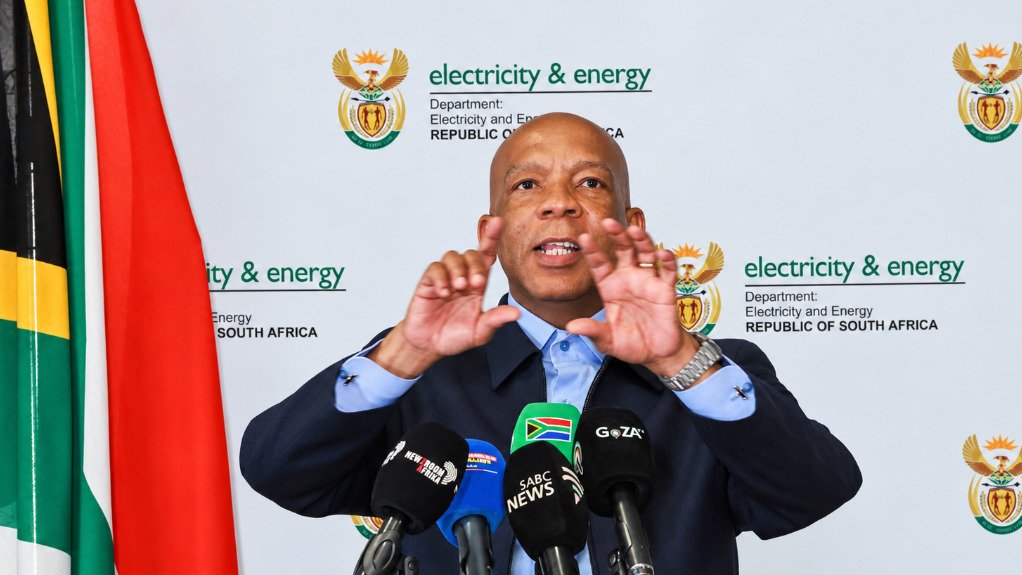
The determination was announced on October 19 by Electricity and Energy Minister Dr Kgosientsho Ramokgopa at a joint briefing with Ekurhuleni Executive Mayor Nkosindiphile Xhakaza.
The announcement has been made only weeks before what is poised to be a highly competitive local government election, scheduled for November 4. The outcome could have a material influence on whether or not the IPP procurement programme will remain a priority for Ekurhuleni’s new council.
Under the determination, allocations were approved for four technologies, including 1 237 MW of solar PV, 780 MW of gas-to-power (GtP), 183 MW of waste-to-power, as well as 200 MW for other technologies that could be piloted by the city.
The bulk of the solar PV allocation, or 1 137 MW, would be built on land identified within Ekurhuleni’s boundaries and would be connected to the city’s distribution network. The 100 MW solar PV balance would be secured through a wheeling agreement, as would be the case for 535 MW of the 780 MW GtP allocation.
No project specifics were immediately provided, including as to where the GtP plants would secure their feedstock, with Xhakaza indicating only that 75 individual IPP partners had been identified through two separate bid windows that had been undertaken some years ago.
In the absence of the determination, the metropolitan council had been unable to conclude the envisaged 20-year power purchase agreements (PPAs) with these IPPs and the procurement programme had, thus, been on hold since 2021.
The Ekurhuleni determination was the third to be approved in favour of a metropolitan council, with the first 400 MW determination secured by the City of eThekwini, in KwaZulu-Natal, and the second 220 MW approved in favour of the City of Cape Town, in the Western Cape.
The scale of the Ekurhuleni determination, which Ramokgopa said had received the National Energy Regulator of South Africa’s concurrence and had also been communicated with the National Treasury, was significantly larger than those two earlier determinations.
Xhakaza said it opened the way for combined investments worth some R6.2-billion and reported that a sod-turning ceremony for the first 25 MW solar PV project had been scheduled for Thursday, October 22. No further details were provided, however.
Should the full capacity allocation be implemented at the tariff levels indicated by the IPPs, the city estimates that it could secure savings of R36-billion relative to the cost of the bulk electricity it would have purchased from Eskom over the period.
The savings, the mayor said, would be passed on to ratepayers. In addition, the clean-electricity credentials of manufacturers in Ekurhuleni, where peak demand stood at 2 500 MW, could be enhanced at a time when various countries were moving to impose carbon border adjustment measures.
Ramokgopa insisted, too, that the determination was approved only because the city was in good financial standing with Eskom.
Ekurhuleni’s current account with Eskom, he said, was up to date, and it had entered into a settlement agreement with the State-owned utility in relation to R2-billion in historical arrears debt.
EMAIL THIS ARTICLE SAVE THIS ARTICLE ARTICLE ENQUIRY FEEDBACK
To subscribe email subscriptions@creamermedia.co.za or click here
To advertise email advertising@creamermedia.co.za or click here


