






A modern, efficient and well-functioning financial system is essential for growth in any modern economy, and as this is pursued, innovation that serves the public interested is pivotal.
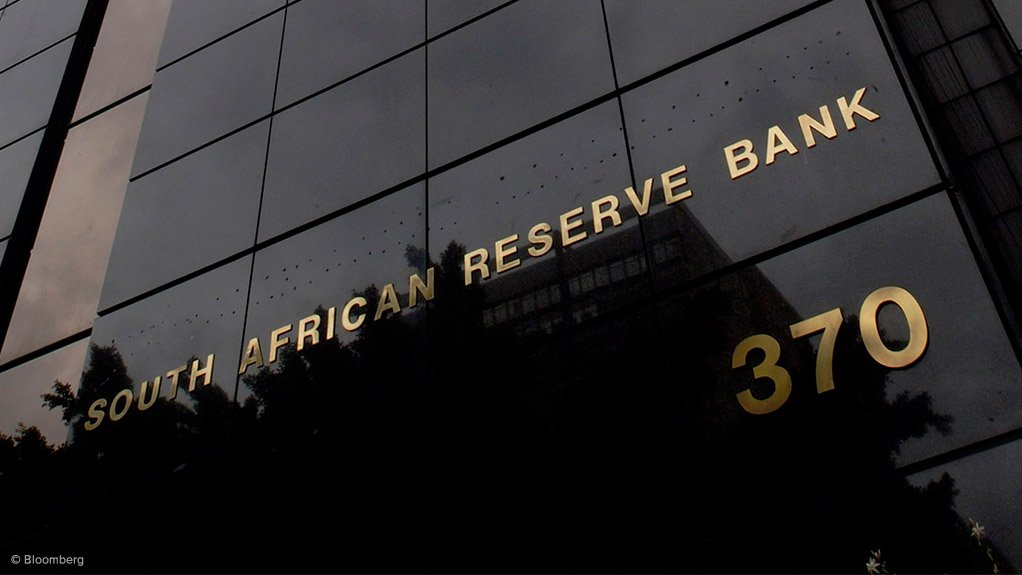
This was highlighted by South African Reserve Bank (SARB) deputy governor Rashad Cassim in a keynote address at the Gordon Institute of Business Science, in Johannesburg, on June 9.
“The goal is simple, even if the work is not: a payment system that is modern and competitive, a monetary system that remains credible and coherent and a financial system that is both innovative and stable,” he emphasised.
He outlined the SARB’s approach to fast payments, digital assets and central bank digital currency (CBDC).
While South Africa had been at the frontier of wholesale payments relative to many of its peers, it had lagged in keeping pace with innovation in fast retail payments and the move to real-time fast payments, Cassim pointed out.
“Our retail system has not been as quick, cheap or continuously available as those in countries such as Brazil and India. In response, the SARB, working with the private sector, has embarked on an ambitious effort to address issues or gaps in our fast payment system, PayShap,” he informed.
In the move to fast retail payments, two policy questions materialised – the role that the SARB plays, given that much technological innovation is driven by the private sector; and, as a late mover, could South Africa leapfrog in digital payments innovation, including by using decentralised technologies such as distributed ledger technology (DLT).
“We kept an open mind and launched a series of proof-of-concept experiments. These included testing DLT in retail payments, wholesale payments and CBDC-related settings. One important initiative was Project Khokha, launched in 2018, to test what the technology could do in practice – and where its limits lay,” Cassim explained.
He highlighted that Project Khokha 1 demonstrated that a permissioned DLT network could move tokenised central bank money and settle trades in a controlled environment, and showed the trade-offs involved, particularly between privacy and efficiency.
“Keeping transactions private is possible but complicates design and slows the system. Having legal clarity on when a payment is ‘final’ on a decentralised system is also essential, and DLT systems do not automatically interoperate with existing payment infrastructure.”
In 2022, the SARB expanded its DLT experimentation in Project Khokha 2.
This follow-up work was needed to scale up the experiments and add tokenised securities, a wholesale CBDC issued by SARB and a stablecoin-like token issued by the commercial bank participants.
Project Khokha 2 brought the experimentation closer to a real-world operating environment, broadened participation and allowed hands-on experimentation. It also surfaced important governance and legal questions related to DLT-enabled tokenisation and settlement that would need to be resolved before any policy decisions could be taken, Cassim explained.
The SARB’s exploratory work on retail central bank digital currency is part of a broader effort to understand how public digital money might function in a modernised economy.
Last year, the SARB published its position on the role of a CBDC for retail payments.
Its view is that, while a retail CBDC is technically feasible and could support innovation while ensuring continued public access to central bank money, there is no compelling need for its immediate implementation, Cassim pointed out.
Instead, the compelling need was to modernise the payment system to give every South African fast, simple and secure digital payments, he added.
In embarking on this journey, there was a need to define the SARB’s role in the fast retail payment system, with research into global peers showing that practices vary considerably from country to country.
“In some jurisdictions central banks play a dominant role in both the regulation and operations of payments. In other cases, the private sector leads. We have ended up preferring a hybrid system, where both the SARB and the private sector play equally important roles in shaping our payment landscape.
“We recognise the sophistication and effectiveness of our private sector and we did not want to crowd that out. But it was also clear that the SARB needed to play a bigger role in retail payments to keep up with the global frontier,” Cassim outlined.
He also touched on the topic of supporting innovation while protecting stability and public interest.
“Our Payments Ecosystem Modernisation (PEM) marks an important shift in the SARB’s role – from setting the policy direction alone to helping shape the payment ecosystem more actively. We believe the SARB is well placed to act in the public interest, above the interests of any one group.
“Our role is to coordinate, support wider adoption of technology, promote a level playing field, reduce regulatory barriers where appropriate, and widen access for new entrants – especially non-bank players. But this must always be done within our mandate to safeguard financial stability by managing the liquidity, credit and cyber risks that innovation in payments can create,” Cassim detailed.
Through PEM, it was upgrading the underlying infrastructure to deliver a safer, faster and cheaper payment ecosystem for all users, he highlighted, underlining the importance of this for low-value payments, like those made by informal traders and households.
This required infrastructure and regulatory reform to move together, combining legislative changes, new authorisation frameworks and foundational platforms, Cassim pointed out.
He mentioned that cash remained the most popular means of payment in the economy, with the SARB committed to ensuring cash remained readily available and convenient.
“Our strategy is about giving South Africans more choice, not taking anything away – except hopefully needless fees and delays.”
On the topic of stablecoins, Cassim said these presented a distinct challenge for central banks.
“In the case of CBDC, the issuer is the central bank. In the case of stablecoins, the issuer is typically a private non-bank, although some commercial banks are also experimenting in this area,” he explained.
Cassim said that the response to stablecoins depended on understanding what was driving their growth and what they were actually being used for: as a more efficient payment instrument, as a form of e-money on blockchain, or as an alternative to publicly issued money.
“If they begin to function as the latter, the concerns become more serious. Unlike traditional money, stablecoins are not yet regulated to the same standard, and without proper oversight they could weaken the integrity of the monetary system. Other concerns include currency substitution and the possibility of circumventing exchange controls,” he warned.
While stablecoins have grown considerably, they are still a small part of overall financial activity.
“The SARB remains cautious about stablecoins, recognising both their benefits and their risks. Many jurisdictions, who have introduced regulation on stablecoins focus on addressing the risk of weak consumer and prudential safeguards, the need for stablecoin issuers to hold high-quality assets to back their tokens, to be transparent about this and to operate under clear rules that protect users and the financial system, ensuring that they do not undermine monetary stability or regulatory oversight. We are assessing whether the existing regulatory framework can be extended to stablecoin arrangements or if there is a need for separate regulation,” Cassim informed.
“In the end, as we monitor the growth of stablecoins, we are asking a simple question: are they gaining ground because the financial system is too costly and inefficient, or because they offer a way around legal domestic and cross-border channels? If the answer is the former, then our modernisation agenda must respond by making the formal system faster, cheaper and easier to use. If the answer is the latter, then the regulatory challenge becomes more urgent. That, in many ways, is the policy test before us,” he added.
EMAIL THIS ARTICLE SAVE THIS ARTICLE ARTICLE ENQUIRY FEEDBACK
To subscribe email subscriptions@creamermedia.co.za or click here
To advertise email advertising@creamermedia.co.za or click here


