







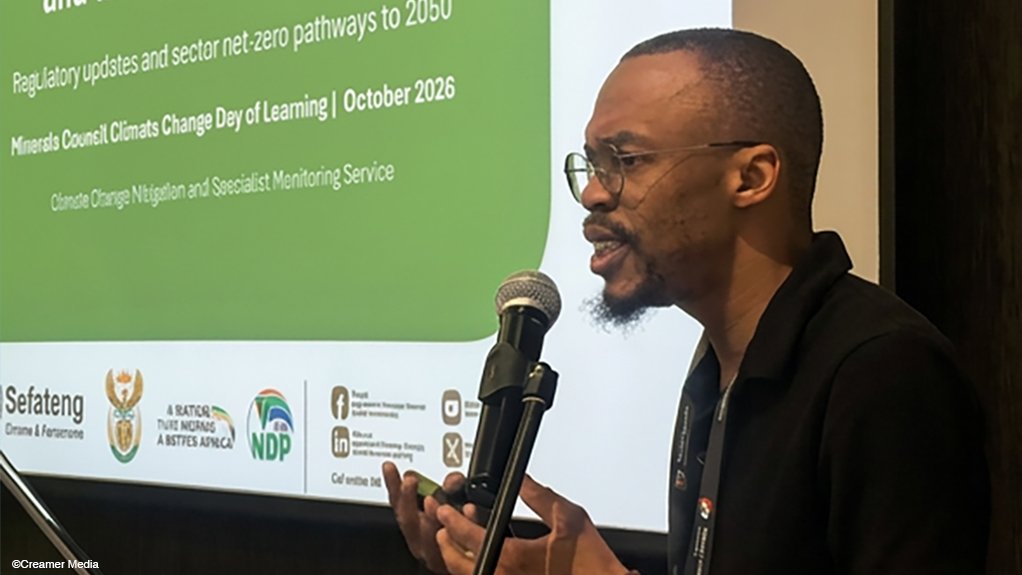

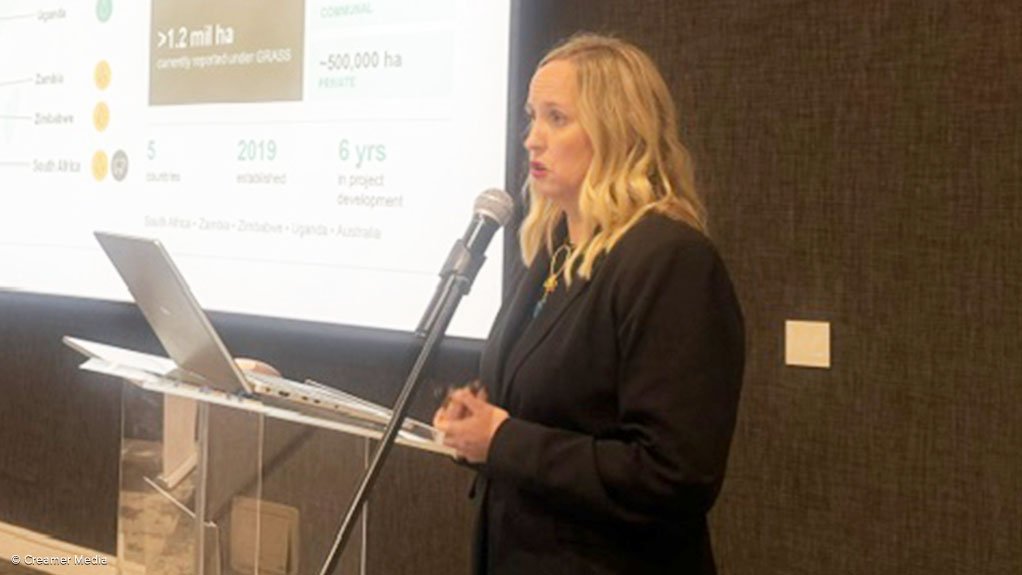




JOHANNESBURG (miningweekly.com) – Climate considerations are increasingly shaping how business is done, Minerals Council South Africa senior climate specialist Shalendra Subramoney said on Friday, October 30, in launching the council’s inaugural Climate Change Day of Learning, attended by public and private sector climate mitigation representatives.
“Mining is central to both South Africa’s development and the global climate transition. We need to reduce emissions and strengthen resilience while attracting the investment needed to grow a competitive mining sector, sustain and create jobs, support communities, and bolster South Africa’s economic development. Climate ambition and economic growth must reinforce each other,” Minerals Council senior executive: environment, health, legacies and employment relations Shamini Harrington stated in the keynote address.
"Mining is an energy-intensive industry with a responsibility to manage and reduce our own emissions and build resilience to the physical impacts of climate change. At the same time, mining produces the minerals and metals on which electrification, renewable energy, infrastructure and technological development depend. Mining therefore has a dual role - we are part of the transition ourselves, but we are also fundamental to enabling it.
"That dual role matters significantly for South Africa. Our country has significant development needs, an urgent requirement for stronger economic growth and investment, and a need for reliable and affordable energy, water and logistics. Mining remains deeply embedded in that economy. In 2025, the sector employed more than 470 000 people, contributed more than R439-billion to GDP and paid R31-billion in taxes,” Harrington added.
Attendees ranging from established mining companies to junior miners as well as exploration companies were hailed as being very important owing to climate change affecting every part of the mining ecosystem.
Even though the challenges and opportunities would differ across companies and commodities, Subramoney pointed out how, in the day-to-day work environment, everyone was experiencing climate's increasing influence on investment, competitiveness and market access.
“But we must also recognise that it is also opening opportunities in new technologies, minerals, and green value chains. For South African mining in particular, this discussion on climate change comes at a time when we urgently need investment and growth in the sector to arrest some of the performance declines we've been seeing over the past few years, to strengthen our existing operations and to unlock new opportunities.
“It's because of this,” – and Mining Weekly as an attendee heard this theme echoed quite strongly throughout event – “that we believe that climate action and growth need to reinforce each other, because a growing investable mining industry is much more better able to decarbonise, to build resilience, and to innovate,” Subramoney explained.
“While credible climate action increasingly matters to competitiveness and market access, it’s also important to note that mining sits on both sides of the transition.
“We, as a sector, need to continue reducing our emissions and strengthening the resilience of our operations as well as our host communities – and we need to do this while supplying the minerals and metals that the world needs to enable the transition and we also need to acknowledge the continued role of coal in energy security and in driving industrial activity in South Africa.”
The Minerals Council’s formal launch of 2026 Climate Change Position forcefully reaffirmed its commitment to move into implementation amid the Department of Forestry, Fisheries and the Environment's Paseka Mabina outlining the latest climate change policy developments in South Africa, including implementation of the Carbon Tax Act and the longer-term decarbonisation pathways.
Also unpacked by TASC commercial manager Storm Patel were South Africa’s carbon offsets as well as Harmony Gold’s Mohammed Asmaljee outline of practical implementation and financing of renewable energy, which is something in ongoing uptake across South Africa’s mining sector.
NET ZERO TRANSITION
The Minerals Council’s updated position is enshrined within the context of South Africa as a developing country under the auspices of the Paris Agreement, towards a responsible net zero transition. The position was released ahead of COP31 global climate negotiations in Turkey during November.
The 2026 position builds on the Minerals Council’s 2023 Climate Change Position and reflects a changing global and domestic environment. It recognises that South Africa’s transition must be practical, economically viable and grounded in the country’s development priorities and natural resource endowments, while enabling the investment and growth needed for a competitive and sustainable mining sector.
Mining has a dual role in the transition - reducing emissions and strengthening resilience within its operations and communities, while supplying the minerals needed for renewable energy, electrification and lower-carbon technologies. South Africa hosts many minerals necessary for a low-carbon future, including platinum group metals, manganese, chrome, iron-ore and vanadium among others.
A growing and investable mining sector is essential to mobilise the capital required for decarbonisation and climate resilience, while continuing to support jobs, communities and economic development.
This aligns with the Minerals Council’s wider Investment and Growth Strategy and its work through the Government-Business Partnership, where mining is one of three priority growth sector's to revitalise South Africa’s economy. Working with government and business, the sector is supporting efforts to strengthen competitiveness and increase investor confidence and investment in mining for the benefit of all South Africans.
The updated position continues to recognise the importance of reliable and affordable energy. Coal continues to play an important role in South Africa’s energy security, industrial base and economy as the country’s energy system progressively diversifies towards the inclusion of other energy sources such as renewable energy, gas and nuclear. The transition must be carefully managed to enable decarbonisation while protecting economic activity, jobs and communities and creating new opportunities for workers and mining regions.
The launch formed part of the Minerals Council’s 2026 Climate Change Day of Learning, themed 'Mining, climate action and the road to COP31'. It brought together the mining industry, government and climate specialists to discuss climate policy, carbon markets, renewable energy and practical approaches to mining growth and decarbonisation.
EMAIL THIS ARTICLE SAVE THIS ARTICLE ARTICLE ENQUIRY FEEDBACK
To subscribe email subscriptions@creamermedia.co.za or click here
To advertise email advertising@creamermedia.co.za or click here


