






The Broad-Based Black Economic Empowerment (BBBEE) Commission's latest research report, 'South Africa’s Transformation Landscape: 2013–2023', has revealed that progress is being made to drive transformation, but performance has been uneven across elements of the BBBEE Scorecard, as well as across sectors.
The research was conducted in collaboration with the Competition Commission of South Africa, the Presidential BBBEE Advisory Council, the Department of Trade, Industry and Competition and the South African National Accreditation System.
The research was undertaken in line with the BBBEE Commission’s mandate to increase knowledge of the nature and dynamics of BBBEE. Data for the research was drawn from BBBEE Scorecard submissions and compliance reports of private and public entities which are obliged by the BBBEE Act to report on their implementation of legislation.
The BBBEE Scorecard remains the primary statutory instrument for measuring implementation of the BBBEE Act. The research analysed scorecard data of 28 131 certificates from 56 verification agencies covering the years 2013 to 2023, and traced compliance trends over the period, at both the macro-level and for sector-focused scorecards, for all business sizes as categorised by the BBBEE Act.
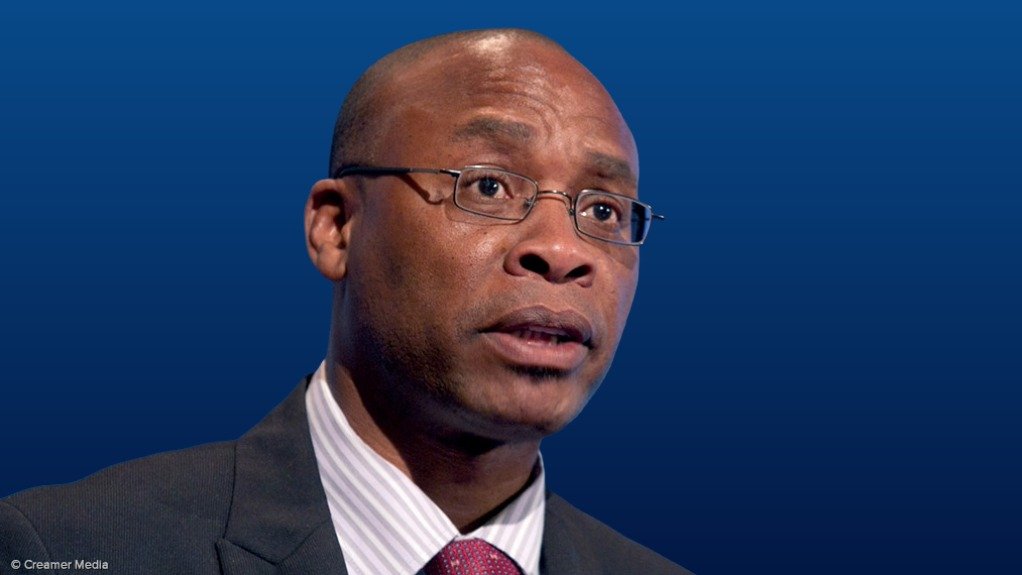
“The BBBEE Scorecard provides South Africa with a consistent and nationally recognised framework for measuring progress with BBBEE and economic transformation. By analysing ten years of scorecard performance, this report offers important insights into the gains achieved, areas of stagnation and opportunities for accelerated transformation. It also contributes to a growing body of evidence needed to strengthen policy, improve implementation, and advance a more inclusive economy,” says BBBEE Commission commissioner Tshediso Matona.
The report shows that the number of entities assessed for compliance with the objectives of the BBBEE Act has increased steadily during the period under review.
Despite recent setbacks, the commission says, noncompliance remained relatively low over the ten-year period, with 26% of qualifying small enterprises and 24% of large enterprises rated as noncompliant in 2023.
Further, at a macro level, encouraging progress was recorded in several elements of the BBBEE Scorecard. Ownership recorded consistent improvement, with average scores increasing from 12.4 points in 2013 to 19.2 points in 2018, before reaching 21.4 points in 2023.
Enterprise and supplier development also demonstrated significant progress, increasing from 19% of the available points in 2013 to 66% in 2023, reflecting stronger efforts to transform supply chains.
Similarly, skills development improved markedly from 17% in 2013 to over 60% in both 2018 and 2023, indicating sustained investment in developing skills. Socioeconomic development continued to exceed its target throughout the period, reaching 135% of the target in 2023.
The commission notes, however, that the report findings reveal that transformation has not progressed evenly across all elements of the scorecard.
It states that, while management control improved significantly between 2013 and 2018, progress plateaued thereafter, reaching only about 54% of the available points by 2023.
It adds that transformation at board and top management level remained particularly slow, showing little improvement over the ten-year period.
Further, significant differences in transformation performance are evident across sectors of the economy. "While some sectors have made substantial progress, others continue to lag. The agriculture, property and financial services sectors recorded relatively lagging performance against most transformation indicators, as well as the highest levels of noncompliance in 2023, with noncompliance rates of 50%, 67% and 62%, respectively.
"These sectors also failed to achieve the minimum ownership targets for both black people and black women. Agriculture recorded black ownership of 19.9% and black women ownership of 4.7%, while property achieved 20.5% and 6.4%, and financial services 21.5% and 7.5%, respectively," the commission points out.
By contrast, the construction, transport, marketing, advertising and communication (mac) and forestry sectors recorded the highest levels of compliance in 2023, at 81%, 80%, 66% and 60%, respectively. These sectors also recorded the highest proportion of entities achieving BBBEE Levels 1 to 4.
The commission states that there is a need for a more integrated national data ecosystem for transformation, to enable more rigorous future assessments of the policy’s broader economic outcomes.
Further, it stresses that the report findings show that BBBEE has not failed but demonstrates that while there has been progress over the ten-year period from 2013, there remains significant scope to deepen and accelerate economic transformation.
"This report confirms that South Africa has made measurable progress in implementing BBBEE over the past decade, while also reminding us that transformation is an ongoing national project. The findings show that BBBEE has become embedded in the governance and business practices of many organisations, but they also highlight areas where greater ambition and collective action are required.
"Our responsibility now is to build on the progress achieved, strengthen implementation, improve the evidence base and refine the policy framework so that economic transformation delivers broader, deeper and more inclusive participation in the economy. This report should therefore be viewed not only as a reflection on where we have come from, but as a roadmap for the next phase of South Africa's transformation journey," Matona comments.
EMAIL THIS ARTICLE SAVE THIS ARTICLE ARTICLE ENQUIRY FEEDBACK
To subscribe email subscriptions@creamermedia.co.za or click here
To advertise email advertising@creamermedia.co.za or click here


