Guinea
Guinea is a West African country located on the Atlantic coast, bordered by Guinea-Bissau, Senegal, Mali, Côte d'Ivoire, Liberia and Sierra Leone. The capital and largest city is Conakry, a major port on the Atlantic Ocean. Guinea has a population of approximately 13 million people and an economy heavily reliant on mining, particularly bauxite, of which it holds some of the world's largest reserves. The country is also a significant producer of gold, diamonds and iron ore. Agriculture employs a large share of the workforce, with key crops including rice, cassava, coffee and palm oil. The currency is the Guinean franc. Guinea is a presidential republic and a member of the African Union, the Economic Community of West African States (Ecowas) and the Organisation of Islamic Cooperation. The country has faced recurring public health challenges, including outbreaks of Lassa fever and serving as the epicentre of the 2014–2016 West African Ebola epidemic, which underscored the importance of disease surveillance and pandemic preparedness in the region. Guinea gained independence from France in 1958 and experienced decades of authoritarian rule before transitioning toward multiparty democracy in the 1990s, though political instability has persisted.
Guinea Updates
Guinea’s May elections end its transition – but will they bring stability?
By: ISS, Institute for Security Studies 26th May 2026 Although authorities adhered to the ECOWAS timeline, Guinea’s return to democracy is mired in controversy. On 31 May, 6.8-million citizens will... →

Ebola outbreak in the DRC: four reasons it will be hard to contain
25th May 2026 By the second week of the latest Ebola outbreak in the Democratic Republic of Congo it was already clear that containing the spread of the... →

Hantavirus in Africa: why climate change, rats and weak surveillance are worrying scientists
19th May 2026 Hantaviruses are not new. They have circulated for decades in rodent populations, particularly in rats and mice. Humans can become infected if they... →

100-million African children are not in school. What’s driving the trend and how to reverse it
14th May 2026 Many countries across Africa have embraced universal basic education policies in recent decades. But recent data has revealed that more than... →

Agriculture in Africa: science and research can’t make an impact without investment and good policies
14th May 2026 Agriculture is the lifeblood of Africa. More than 60% of African households depend directly or indirectly on the land for their livelihoods. And... →
AngloGold delivers record free cash flow 
By: Martin Creamer 8th May 2026 The record first-quarter (Q1) free cash flow of $1.2-billion delivered by AngloGold Ashanti is almost triple the Q1 2025 amount, following steady... →
The Madagascar upheaval – coup, revolution or ‘coupvolution’?
By: ISS, Institute for Security Studies 23rd March 2026 Coups in the Sahel set a discouraging precedent for whether Madagascar's military leader will leave office in two years. The Southern African... →
African ship registries: a safe harbour for shadow fleets?
By: ISS, Institute for Security Studies 17th March 2026 The number of high-risk vessels flying African flags has surged, increasing risks to legitimate shipping interests and foreign investment. Sweden... →
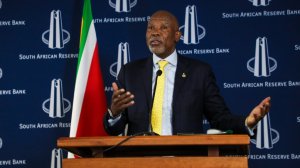
Daily Podcast – March 09, 2026
By: Halima Frost 9th March 2026 Making headlines: Ramaphosa points to eThekwini’s ‘progress’ in improving local govt ahead of elections; Reserve Bank to redraft risk scenarios as... →
Guinea dissolves 40 political parties, opposition leader cries foul
By: Reuters 9th March 2026 Guinea's main opposition leader said "direct resistance" to the country's coup leader-turned-president was now the only way to bring about change... →
 |
 |
1 |
2 |  |
 |