Burundi
Burundi is a landlocked country in East Africa bordered by Rwanda to the north, Tanzania to the east and south, and the Democratic Republic of Congo to the west. The capital is Gitega, though Bujumbura remains the largest city and commercial centre. With a population of about 12-million, Burundi is one of the most densely populated countries in Africa and among the poorest in the world, with an economy heavily dependent on subsistence agriculture, particularly coffee and tea exports. The country uses the Burundian franc as its currency. Burundi is a presidential republic and a member of the East African Community, alongside Kenya, Tanzania, Uganda, Rwanda, South Sudan, the Democratic Republic of Congo and Somalia. The nation's economy faces significant challenges including limited infrastructure, political instability and restricted access to international markets owing to its landlocked geography. Ethnic tensions between the Hutu majority and Tutsi minority have shaped much of Burundi's post-independence history, including a civil war that lasted from 1993 to 2005. Since independence from Belgium in 1962, Burundi has experienced recurring cycles of political violence and economic hardship, though regional integration efforts through the East African Community offer potential pathways for trade expansion and development.
Burundi Updates
US imposes sanctions on commanders over fighting in eastern Congo
By: Reuters 3rd June 2026 The United States on Tuesday imposed sanctions on commanders of armed groups it accused of driving the conflict in eastern Democratic Republic of... →

Millions of farmers in Africa’s Great Lakes region face rising temperatures. Study predicts how crop disease and pests could spread
13th May 2026 Farming in the Great Lakes region of Africa (which includes Uganda, Rwanda, Burundi, the Democratic Republic of Congo, Tanzania and Kenya) is... →
Can civilians fill the peacekeeping gap in eastern DRC?
By: ISS, Institute for Security Studies 12th May 2026 If formally recognised, unarmed civilian protection and community-based early warning can offer a path to sustaining stability and security amid... →
Governing the digital economy: Africa’s shift from connectivity to control
By: In On Africa IOA 24th April 2026 Africa’s digital evolution is entering a governance phase. African nations are taking control of their online information systems as a part of an... →

East African Community’s expansion has triggered financial troubles: why solutions come with risks
23rd April 2026 The East African Community is one of Africa’s oldest regional economic organisations. Its birth in 1967 was the culmination of decades of economic... →

Credit and credibility: rating agency errors come with a cost
9th April 2026 The rating agency S&P Global’s Africa Credit Rating Trends 2025 reviews the past year’s rating activities and analyses the continent’s prospects... →
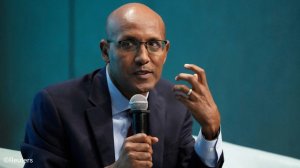
Sub-Saharan Africa faces slower growth as US-Iran war raises costs
By: Reuters 8th April 2026 The World Bank cut its growth forecast for Sub-Saharan Africa for 2026 in a report published on Wednesday, saying the fallout from the Iran war was... →
Macky Sall’s failed UN bid: a stress test for the African Union?
By: ISS, Institute for Security Studies 7th April 2026 Rather than indicating disunity, the outcome shows that the AU upheld its procedures for endorsing candidates to international positions. A draft... →
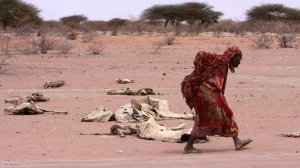
Heatwaves will be worst for rural parts of Africa – new model shows tens of millions face dangerous warming by 2100
26th March 2026 Ask people where heatwaves hit hardest and most will probably say cities, which trap heat in concrete and metal and generate warmth from traffic... →

Fink Haysom fought tirelessly for justice and reconciliation – in South Africa and on the global stage
23rd March 2026 The preamble of the South African constitution of 1996 starts as follows: We, the people of South Africa, →